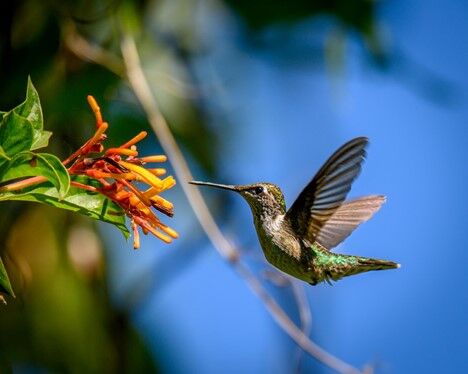
I was thinking about this a couple weeks ago as I was checking the progress of my perennial flowers starting to burst forth, and then again when everything got covered in snow! The migrating hummingbirds started returning about a month ago; I know this because I had to refill my feeder twice as often, which got me to thinking ...
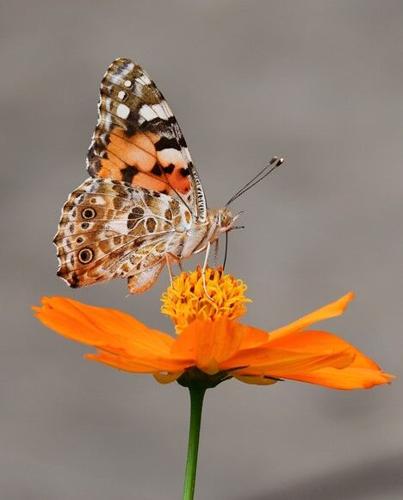
Humans have wreaked havoc on the earth, thus far, so it only seems fair that we try to reverse some of that damage by giving Mother Nature a helping hand. I’m talking about planting to help our various pollinators survive and thrive! Most people are well aware of the importance of bees, as pollinators, and beneficial insects in and around our gardens, but pollinators come in all shapes and sizes! We generally don’t think of butterflies, hummingbirds or even flies as pollinators, but they are equally important in the health of our plants and our happiness factor! (There is a very informative article at “How to Create a Hummingbird-Friendly Yard,” Audubon, at www.audubon.org/content/how-create-hummingbird-friendly-yard).
Did you know that hummingbirds don’t rely solely on nectar for nourishment, but also require protein in the form of small insects and spiders? Thus, the importance of attracting beneficial insects to our gardens and avoiding insecticides, whenever possible, is imperative.
It doesn’t take much to keep these beautiful creatures coming back to our gardens and sharing their gift of pollination. Yes, dandelions do play a very important role in this process, so please let some of them flourish! There are plenty of gorgeous annual, and perennial, flowers and shrubs that hummingbirds & butterflies are attracted to, and actually require for their diet and habitation. Just last week I purchased some Foxglove seeds and a package of wildflowers for the Pacific Northwest, which includes Columbine, California poppy, Coreopsis and so much more! (Oregon State University offers a great list of suggested plants at “Plant List for Pollinator Gardens, Garden Ecology Lab, oregonstate.edu). If you prefer to buy established plants for your garden don’t forget that the Hood River Master Gardeners annual plant sale has started and this year you’ll be able to shop in person if you prefer! (More info can be found at Central Gorge Master Gardener Association (oregonstate.edu).
Contributed photo
Once hummingbirds and butterflies find a consistent source of food and water they will move in and bring along with them a world of visual delight! Not to mention that as they feed on the floral nectars they disturb the pollen, which helps the propagation process, which brings us more flowers and a big THANK YOU from Mother Nature! Surely you see where I’m going with this — let’s be thoughtful about how and what we plant in our soil. That consideration will bring you (and so many others!) much joy for years to come!
As always, if you have specific gardening or pest question you can submit them, online, to the OSU Hood River Extension, Columbia Gorge Master Gardener’s virtual Plant Clinic at extension.oregonstate.edu/mg/hoodriver or by phone at 541-386-3343 ext.38259. Master Gardeners are a great free resource for research-based information. Remember to provide detailed plant or pest problem information, as well as your preferred method of contact.



Commented