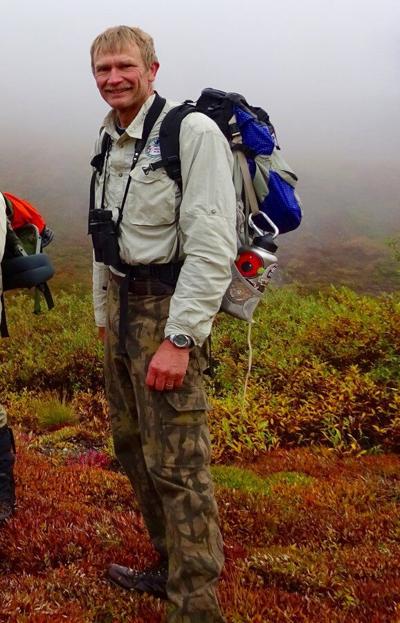
Steve Berendzen, project leader for the Arctic National Wildlife Refuge, will begin as project leader for Central Washington National Wildlife Refuge Complex in February.
The U.S. Fish and Wildlife Service has selected Steve Berendzen as the new Project Leader for the Central Washington National Wildlife Refuge Complex in the Columbia Pacific Northwest Region. He will begin his role in February 2022.
“We are so excited to have Steve as the new Project Leader for these important public lands,” said Robyn Thorson, regional director. “He brings with him unparalleled leadership experience and natural resource knowledge, and his ability to work with partners and the community makes him the right fit for this position. I look forward to the work he will do in Washington.”
Steve Berendzen, project leader for the Arctic National Wildlife Refuge, will begin as project leader for Central Washington National Wildlife Refuge Complex in February.
Kyla Berendzen photo
A 37-year veteran of the Service, Berendzen has led conservation efforts in a diverse array of habitats from the Hawaiian Islands to northern Alaska. He will be leaving his most recent post as the project leader for the Arctic National Wildlife Refuge to come to central Washington and tackle conservation challenges such as wildfire management and invasive species control in support of ongoing habitat restoration efforts.
As the project leader for the Central Washington National Wildlife Refuge Complex, Berendzen will lead a team of biologists and refuge specialists in the management of Columbia, Toppenish, Conboy Lake National Wildlife Refuges, and the Hanford Reach National Monument.
“My wife and I are looking forward moving back to the Columbia Pacific Northwest Region after all these years,” said Berendzen. “Each landscape presents unique conservation challenges and opportunities, and I am excited to tackle these challenges, build new partnerships in the community, and reinforce our commitments to Tribal governments.”
The National Wildlife Refuge System is a network of protected lands that are established for the conservation of wildlife and habitats. These lands also offer the public access to wildlife-dependent recreational activities such as hunting, fishing, wildlife observation, photography, environmental education, and interpretation.



Commented