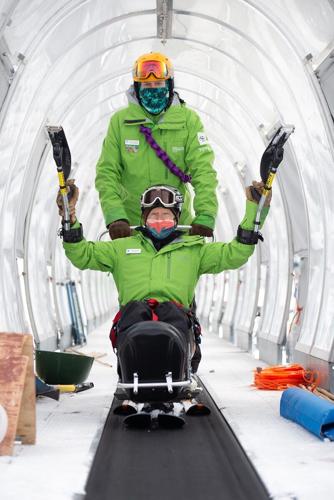
Ski instructor John Bailey works with students and instructors to help those with a range of challenges, from mild to serious physical and cognitive differences, to access Mount Hood ski slopes at Mt. Hood Meadows. Special certification is needed to provide instruction for some equipment, such as the sit ski, above.
Ski instructor John Bailey works with students and instructors to help those with a range of challenges, from mild to serious physical and cognitive differences, to access Mount Hood ski slopes at Mt. Hood Meadows. Special certification is needed to provide instruction for some equipment, such as the sit ski, seen above.
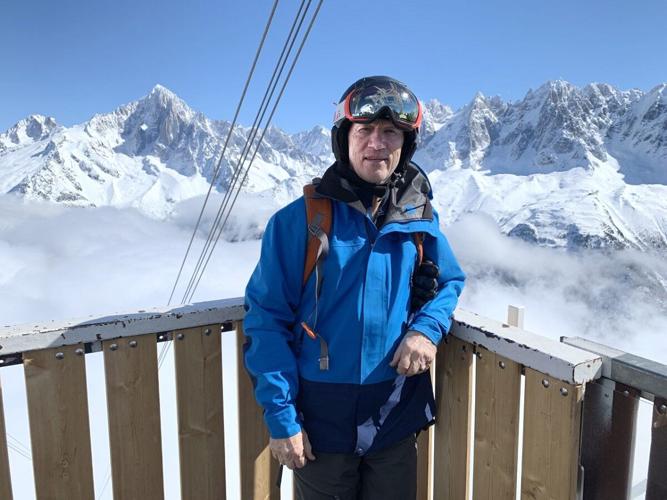
Ski instructor John Bailey, above, works with students and instructors to help those with a range of challenges, from mild to serious physical and cognitive differences, to access Mount Hood ski slopes at Mt. Hood Meadows.
Ski instructor John Bailey works with students and instructors to help those with a range of challenges, from mild to serious physical and cognitive differences, to access Mount Hood ski slopes at Mt. Hood Meadows. Special certification is needed to provide instruction for some equipment, such as the sit ski, above.
At Mt. Hood Meadows, Adaptive Ski Lessons taught by certified, passionate instructors make it possible for everyone to enjoy the mountain, regardless of capability or impairment.
For years, these lessons have aided members of many communities in experiencing the thrill of skiing and snowboarding.
Individuals with a range of challenges, from mild to serious physical and cognitive differences, can access Mount Hood with various program adaptations.
While many people picture accessibility as reserved parking spaces, ramps, and elevators, “…access goes well beyond physical structures. Access needs to include the programs and services provided by an agency, company, or organization. While access to physical facilities represents a major leap forward, the need to provide access to programs and services is a more profound change — and can be more confusing,” according to the United States Department of Agriculture (USDA).
In compliance with legal acts such as the Americans with Disabilities Act of 1990 (ADA), Architectural Barri-ers Act (ABA), the Rehabilitation Act of 1973, and more, the National Forest Service has pushed for greater program access and inclusion.
The term program access “means that a person with a disability has an equal opportunity to participate and gain the same benefits from a program or service as anyone else… [although] Programs are not required to guarantee successful participation, but instead to offer equal opportunity for participation.”
The USDA has taken the inclusive movement seriously, as addressed in a 2015 speech by Deputy Chief of the National Forest Service Leslie Weldon who stated, “Externally, we are committed to expanding access tothe outdoors for underserved and minority communities… We are offering them opportunities to experience the Great Outdoors.” This is the goal of the Adaptive Ski Program at Mt. Hood Meadows: to be inclusive and ensure that the outdoors are accessible for all.
Ski instructor John Bailey, above, works with students and instructors to help those with a range of challenges, from mild to serious physical and cognitive differences, to access Mount Hood ski slopes at Mt. Hood Meadows.
Photo courtesy John Bailey & Mount Hood Meadows
Adaptive skiing
Adaptive skiing programs came about as a response to inclusion policies by the Forest Service, and the Adaptive Lessons at Meadows were already in place when ski instructor John Bailey joined the team.
“Our goal is to work towards as much independence as possible for the students,” Bailey commented. Originally from Maine, he has been involved in adaptive skiing programs for 22 years. His journey started in his home state, where he joined what was then called Maine Handicapped Skiing, now renamed Maine Adaptive Sports & Recreation. He has also instructed in Alaska.
When asked why he began getting involved in these programs, Bailey said he had fond memories from his years of instructing. “What started me was the free ski pass, what kept me going was the impact on peoples’ lives.”
He recalled a story of one of his first students, a young construction worker who fell off a roof and fractured his spine. Soon after, his physical limitations led to depression and nearly drove his new fiancé away.
However, thanks to his lesson with the adaptive ski program, he turned his life around and began skiing with his fiancé. He realized he could still be active and spend time outside.
“It was almost like watching a flower bloom,” Bailey recalled. “Getting outside, the thrill of sliding on the snow, the sunshine… It all changed his life and what he saw as attainable in his new condition.”
Without such a program, the young man’s life would have taken a very different path, he added.
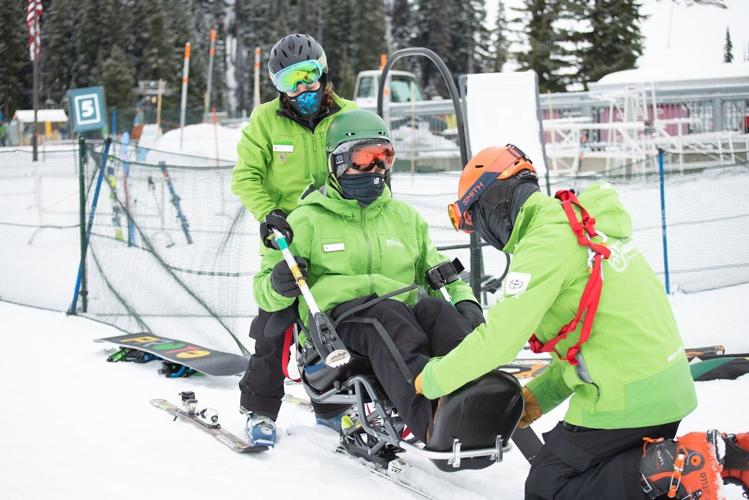
Bailey’s students range in age from 4 to 80 and everyone receives one-on-one or one-on-two lessons. This allows students the support they need to be successful and enjoy their time on the mountain. While some instructors have a background in physical or occupational therapy, all must achieve Level III Certification through the Professional Ski Instructors of America to be approved for these lessons. Meadows offers training clinics for instructors to learn to operate equipment such as a sit ski, which takes years of coaching to earn proper qualification for.
John Bailey’s primary job is the evaluation process for new participants, to understand their capabilities and prior experience. He gathers an overall picture of each student’s history and challenges before arranging their lessons.
The program is open to anyone, even those who are low income. Meadows offers all kinds of equipment including tools for varying levels of passive or active participation, such as stand-up supports, sliders, bi or mono-skis, and tethers.
They are also trying to broaden their equipment with outriggers and sit skis, for example, which provide extra support but still allows the student control over their movements.
“This [equipment] is meeting an important niche we didn’t have before,” Bailey said.
Ski instructor John Bailey works with students and instructors to help those with a range of challenges, from mild to serious physical and cognitive differences, to access Mount Hood ski slopes at Mt. Hood Meadows. Special certification is needed to provide instruction for some equipment, such as the sit ski, seen above.
Photo courtesy John Bailey & Mount Hood Meadows
NW Blind Athletes
One group that has consistently enjoyed adaptive lessons at Meadows is the Northwest Association for Blind Athletes (NWABA). They have been coming every Wednesday for the last 10 or so years, and they even offer transportation for their students.
NWABA brings determined, talented students with no limit on age range or experience. Students can choose either skiing or snowboarding and they work with instructors to achieve safety and independence.
All of the gear they need is supplied and the students are thrilled to be out in the snow. They love the program and build a close relationship with ski instructors as they conquer the mountain one lesson at a time, fearless and smiling from ear-to-ear.
When asked why they participate in the program, one student exclaimed “I ski for the hell of it!”
Anyone can encounter a life-changing event or disease — particularly older generations — which can be debilitating. The lasting effects of such an event alter one’s mobility and comprehension of the world, making programs like adaptive skiing vital.
Any aspiring or experienced skier with special needs can contact Mt. Hood Meadows about the programs, from blindness to muscle control and mobility issues, to developmental delays or Autism diagnoses, to spinal injuries or more.



Commented