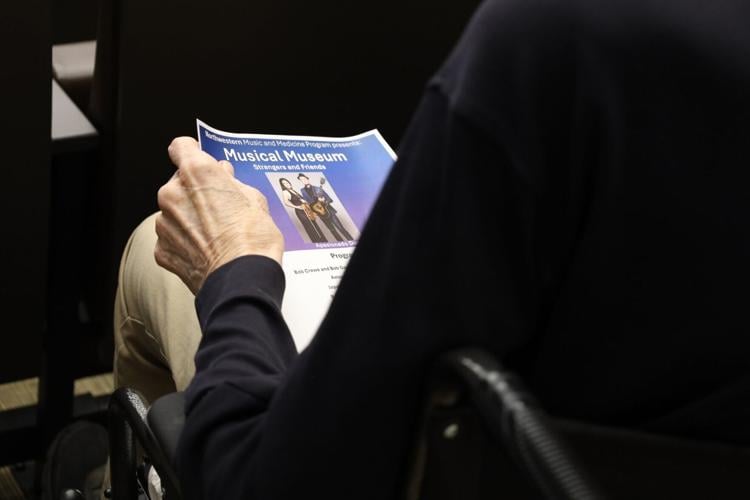
An audience member reads the Musical Museum program while attending the concert July 7 on the Northwestern University campus in Chicago. (Kristin Samuelson via SWNS)
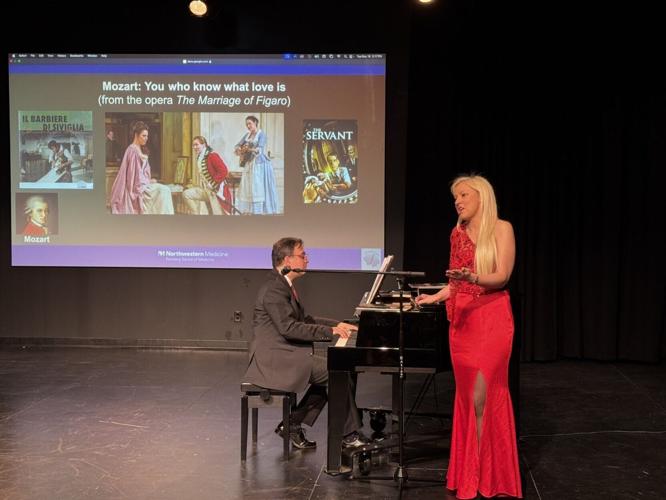
Dr. Borna Bonakdarpour, who co-developed the Musical Museum, accompanies an opera singer during a Musical Museum concert in December 2024 on the Northwestern University campus in Chicago. (Kristin Samuelson via SWNS)
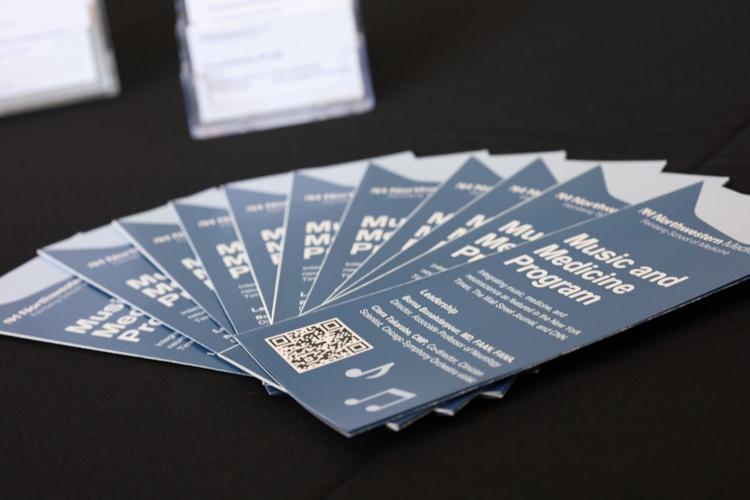
Music and Medicine pamphlets sit on a table outside the Musical Museum concert where guests can mingle after the performance. (Kristin Samuelson via SWNS)
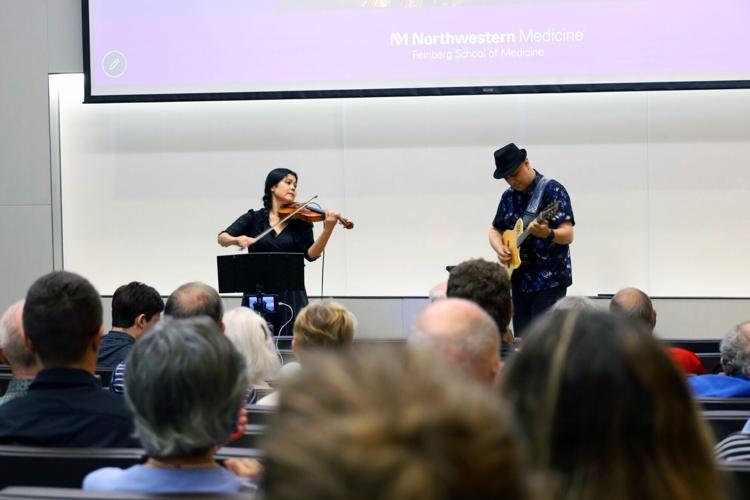
The Apasionado Duo performs at the Musical Museum July 7, 2026, on the Northwestern University campus in Chicago. (Kristin Samuelson via SWNS)
By Talker
By Stephen Beech
Dementia patients gain peace and contentment from attending live music concerts, suggests new research.
Processing of music stays intact for a long time for people suffering from Alzheimer's and other degenerative conditions, say American scientists.
Growing evidence suggests lifelong learning can help combat cognitive decline.
But many older adults with dementia avoid traditional classes for fear of not keeping up.
Researchers at Northwestern University in Illinois created the Musical Museum — a live concert and lecture series designed specifically for people with neurocognitive disorders and their caregivers.
Their findings, published in the journal Frontiers in Neurology, showed that the initiative improved emotional well-being, intellectual stimulation and social interaction.
An audience member reads the Musical Museum program while attending the concert July 7 on the Northwestern University campus in Chicago. (Kristin Samuelson via SWNS)
By Talker
Surveys conducted by the Northwestern Music and Medicine Program (NMMP) also showed that participants reported high satisfaction and significantly improved mood following sessions.
One participant said: "This program provided peace, relaxation and occasionally a cathartic release of tears."
Others expressed appreciation for the program's social benefits, with one participant calling it "a wonderful opportunity to expand our contacts with individuals undergoing similar experiences."
NMMP director Dr. Borna Bonakdarpour said: "Music stays intact for a long time for dementia patients, so the Musical Museum is a very good way for them to emotionally regulate and provide intellectual and cognitive stimulation.
"We always want to keep their brains engaged."
Dr. Bonakdarpour and study author Clara Takarabe developed the Musical Museum during the COVID-19 pandemic to continue enrichment for isolated patients with dementia.
Dr. Borna Bonakdarpour, who co-developed the Musical Museum, accompanies an opera singer during a Musical Museum concert in December 2024 on the Northwestern University campus in Chicago. (Kristin Samuelson via SWNS)
The innovative series — which draws an average of 50 attendees per event — creates safe, stimulating spaces in which people with neurocognitive disorders, their caregivers and other supporters experience hour-long sessions with diverse music, both familiar and unfamiliar, enhanced by verbal introductions providing historical and musical context.
One participant said: "I especially loved the historical context about the pieces.
"It made me appreciate the new pieces more and understand the ones I already knew more."
Receptions following the concerts encourage social interaction.
Dr. Bonakdarpour said: "It's common for individuals with dementia to isolate because they might feel nervous or embarrassed, especially if their language has declined, so this is a great way to get them out, and it's a nice opportunity to see them outside the clinical setting."
Participants attended 11 sessions, which spanned musical genres including bossa nova, jazz and baroque.
Each Musical Museum session was built around a theme that integrated philosophical concepts such as love loss and time, with culturally significant periods for older adults such as the 1960s and 1970s.
Music and Medicine pamphlets sit on a table outside the Musical Museum concert where guests can mingle after the performance. (Kristin Samuelson via SWNS)
By Talker
Familiar music was defined as tunes that would have been popular during the audience's early to late adolescence, which previous research has shown may improve autobiographical memory and self-consciousness, and reduce agitation.
Unfamiliar music was generally tonal and possessed melodies that were culturally diverse and at times based on traditional folk tunes from a variety of geographical regions.
Dr. Bonakdarpour, a classically trained pianist who performed in some of the concerts, said: "We decided to call it a museum because we treat each piece of music as if it's something that's curated for a museum."
He added: "We merge science and creativity and provide a lifeline to those navigating the challenges of cognitive decline, creating joy and connection through art."



Commented