
Part 1 of 2
THE GORGE — After a bad market last year, Oregon’s cherry growers are cautiously hopeful for a better year.
“We need a good year, because we’ve had a couple rough years,” said Ashley Thompson, Oregon State University, Fruit Tree Extension, Wasco and Hood River counties. “Cherries are unpredictable in terms of price, compared to something like pears where the price is usually fairly steady. Cherries are either boom or bust.”
There was damage to some of the trees during a cold snap Jan. 11-17, but it may not be severe. “We went out to assess some of the orchards in low-lying spots that were most likely to have damage. The damage we saw was minimal, but there is some damage in certain locations with some of the cherry varieties. We are hoping for a nice spring, however. Most of the orchards are looking good right now,” said Thompson.
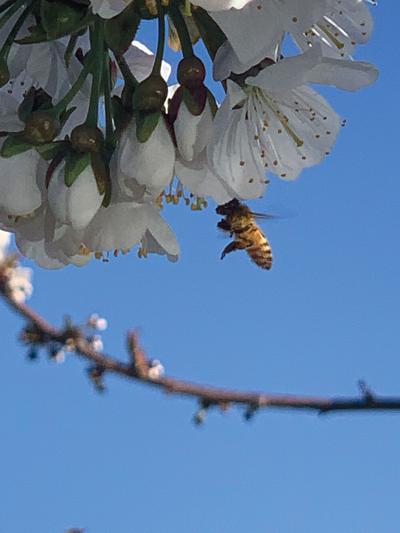
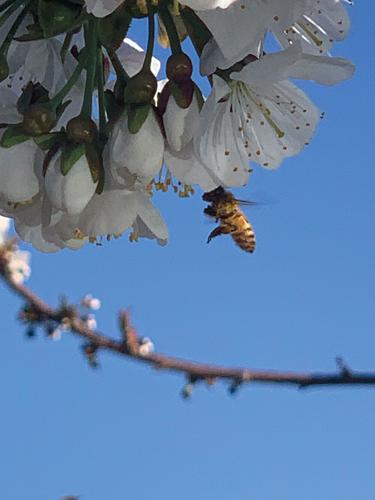
“It seems like it might be a ‘normal’ year — at least a normal spring,” she said. “Hopefully it becomes a normal summer and we’ll have a good harvest. It’s still pretty early, however and the buds are not completely in bloom yet.”
Northwestern Oregon, Hood River and Wasco counties, is the heart of Oregon’s cherry industry, partly because of climate. This is a transition zone in the Columbia River Gorge between the temperate rain forest of the Cascade Range and dry desert of eastern Oregon. Precipitation varies by elevation and east-west location. Annual precipitation averages more than 76 inches in Cascade Locks, but less than 31 inches in Hood River. At the highest points on Mount Hood, annual precipitation can be 150 inches.
The Gorge has a moderating effect on air temperatures near the river when air from the ocean moves in from the west. The region has cool summers and cool winters, with a narrow annual temperature range and few extremes, due to the marine influence. Major easterly flows, however, occasionally cause extreme cold conditions as cold air moves west through the Gorge.
Oregon is the third largest cherry producing state in the U.S. “Our cherries are shipped all over the country, and we still export some to Asia. We are known for growing really big, high-quality beautiful fruit,” said Thompson.
“It’s a little early to predict for this year but we hope for a normal season — after last year’s terrible market, and disaster declaration for Wasco County,” she added.
Last year, some growers let their cherries stay on the trees and rot because they were not worth picking.
Sage Fruit is a company with growers farming several thousand acres of orchards throughout Washington and parts of Oregon, growing a wide variety of apples, pears and cherries. Megan Thompson runs Cascade Cherry Growers, a co-op that is part of Sage Fruit.
“We pack fresh fruit for about 25 local growers. I am also a consultant, helping direct the growers regarding when to pick and how to deal with the market. I am the liaison between the packing and marketing side, and the growers,” she said.
“Regarding the outlook for this year, cherry growers are very optimistic people. We can’t store our crop, so every year is a different situation. Last year we had the perfect storm when Mother Nature compressed the California market into our marketing window. We had a very late bloom and then transitioned into harvest very quickly,” Thompson said.
“That weather also affected Washington, pushing our harvest out, so we had a very tight harvest and marketing window. We deal with a highly perishable crop that must go to market when it is ready,” she said. When prices plummeted, many cherry growers left fruit on the trees, and the cherries that did get picked had little value.
“Looking toward this year’s market, currently California’s crop is more normal in timing. Their bloom and early activities in the field to get an early crop have been a lot more normal,” she said. “This is great news for us, since we also seem to be on a more normal schedule because our cherries are not yet blooming. They will start soon, and continue on up through Washington and into Canada.
“There have been reports of crop damage in Wenatchee and this might mean that the fruit in our district, especially the later varieties, could hopefully have some better value,” she said. “It’s sad to have someone else have a crop failure in order to have our own success, but it all hinges on supply and demand in the market.”
Farmers in her district pick cherries for about eight weeks. “We start the first or second week of June and generally go through mid-August, with higher elevation farms having later varieties. There is a lot of optimism for this year for The Dalles, Hood River, and the Mid-Columbia area,” said Thompson.
“We rely on 25-30% of our crop for export. That can also be challenging, trying to get it where it needs to be — since that market is for the largest fruit and the highest quality. We get paid a lot more for that fruit.”
It can also be challenging working with the retailers. “They want to make their money, with their pricing, but at the same time we sometimes need them to bring down their price a little, to get movement going. It has to be a compromise,” she said.
Tree health is pretty good this spring, she said. “For the most part we’ve come through the winter in good shape; most of the growers have done a really nice job pruning, and are about to start fertilizing, irrigation, and crop protection.”
Last year was abnormal. “California’s first big market is generally Memorial Day, but last year they had most of their crop packed and shipped in June. Northwest cherries (Oregon and Washington) biggest marketing window is traditionally the Fourth of July. Growers are always hoping for high quality fruit that we can pack and ship with high market demand,” she said.
“We are always at the mercy of Mother Nature.”


Commented
Sorry, there are no recent results for popular commented articles.