
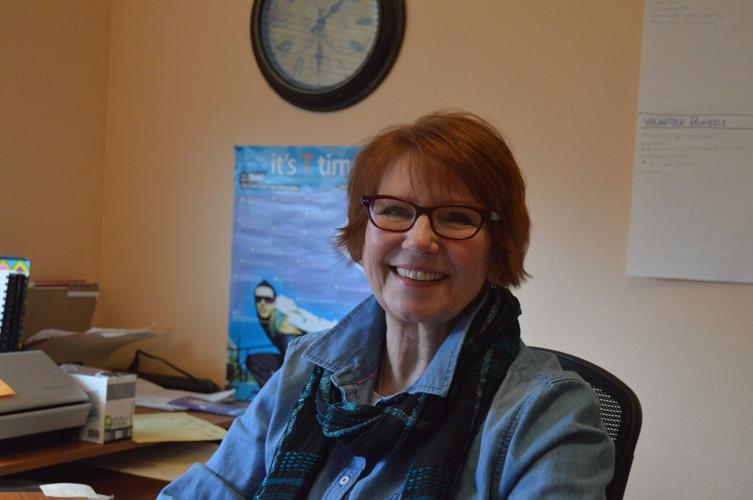
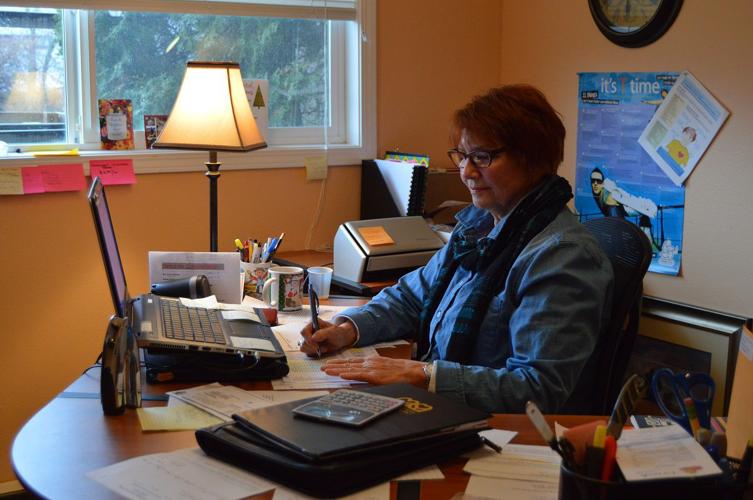
Ask Susan Baldwin, Columbia Gorge CASA volunteer manager, about her volunteers and the children they serve, and she’ll start to tear up.
“I really love what I do,” she said. “It is such an honor to work for the people I work with. I get a little emotional talking about this, because it’s the best group of folks ever, just ever.
“People who volunteer to advocate for kids … I couldn’t work for a better bunch of folks. And that’s really what I feel. I work for them — they don’t work for me.”
CASA — or Court Appointed Special Advocate – matches adult volunteers to a child or sibling group in the legal system who have been taken out of their homes because of abuse or neglect. The goal of a CASA “is to be able to get to know a child or sibling group well enough so we can speak with some sort of confidence about the subject to the judge who’s assigned to that particular child,” Baldwin explained. “And so it involves meeting with the child or group regularly, at least once a month, and getting to know the people who are peripherally involved with that child, including foster families and (biological) families.”
Baldwin started as a volunteer 13 years ago, and is coming up on her 10th anniversary as volunteer manager — and still serves as a CASA volunteer.
“I’ve seen a lot of cases,” she said. “What I see is families generationally coming into care with the same issues as their parents and their grandparents, and that is tough to see because it’s like there’s no 100 percent solution, and that’s kind of tough to take.”
The work is not easy, but it is rewarding. Volunteers receive assignments based on their comfort levels, “because we have children who are in care because they’ve been abused in some way or allowed to be abused, so we deal with some pretty touch subjects. Or some people just don’t know how to deal with four-year-olds — they’d rather advocate for a teenager. Or some can’t stomach that some of our children have been sexually abused. So I would never assign somebody to a case where the person couldn’t do a good job because of their own fears.
“It’s very touchy work that we do,” she added. “We have to be very cognizant to sensitivities.”
While CASAs do not have authority to place children, they can make recommendations to the court.
“We’re bound by the law, but that doesn’t necessarily mean what is legal is in the best interest of the child,” she said.
“The beauty of the program … is that CASAs are the only unpaid, nonprofessional legal participant in a dependency case. So we don’t have any allegiances with anybody. We don’t have to follow state rules, we don’t have to follow legal rules, we can talk to anybody we deem important to talk to, without having to get permission from anybody,” she explained. “The Oregon Legislature has given us a great deal of latitude … that’s where we get the authority to do what we do. And Oregon is one of the most liberal as far as giving latitude to advocates in the states. It’s great to be a CASA in the State of Oregon.”
Seven new CASAs were sworn in by Judge John Olson on Jan. 14. The program relies on volunteers, grants and donations to remain in service; it’s nationally-mandated, but not governmentally funded. Baldwin and CASA Director Susan Erickson (“We call ourselves Susan Squared,” Baldwin said) are the only two paid employees of a program covering Hood River, Wasco and Sherman counties with more than 50 volunteers.
To that end, Baldwin holds three training sessions a year — winter, spring and fall — the first of 2016 scheduled to run Feb. 23 through March 22, with an initial introduction Feb. 16.
Training begins with a tutorial on the online program used by CASA — called MOODLE (“an open-source learning platform”) — and then a combination of online and classroom training.
The training follows the national CASA manual, modified to include local information from the tri-county area. Because half of the training is online, volunteers “can train in their PJs if they want, train at midnight if they’re night owls,” said Baldwin.
Once training is complete, the volunteers take an oath before one of four circuit court judges and receive their first case.
“I have trained and supported advocates with educational backgrounds from high school graduate to PhD and MD degrees,” she said. “We are a unique group of folks whose ‘book learning’ doesn’t correlate into good, or not so good, advocating.”
Before training, however, volunteers are asked to make an appointment with Baldwin for an informal interview “to discuss expectations on both sides,” she said, and complete an application packet that includes references, a background check and fingerprinting.
That interview is important because sometimes the expectations of the job are not the realities. Sometimes volunteers are disappointed by the solitary nature of the work — caseworkers who don’t have time to “chitchat” about a child and their progress, for example.
“There’s a legal party team, but it’s not teamwork, necessarily, and that disturbs some people,” Baldwin said. “This is quiet work … because we deal with very confidential information.”
That said, the CASA office makes sure its volunteers are well supported, with monthly luncheons, occasional no-host breakfasts, and weekly newsletters.
“It gives CASAs a chance to talk to each other about their cases — a place to vent or get ideas, to feel like you’re bigger than something that’s one person,” she said. “Because this is hard work. This is not easy work, because it’s emotional. And emotional subjects are like boiling water.”
For more information about CASA and the winter training, call Baldwin at 541-386-3468, or email sbaldwin@gorgecasa.org by Feb. 8. Those who would like to take the training, but need to wait until later in the year, are also encouraged to call to start the process.


Commented