
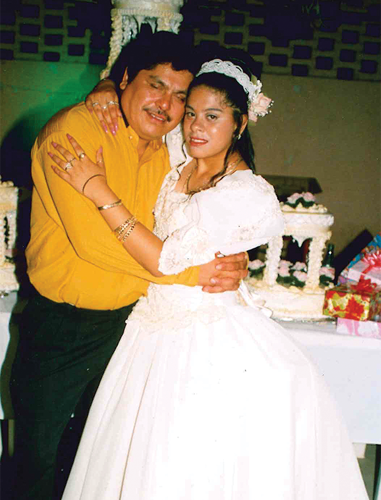
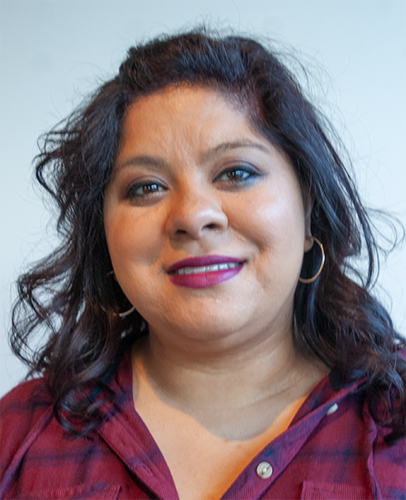
To a reporter, the strange surfacing of notes and papers from a long-ago homicide case was a puzzlement; to Janet Acevedo, seeing a box with the notes inside was like “opening a coffin.”
On June 28, a box was found at a ballfield and reported to police. It contained clothes, ride tickets stolen from a carnival, and a reporter’s handwritten notes, copies of criminal court documents, and an envelope with the reporter’s name on it.
The police took the tickets, left the clothes, and gave the box and papers to the reporter.
Acevedo came to the Chronicle the next day, having received a panicked call from one of her younger brothers. He’d heard something strange and vague: that old court papers related to the May 2000 killing of their father, Elfego Torres, had been found and were now at the newspaper.
He couldn’t leave work, so she said she’d go check. “It kind of made me think back to the time when I was shielding my brothers from the pain,” Acevedo said.
She was just 17 and her brothers Eddie and Alex were 14 and 12, respectively, on May 12, 2000, when their father was shot and killed by Roger Thompson in an argument over loud music.
Now she’s 35, and the ever-present pain from that day mushroomed with the phone call from her brother.
When she came to the newspaper, she was trying hard not to cry. “I had to remember I was strong when I was younger and I had to be strong now. It’s just part of my life.”
She was worried the courthouse had misplaced original files. She was “shaking internally” as a reporter showed her the box’s contents and was relieved to see the court papers were only copies.
The Chronicle was in the process of moving at the time and had recycle bins in the alley. The reporter hadn’t seen the documents in 18 years and imagined they’d migrated somewhere in the building and over the years ended up in the recycle bin, where perhaps the carnival thief took them.
Acevedo is deeply religious, and believes things happen for a reason. She was upset at the time of her dad’s death that the newspaper didn’t reach out to do a story on what kind of man he was.
Now, because of this strange turn of events, it would finally happen. “My dad always used to say, good things don’t get rushed,” she said.
She said he was hard working and generous, a joker with a nickname for everyone. If he got in an argument, he was always the first to make peace.
The street where they lived was called the happy block because they were always having gatherings.
The back of their house was called the doctor’s office. If friends called to ask if the doctor was open for business, it meant they wanted to come over for a drink. He was formal, introducing his friends to his family, that way people would have respect for his family, the way he respected them, Acevedo said.
He had pearls of wisdom, telling her, “You don’t judge people based on their race; you judge them based on their heart and how they treat others.”
He sent half his paycheck to his parents in Mexico, and gave money to the homeless.
Sometimes she’d tell him he was being too generous. “He’d say, ‘It’s ok, if they don’t appreciate it, God will appreciate it.’”
He was a foreman at an orchard. Being a foreman is important within the Hispanic community, “but within the Anglo community, it doesn’t translate to anything,” she said. “It’s like saying your dad works at McDonald’s. And that’s the way society is.”
Her dad’s funeral at St. Peter Catholic Church was standing room only. “I couldn’t understand how many people my dad had impacted, really touched their lives.”
She was deeply appreciative of a community concert that raised money for the family. They donated what they didn’t need to the church.
Public reaction was mixed after her father was killed. Some “would look at us bad, ‘Oh, those Mexicans.’” Others looked at them with pity. Still others were afraid it would happen to them.
Some people avoided them after he died, unsure of what to say. It was isolating, she said.
In the courtroom, she said some people referred to her family as “the beaner side, the Mexican side, and this is the white side, and they would look at us as if we had committed the crime.”
Acevedo still seethes that Thompson — who was initially charged with murder but was found guilty of criminally negligent homicide in what’s called a stipulated facts trial — only served 18 months in prison.
The short sentence added insult to injury, and she sees it as a grave injustice.
She sued civilly, out of spite, she said, and won a settlement. But it only made the pain worse, because she realized “it’s all over, and that’s all you get.”
For the first year, she left her bedroom door open at night “just in case my dad walked in and said, ‘Hey it’s a joke, I’m here.’”
She said the loss just gets worse as the realization of missed memories piles up. “Eventually, you forget how they laughed, how they smelled, the things that Dad would’ve said, and it’s really hard.”
When her brother’s daughter was born, he cried. “He said my dad would’ve loved to have been a grandpa. That’s something we don’t get.”
She cries when she sees daughters with their dads. “If they hug him, even if they’re adults, it breaks my heart that I don’t have that opportunity, because my dad was a hugger.”
She said, “The more I talked about my dad, the better I felt. My brothers never could.”
She went through a period of not even being able to look at white men who reminded her of Thompson. But, “at the end of the day, every race has bad people and good people, and that’s what I walked away with.”
Her dad wasn’t racist, she said, “If I want to honor my dad, I had to basically look at everyone for who they were.”
He moved to the U.S. from Mexico at 12 or 13, and was a legal permanent resident, as is her mother. Acevedo and her brothers were born in the U.S. Her dad told her, “’You claim American first, and then you’re Mexican, because you have to be more American than the American and more Mexican than the Mexican.’ And it was true. You had to know about Willie Nelson and (singer) Vincente Fernandez.”
Thompson wasn’t arrested until three days after the killing, which fell on her dad’s birthday.
In fact, Torres and his friends were celebrating his birthday a few days early at the Tenneson Orchard on Mill Creek Road when the shooting happened. Thompson argued with them, left, came back, and shot Torres.
Thompson complained about the music being too loud. Torres said he had a right to listen to it. Then he said to Thompson to go ahead and shoot him, Acevedo said.
Torres also had a rifle with him, but he was using it as a display of strength, and never cocked it, Acevedo said.
She felt her dad was wrongly portrayed as aggressive. “He was ready to drink beer, but not ready to shoot a gun at a human being.”
He died at the scene.
At the hospital, when she learned her father was dead, Acevedo fell to her knees. Her mom and brothers didn’t understand what was going on. “I had to tell all of them that my dad was dead.”
They were allowed to see him. “We were holding my dad’s hand and it was still warm.”
A friend of Thompson’s once told her to learn to forgive so she could have peace. “When you don’t get your goodbye with your dad, or when he’s taken in a tragic way it is really hard to overcome those feelings.”
Her dad was taken home to Mexico for burial. Acevedo was in such denial about it that it didn’t hit her until six months later, when a neighbor’s grandma died. The dam broke, and “I cried like a baby.”
They also wanted to autopsy her dad on his birthday. “I begged him to do it any day but not on his birthday, to at least give him that dignity,” she said, her eyes welling up.
She insisted on seeing autopsy photos. “I needed proof that my dad was gone.” She only saw a few. The district attorney “didn’t feel it was appropriate for a 17-year-old to look at them.”
The day he died, several strange events seemed to portend trouble. Acevedo, then a junior in high school, could always see her dad from her classroom as he drove by during his lunch. He’d always wave. That day, he didn’t. “It felt awkward, like that wasn’t right. That was the last time I saw my dad.”
That day in class, her teacher talked about how a girl in another class period, whose mother had cancer, had written about it for an assignment. That student sat in the same chair Acevedo did. “I thought, oh my gosh, something bad is going to happen.”
Also that day, even though it was May, her mother had a fire going because she was cold.
Then, before he left for work, Torres asked his neighbor to please keep an eye on his family.
“All the signs were there that something was going to happen, life was trying to prepare you for this tragedy,” Acevedo said.
Her senior year, prom fell on the one-year anniversary of her father’s death. She didn’t go.
“Even though it’s been 18 years, we still feel the pain; we still feel the consequences of one man’s action. We’ll never be the same people.”
She said, “It’s been tough, but what can you do?
“All you can do is take it in with a grain of salt, do the best with what you have and put the rest in God’s hands.”


Commented
Sorry, there are no recent results for popular commented articles.