
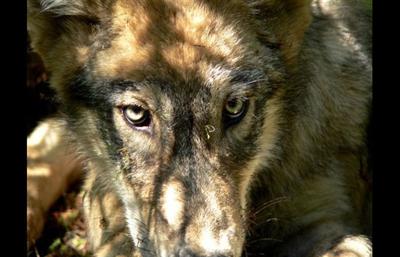
The looming court battle over the Oregon Fish and Wildlife Commission’s decision to remove gray wolves from the state endangered species list is a prime example of the growing disconnect between people in urban centers and food producers in rural areas.
When the wolf population reached the number determined by the state’s management plan to make it eligible for delisting, officials took action.
They decided to move into phase two of the plan to resettle wolves in Oregon by allowing landowners to obtain a permit to hunt predators attacking cattle, sheep, goats and other livestock.
The Nov. 9 decision by ODFW was immediately challenged by the Center for Biological Diversity and several other national groups who don’t want to abide by the plan.
They want wolf numbers much higher before protections are lifted.
A lawsuit is now pending, which is no surprise to ranchers who walked away from the table when the management plan was being negotiated because they felt their interests were not given enough consideration.
The state plan called for delisting of wolves when eastern Oregon hits a population of four breeding pairs for three consecutive years. That goal was met last January.
ODFW officials believe there are now 81 wolves living in Oregon and many ranchers argue that number is too low.
Although wolf packs were initially confined to the northeastern corner of the state, the animals have been relocating to other areas.
Delisting wolves will still heavily regulate hunts but make them possible.
As it is, the rules are so stringent that no hunts have taken place despite an increase in livestock losses.
On the west side of the state, with highways 97, 20 and 395 the dividing lines, wolves are protected by federal law and no kills are allowed.
Any changes in the state management plan will not affect western Oregon unless federal protection is lifted.
If ODFW’s wolf management plan resembled that for cougars, the level of angst amongst ranchers would have been greatly reduced.
Cougars attacking livestock can legally be killed and that is a fair way to deal with depradation.
The dispute over wolves in Oregon began after the animals were reintroduced into Idaho in 1995 and began making their way across the border.
Ranchers have rightfully protested that their right to protect their livelihood and the animals they care for should carry more weight in wolf management decisions.
Livestock owners have more skin in the game than a hiker from a metropolitan area who wants to “hear wolves howl to enhance the experience.”
“It has an emotional impact when we turn out cattle and have to wonder which animals will return,” said George Rollins, a rancher from Halfway.
He and other cattlemen have been waiting for ODFW’s delisting decision to restore balance to their world.
“We’re hanging our hat on delisting,” said Wallowa County Rancher Todd Nash at a forum for livestock owners in Wasco County.
Nash owns a 650-head herd in Enterprise and has lost numerous cows and calves to wolves.
He chairs the cattlemen association’s wolf committee and has actively lobbied for changes in the state plan.
It is not in the culture of ranchers to allow a predator to stalk, maul and kill their livestock and do nothing about it, says Nash.
When you understand the cattlemen’s way of life, it becomes apparent that the only hope of livestock owners respecting and following the wolf plan is for it to be balanced.
The state needs to bank more money to reimburse losses and make the process to qualify for compensation less oneprous.
Getting a kill confirmed has been difficult, say Eastern Oregon ranchers, because compensation is paid by governments that are also paying the wages of agents conducting investigations.
The job of confirming kills should be left to law enforcement agencies in each county who are trained for that task.
In recent years, it has grown more difficult for ranchers to get a wolf kill confirmed because deterrents, such as having a range rider on guard, have taught the animals to be more secretive. And when cows and calves go missing, which is often the case, a wolf kill cannot be proven so no money is awarded.
Citizens throughout the state should have to ante up and make sure all livestock owners receive fair market value for wolf kills.
“People want wolves saved, but they don’t realize what that means. The burden we suffer from livestock lost to wolves should not be endured alone,” said Sharon Beck, a rancher from Union County.
Taxpayers should also be called upon to foot the bill for weight loss among a herd, and therefore loss of market value, from the stress that follows a wolf attack.
A tax credit for losses should be extended beyond 2018 and the amount an individual rancher can claim should not be capped to prevent him or her from recouping all losses.
“We just want fair and just treatment under the law,” said Rollins and we believe that’s what needs to happen.
At the very least, the wolf plan needs to be followed as approved.
Failure to do so is likely to cause more wolf deaths than planned hunts would have.
Ranchers can’t be expected to continue playing nice if uncompensated losses grow.


Commented
Sorry, there are no recent results for popular commented articles.