Although Donald Trump had pledged to reverse Obama’s executive orders on immigration during his presidential campaign, the president had softened and showed some “heart” for the DREAMERs protected under DACA, or Deferred Action for Childhood Arrivals. However, the president has callously decided to terminate the irenic DACA program that temporarily deferred deportations for nearly 800,000 young immigrants who were brought to the U.S. as children. The president’s final decision on DACA was delivered on Sept. 5 by the Attorney General Jeff Sessions, one of the leading opponents of DACA. Sessions emphasized that the government will no longer accept new applications from undocumented immigrants to shield them from deportation.
DACA, the only gain President Obama achieved for the undocumented population, was set up through policy guidelines written by the Secretary of Homeland Security in 2012, an act of prosecutorial discretion meant to be applied only on an individualized case-by-case basis. Since then, hundreds of thousands of undocumented students who satisfy the criteria to apply for DACA had shared their information with Homeland Security for a criminal screening. Those who qualified for DACA were granted protection on a two-year basis, subject to renewal, and were able to apply for working authorization permits from the U.S. Citizenship and Immigration Services (USCIS). The employment authorization permits also required them to apply for a social security card, which in turn allows them to apply for a driver’s licenses in many states across the country.
The rescinding of DACA, however, comes in an “orderly wind-down” process, giving Congress a six-month window to replace DACA with legislation before it phases out on March 5, 2018. The memorandum that rescinds DACA states that the government will no longer accept any new DACA applications, and that individuals who are currently in DACA status will remain protected until their work authorization permit expires. USCIS has announced that it will adjudicate properly filed DACA pending renewable requests from current beneficiaries whose benefits will expire between Sept. 5, 2017, and March 5, 2018; these renewable requests, however, must be filed before Oct. 5, 2017 (see the American Immigration Council website below for details). In other words, current DACA recipients will not be immediately affected — they can retain their granted DACA status until it expires. When their work authorization permits expire, however, DACA recipients will automatically become unDACAmented, unless Congress acts to pass some kind of legislation before March 5.
The unDACAmented status means that DACA individuals are suddenly deprived of their previously recognized rights to work, go to school, get a driver’s license, get socially and politically involved, and lose fear of deportation. As DACA phases out, the American dream winds down for hundreds of thousands of young people. In previous writings, I have emphasized that the work authorization permits are fundamental for DACA recipients; it opens doors to new jobs, academic careers, and business opportunities. Once their work authorization permits expire on March 5 for most of the DACA recipients, these progressive opportunities will disappear. That is, many students who are currently working to pay for college, as college is one of the requirements to apply for DACA, will not be able to afford college tuition anymore. If they find a way to pay for college, they will not be permitted to use their professional skills because they won’t have the legal status to work in this country. For example, a medical student who is about to finish class and ready for residency will not be able to finish residency because completing their residency work requires work authorization.
The termination of DACA represents the embodiment of the politics of fear; it sends the message that undocumented immigrants would simply go home if the government made their lives miserable enough. The inanity of this idea circulating in the minds of Republican politicians is marked by its allure for those who hate illegal immigration. For these young immigrants, however, the U.S. is the only place they know as home, where they are currently paying taxes in a legal way. Beyond the politics of fear embodied in termination DACA, the president’s action is also clearly sending a message to Congress.
While the president did not himself announce the ending of DACA as expected, he has been urging Congress to act soon on the immigration issue. The White House Press Secretary Sarah Hukabee Sanders said on Sept. 5 that “the president wants to see responsible immigration reform.” While it is unclear what kind of legislation the president is willing to work with Congress, the press secretary reiterated that building the wall is part of the immigration package. Moreover, the memorandum that directly rescinds DACA cites the President Trump’s executive order 13, 768, “Enhancing Public Safety in the Interior of the United States,” which directs federal agencies to “ensure the faithful execution of the immigration laws … against all removable aliens.” Once DACA phases out on March 5, 2018, the DACA beneficiaries will be subject to removable according to Trump’s immigration enforcement priorities. The press secretary emphasized on Sept. 5 that unDACAmented students are not the president’s priority for deportation, but this is an empty and deceitful message used to cause confusion.
As of now, Congress is the only hope for the DREAMERs. Therefore, I urge you to contact your elected representatives to pass legislation that protects the DREAMERs; more specifically, show your support for the Development, Relief, and Education for Alien Minors (DREAM) Act legislation. The DREAM Act is a legislative proposal that would protect undocumented youth in this country.
If you are interested in learning more about the termination of DACA and the DREAM Act, I encourage you to visit the following websites:
The memorandum that rescinds DACA: www.dhs.gov/ news/2017/09/05/memorandum-rescission-daca
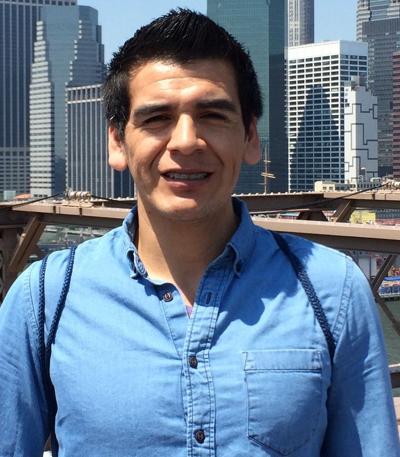
Abel Cruz Flores is a graduate student at Georgetown University, a third year Ph.D. in Spanish linguistics. He graduated from Columbia Gorge Community College Hood River Campus in 2010. He is an advocate for immigration reform.



Commented
Sorry, there are no recent results for popular commented articles.