THE GORGE — Wasco and Hood River counties have agreed to pool their funds to launch a new state-mandated deflection program to divert individuals detained by law enforcement for low-level drug possession away from jail and into substance abuse treatment.
Matt English, Hood River County Sheriff
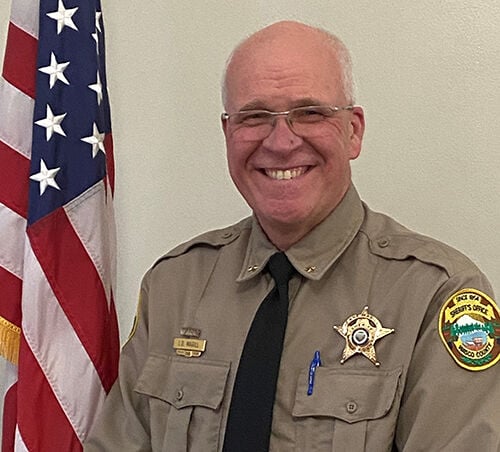
Lane Magill, Wasco County Sheriff
Deflection is a program in which individuals who meet specific criteria — often those with low-level charges related to substance abuse or mental health — are diverted immediately upon arrest away from jail and instead transported by law enforcement to a designated treatment center or deflection facility.
This program is part of a new law effective last September which re-criminalizes low-level drug possession while funding law enforcement programs to divert qualifying individuals to substance-abuse treatment.
National Survey on Drug Use and Health estimates one in five Oregonians have a substance use disorder, nearly the highest among all states, while 79.1% of Oregonians who needed treatment didn’t receive it, also near the highest among states.
Two counties, one program
Wasco and Hood River counties’ intergovernmental agreement (IGA), signed at a regular Wasco County board meeting on Feb. 5, charges Hood River County with staffing and administering the program through its Hood River County Sheriff’s Office (HRCSO) Parole and Probation Department, while Wasco County will “continue to partner in the consortium and provide 24-hour accessible office space in Wasco County for touch down space for Deflection Program staff,” the IGA reads.
According to Wasco County Sheriff Lane Magill, the collaboration began to offset the expenses of getting a deflection program up and running.
“We understood really rapidly as we went through the process with the Criminal Justice Commission (CJC) that $150,000 would not suffice for Wasco County,” he said.
Magill approached Oregon’s CJC with Hood River Sheriff Matt English to combine the funds provided by the state.
“The CJC said, ‘Yeah, absolutely,’” McGill recounted. “They adjusted their application process for us.”
Oregon’s changing approach to substance abuse
Magill told the Wasco County Commissioners that the new deflection program is “a fix for Measure 110,” referring to Oregon’s drug decriminalization law passed in 2020. Many law enforcement agencies throughout the state spoke out against Measure 110, including the Oregon Sheriff’s Association and the Oregon Association Chiefs of Police.
Measure 110 previously reduced penalties for individuals caught with “personal use” amounts of hard drugs like cocaine, meth, or fentanyl and directed hundreds of millions of dollars a year in cannabis industry taxes toward drug treatment services. Individuals caught with low-level drug possession were issued a ticket and a $100 fine which could be waived by calling a hotline to connect the individual with drug treatment services, though signing up for any program was not required.
Last year, lawmakers passed House Bill 4002, which expanded drug treatment funds and changed low-level drug possession from a violation under Measure 110 to a misdemeanor. The CJC commission estimated 1,333 new convictions per year following this re-criminalization coming into effect Sept. 1, 2024.
Aninvestigative report from KATU News found since September, 410 Oregonians have been referred to deflection programs and 10 people have completed programs successfully.
Critics of re-criminalization say substance abuse is a disease that needs public health solutions over penal, criminal-justice-based solutions.
In a statement Jan. 10, the Oregon ACLU said “criminalizing drug addiction and sending people to jail for having user-level amounts of drugs will make recovery more difficult and create lifelong repercussions — creating barriers to employment, housing and education. At-risk individuals, particularly Black and brown people and poor people, will bear the brunt of criminalization.”
According to Magill, law enforcement in Wasco and Hood River counties are in the process of training law enforcement officers to deflect individuals through a program known as Law Enforcement Assisted Diversion, or LEAD.
“LEAD is a national, evidenced based program,” Magill said. “The Marion County Sheriff’s Office has been using it for, I believe, about the last six or eight years. It’s a highly effective program. Keeps a lot of people out of jail, gets them into treatment. There’s a lot of success.”
The commissioners discussed accommodations for Wasco County’s 24-hour accessible space for deflection staff, noting a specific spot in the courthouse.
“Thanks for cooperating. It’s nice to see when counties can kind of work together. It’s always great,” said Commission Chair Scott Hege.






Commented
Sorry, there are no recent results for popular commented articles.