Few travel experiences are as closely associated with the American outdoors as a visit to a national park. From the geysers of Yellowstone to the granite cliffs of Yosemite and the subtropical wetlands of the Everglades, the nation's 63 national parks preserve some of the country's most recognizable landscapes while giving millions of visitors the opportunity to experience nature firsthand. Managed by the National Park Service, these parks balance recreation with the long-term protection of natural ecosystems, wildlife, and cultural resources.
While some visitors seek rugged backcountry experiences, others are drawn to what the travel industry often describes as "soft adventure"—outdoor experiences that emphasize nature and exploration without requiring extensive physical exertion or sacrificing modern comforts. Instead of pitching a tent in a remote campsite, these travelers may choose alternatives ranging from glamping experiences to historic lodges, cabins or park-operated RV (recreational vehicle) campgrounds, where amenities such as comfortable beds, electricity and nearby services make spending the night outdoors more approachable. These accommodations also help broaden access to national parks, allowing families with young children, older adults, travelers with mobility limitations and first-time outdoor enthusiasts to experience some of the country's most celebrated landscapes without the demands of traditional wilderness camping.
Researchers at Dunhill Travel Deals—a leading source for travel deal discovery—analyzed overnight stay data from the National Park Service's 63 national parks across 32 states and U.S. territories to identify the destinations where visitors are most likely to choose accommodations associated with soft adventure travel, specifically in-park lodging and park-run RV camps. The analysis also examines how overnight visitation has changed since before the COVID-19 pandemic and explores the accommodation preferences shaping overnight stays across America's national parks.
Here are the key takeaways from the analysis:
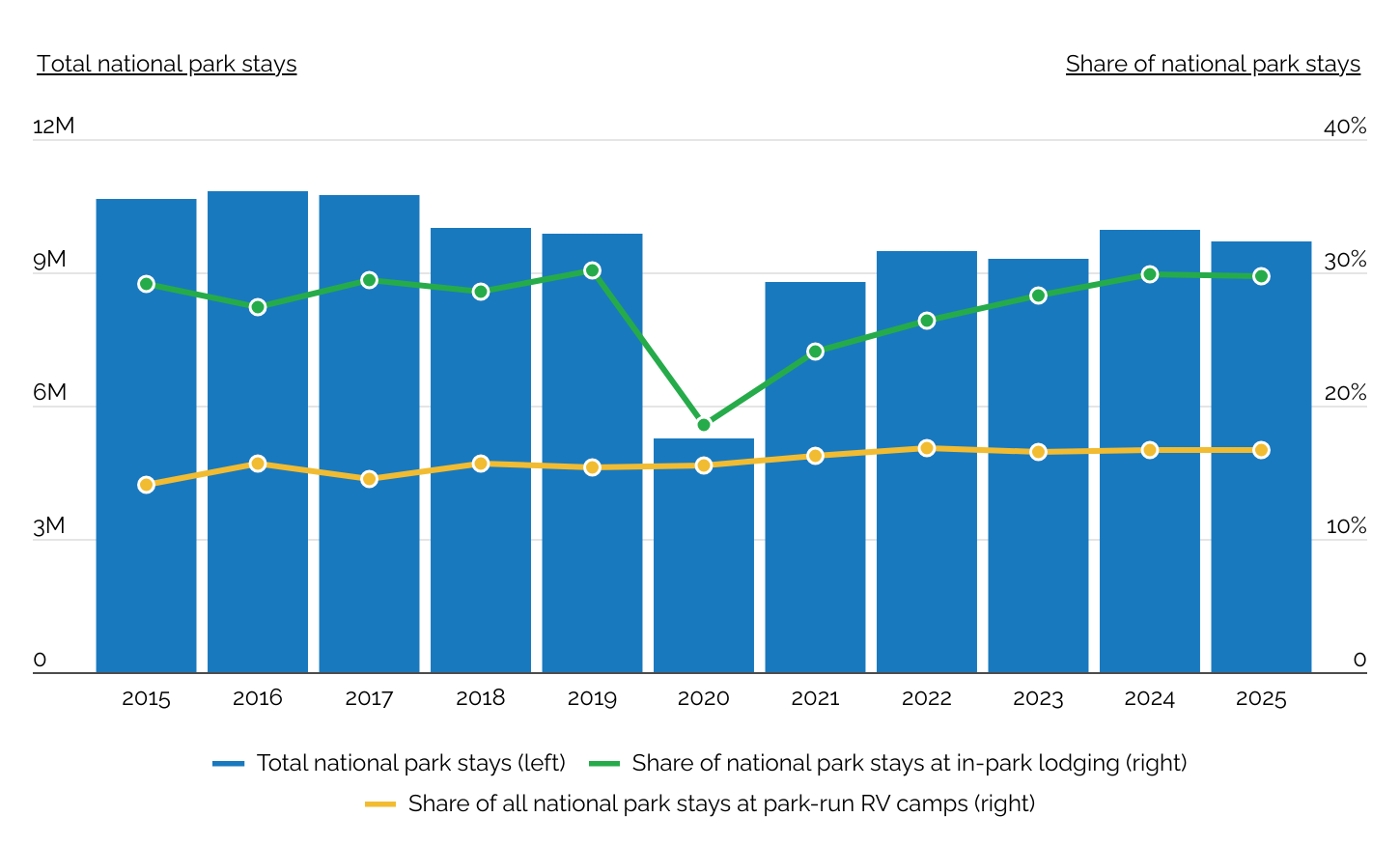
National park stays have yet to fully rebound from the pandemic. Visitors logged about 9.7 million overnight stays across the nation's 63 national parks in 2025, down 1.8% from 2019 and 10.6% below the recent peak of 10.8 million in 2016.
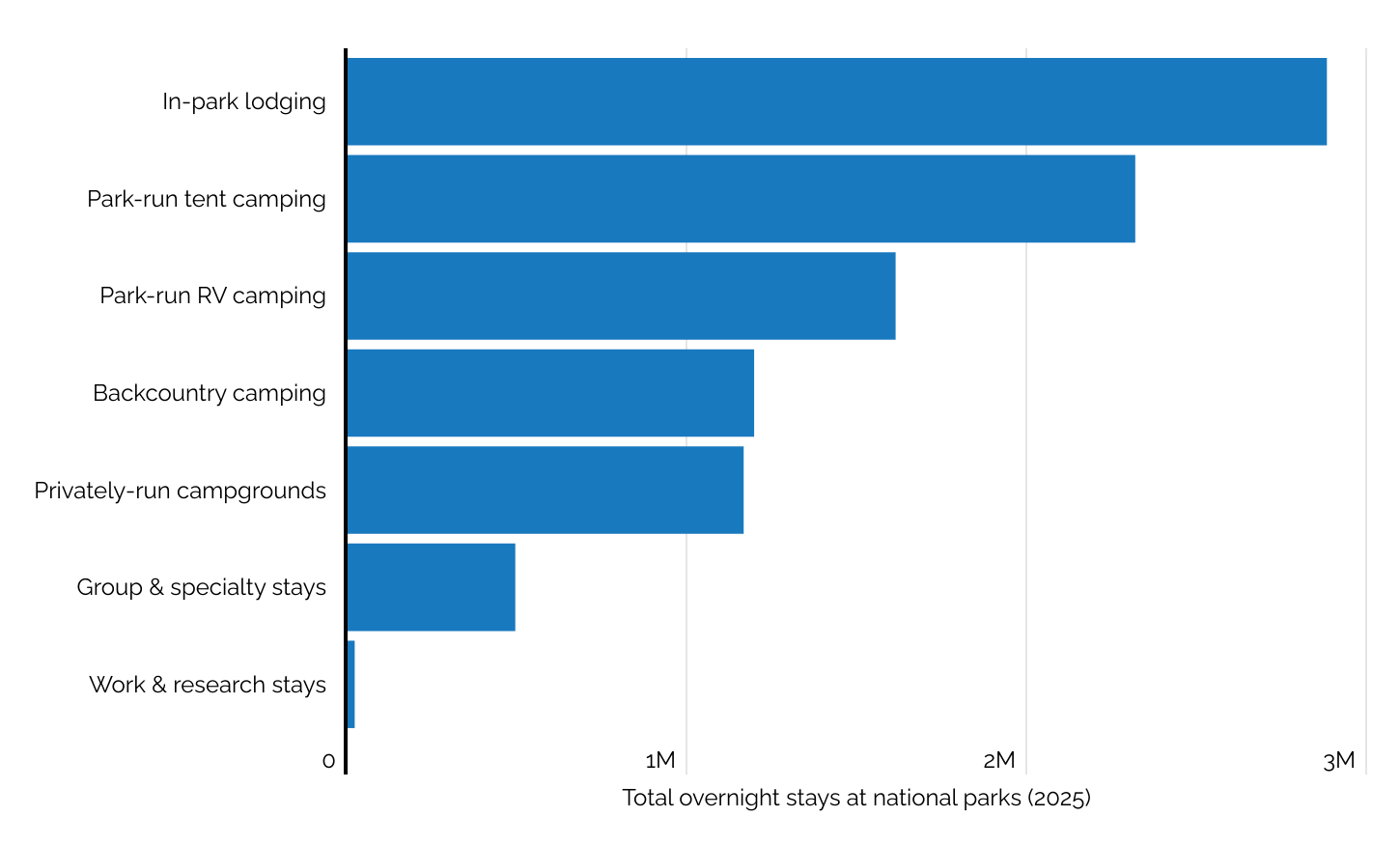
Comfort doesn't mean skipping the outdoors. In-park lodging was the single most popular accommodation type in 2025 with nearly 2.9 million overnight stays, while in-park lodging and park-run RV campgrounds together accounted for roughly 4.5 million stays—nearly half of all overnight accommodations.
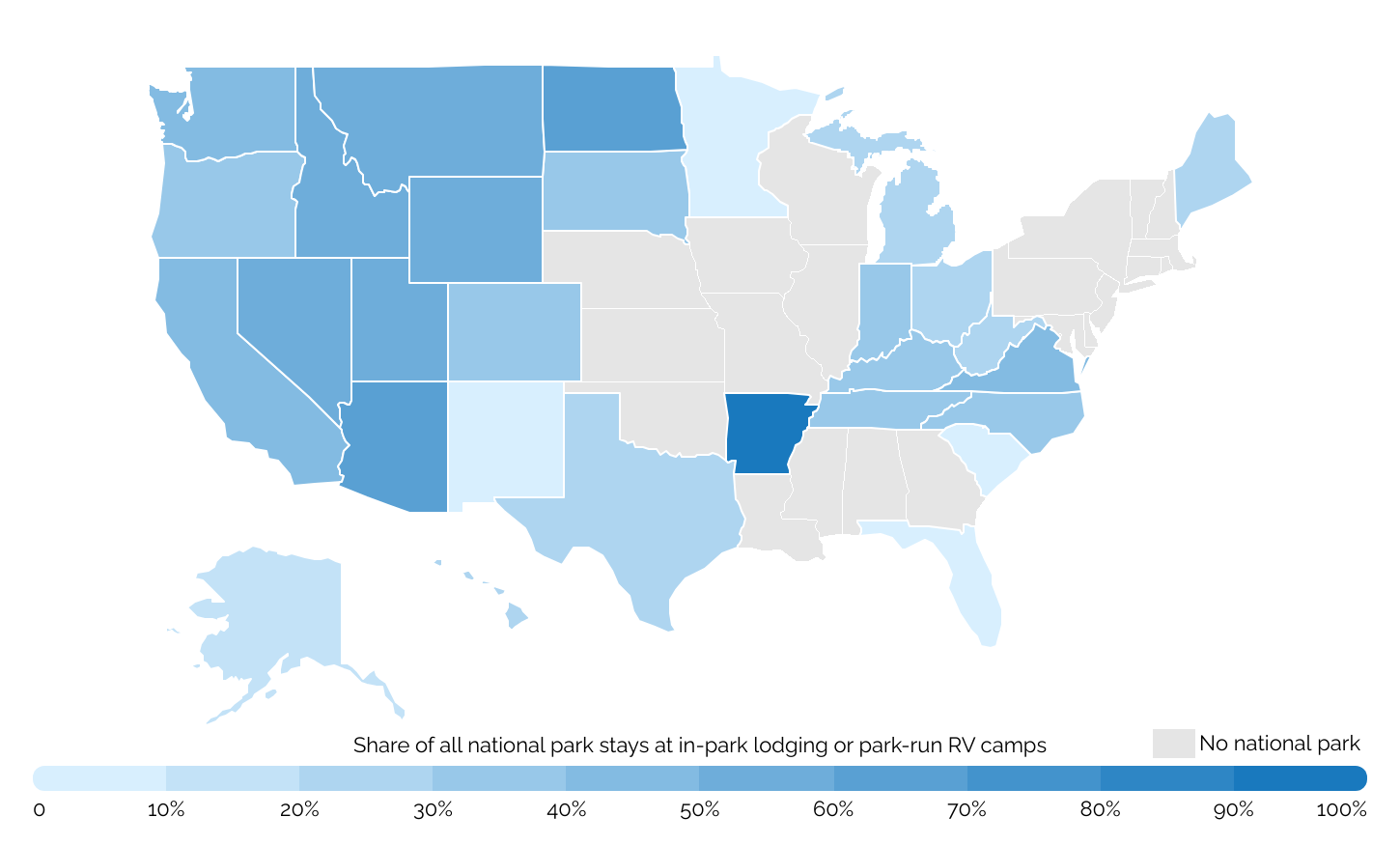
The West leads the way for soft-adventure travel. After Arkansas, which ranked first with 93.3% of overnight stays occurring at in-park lodging or park-run RV campgrounds, Arizona, North Dakota, Montana, Idaho, Nevada, Utah and Wyoming all reported more than half of overnight stays in these accommodation types.
Not all national parks offer the same overnight experience. Parks such as Grand Canyon, Yellowstone and Glacier pair historic lodges with developed campgrounds, while others, including Theodore Roosevelt National Park, rely almost entirely on RV and tent camping—giving travelers a range of ways to experience the outdoors without backcountry camping.
Trends in National Park Overnight Stays
National park overnight stay totals have not fully recovered to pre-pandemic highs
Sources: Dunhill Travel Deals analysis of National Park Service Visitor Use Statistics data
Overnight stays at U.S. national parks have not yet returned to their pre-pandemic high. Across the nation's 63 national parks, visitors logged about 9.7 million overnight stays in 2025, down 1.8% from 9.9 million in 2019 and 10.6% below the recent peak of 10.8 million in 2016. The sharpest disruption came in 2020, when overnight stays fell to less than 5.3 million as the COVID-19 pandemic prompted widespread travel restrictions, temporary park closures and reduced lodging capacity. Since then, overnight visitation has steadily recovered, climbing to 8.8 million stays in 2021 and reaching 9.7 million in 2025. With overnight demand remaining below pre-pandemic levels, travelers may find it easier to secure accommodations at some parks than during the record-setting visitation years of the late 2010s.
Not all overnight accommodations followed the same trajectory. While overall visitation declined sharply during the pandemic, park-run RV camping remained a relatively resilient option, maintaining a consistent share of overnight stays throughout the period. That stability mirrors broader travel trends during the pandemic, when many travelers turned to RVs as a way to vacation while limiting close contact with others and avoiding traditional hotels or air travel. Self-contained RVs allowed visitors to maintain physical distance and enjoy relative comfort while still accessing public lands, helping sustain demand for RV camping even as other forms of travel faced greater disruption.
How Visitors Stay in National Parks
While camping across all forms makes up the majority of stays, in-park lodging remains the top choice for national park visitors
Sources: Dunhill Travel Deals analysis of National Park Service Visitor Use Statistics data
Accommodation choices play an important role in shaping the national park experience. Whether visitors opt for a lodge, an RV campground or a backcountry campsite often reflects how they balance comfort, accessibility and immersion in nature. For travelers seeking a "soft adventure," in-park lodging and developed campgrounds that accommodate RVs offer a way to experience the outdoors while maintaining access to amenities that can make national parks more accessible and enjoyable.
Camping in its many forms accounts for most overnight stays at U.S. national parks, but no single accommodation type is more popular than staying at an in-park lodge, hotel or cabin. In 2025, visitors recorded nearly 2.9 million overnight stays at in-park lodging facilities, representing almost 30% of all overnight stays across the nation's 63 national parks. By comparison, park-run tent campgrounds accounted for about 2.3 million stays (23.9%), followed by park-run RV campgrounds with 1.6 million (16.6%), backcountry camping with 1.2 million (12.3%) and privately operated campgrounds with another 1.2 million (12.0%). Together, in-park lodging and park-run RV campgrounds accounted for roughly 4.5 million overnight stays—nearly half of all overnight accommodations in national parks—signaling a strong demand for soft-adventure options.
Where Are National Park Visitors Opting for Soft Adventure?
Visitors of national parks in Arkansas and western states most often stay at in-park lodging or park-run RV camps
Sources: Dunhill Travel Deals analysis of National Park Service Visitor Use Statistics data
The preference for soft-adventure accommodations is strongest across the western United States, where many of the country's largest and most visited national parks feature historic lodges and extensive developed campgrounds. Arkansas stands out as the lone exception outside the West, while much of the Midwest and Southeast recorded lower shares of overnight stays at in-park lodging or park-run RV campgrounds.
Arkansas ranked first, with 93.3% of overnight stays at Hot Springs National Park occurring in either in-park lodging or park-run RV campgrounds. Arizona followed at 65.1%, driven largely by overnight stays at the South Rim lodges and developed campgrounds in Grand Canyon National Park. Further north, states connected by Yellowstone National Park—North Dakota (64.4%), Montana (59.0%), and Wyoming (50.6%)—also ranked highly, although the park's overnight stays are fully attributed to all three states. Idaho (58.9%), Nevada (54.5%), and Utah (52.5%) round out the states where more than half of overnight stays fell into these soft-adventure accommodation categories.
Here is a summary of the data for Oregon:
Share of all national park stays at in-park lodging or park-run RV camps (2025): 38.7%
Total national park stays at in-park lodging (2025): 20,762
Total national park stays at park-run RV camps (2025): 0
Total national park stays (2025): 53,599
Total national park stays (2019): 54,224
Percentage change in total national park stays (2019–2025): -1.2%
For reference, here are the statistics for the entire United States:
Share of all national park stays at in-park lodging or park-run RV camps (2025): 46.4%
Total national park stays at in-park lodging (2025): 2,881,556
Total national park stays at park-run RV camps (2025): 1,612,526
Total national park stays (2025): 9,687,812
Total national park stays (2019): 9,862,444
Percentage change in total national park stays (2019–2025): -1.8%



Commented