THE DALLES — Many Oregonians with previously limited recycling options can expect significant changes starting this month as the state implements its new recycling modernization, designed to create a uniform collection list across cities with more than 4,000 people. The expanded roster of recyclables will be funded by companies selling products in the state.
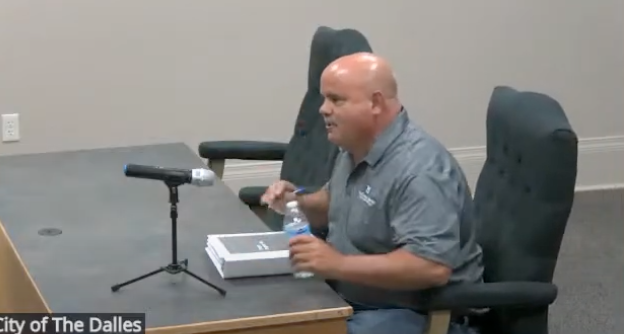
“The idea is to keep manufacturers and producers selling items into the state responsible for the recapturing and the recycling of those materials,” explained Jim Winterbottom, district manager of Waste Connections, during his July 14 presentation at The Dalles City Council meeting.
The Plastic Pollution and Recycling Modernization Act, established by Senate Bill 582, took effect this July, but fully implementing this recycling expansion will take time, Winterbottom said.
“By 2027, everything will be out in place, ready to go statewide,” he said. “I’m hopeful that The Dalles will be much more in front of that than most other cities.”
The legislation aims to not only recycle more types of objects, but also to make recycling easier for residents, keeping more waste out of landfills.
Sell here, recycle here
Approximately 4,610 residential customers in The Dalles will receive new 90-gallon recycling carts at no additional cost, thanks to funding provided by the Circular Action Alliance, the nonprofit organization selected by the Oregon Department of Environmental Quality (DEQ) to manage funds collected from large companies that sell products into the state.
These companies — including major corporations like Walmart, Amazon, Pepsi, Coca-Cola, and General Mills — are required under the new law to financially contribute to recycling efforts.
Winterbottom described this as a step to share costs with producers bringing the waste in, noting, “Hopefully we’re going to see some packaging shrink in size. Disposable razor and plastic gel this big is kind of needed at this point, so we’ll see what happens.”
What can now be recycled?
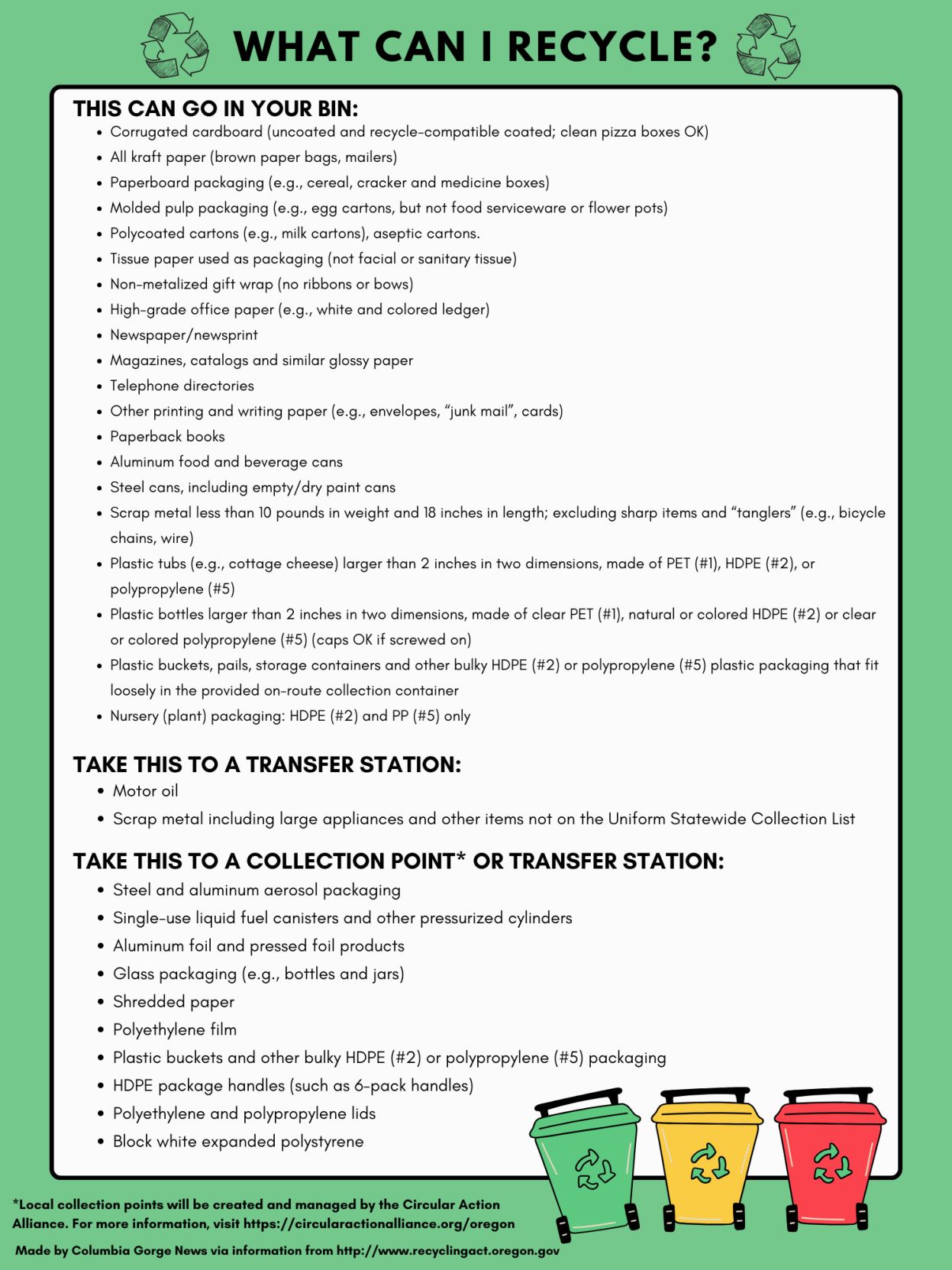
Previously restricted items, such as garden pots, buckets, yogurt containers, and various plastic packaging, are now acceptable in curbside bins.
Crucially, the focus will no longer be strictly on the resin identification numbers commonly found on plastics, but instead on clear descriptions and pictograms illustrating what materials are allowed.
However, certain items — such as aerosol cans, steel and aluminum packaging, aluminum foil, shredded paper, single-use liquid fuel containers, and polyethylene film — won’t be collected curbside. Instead, these materials must be taken separately to designated depot locations, like The Dalles Transfer Station.
Winterbottom explained that depot facilities will play a pivotal role in the new system, noting that “the goal with this program is to provide Oregonians access to a recycle drop within 15 miles of their home.”
A list of what can and cannot go into a recycling bin in Oregon.
Aileen Hymas graphic
The dangers of ‘wishcycling’
“Wishcycling” refers to placing an item in the recycling bin with the hope that it’s recyclable, without actual confirmation. Contamination of non-recyclable items was a major contributing factor to the waste backlog in 2018 when China placed stricter screening criteria on scrap metal, plastic and paper it received.
Winterbottom reassured councilors that contamination rates in The Dalles are currently low, thanks in part to the visible bins used until now, which allowed drivers to quickly assess contents. However, with the new carts, “once the lid’s open and it dumps into the hopper of the truck, then it’s hard to say,” he acknowledged.
Technology solutions, such as hopper cams, may be implemented in the future to monitor and address contamination issues. Winterbottom suggested that Waste Connections may implement a “three strikes your out” rule with customers who repeatedly contaminate the recycling bins.
Councilor Rod Runyon voiced some skepticism, reflecting on past recycling challenges: “Seems like a number of years ago . .. there was no market for the things we were recycling and they were really just getting dumped in the same place anyway.”
Winterbottom responded with cautious optimism, saying DEQ has implemented stricter permitting requirements to ensure materials are properly recycled. He explained that all recycling facilities “are going to have to be permitted to prove an end user is using the material for its intended purpose.”
Will this change trash fees?
Runyon also expressed concern over the creation of “a whole new bureaucracy,” to which Winterbottom conceded, “It’s an extra cost down the line to everybody who pays taxes.”
The financial impact on residents was also addressed directly, with Winterbottom indicating he does not foresee “any dramatic increases in fees at this time.”
Council and public participants raised questions about inclusivity and accessibility, asking whether cart labels would be multilingual. Winterbottom confirmed that labeling in up to 11 languages is currently under consideration by DEQ, highlighting a broader effort to ensure equitable access and understanding.
Throughout the transition, residents can seek detailed information and updates about the Plastic Pollution and Recycling Modernization Act via DEQ’s official website and the Circular Action Alliance site.



Commented