HOOD RIVER — Sheriff Matt English of Hood River County, keeping with regular updates to the County Board of Commissioners, presented Northern Oregon Regional Tactical Team (NORTAC) updates with colleagues Undersheriff James Burgett of Sherman County, Detective Sergeant and current team commander Dave Stefanini, and Sergeant and team leader Joel Ives.
They reported eight to 10 calls per year, with all calls being serviced peacefully to date. Stefanini mentioned calls that involved double homicides, search warrants for explosive materials, active shooters and more.
Their update for the Hood River County Commissioners concerned the need for a new armored vehicle. Currently, the team is using a vehicle from 1985, and not only is it constantly leaking oil and/or experiencing engine failures, its outdated armor is unable to stand up to rounds from any rifle. When weapons stronger than a pistol are involved, NORTAC has to call other agencies to help.
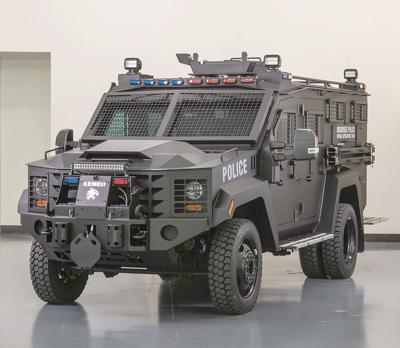
Three counties involved in the tactical team have discussed splitting costs for a new armored rescue vehicle, the Lenco BearCat, to respond to calls while keeping officers and bystanders safe.
NORTAC was started around 2014 to help respond to crimes, mental health and addiction crises, and other intervention or de-escalation needs that involve violence or dangerous individuals.
By 2020, the size of the team and region of service had both grown, now including more than 20 men and women from medics to negotiators and support staff. NORTAC partners with Hood River, Sherman, Gilliam and Wasco counties, and offer their services to other areas if needed.
Commissioner Arthur Babitz pressed for more information surrounding the need for an armored vehicle, curious about public response and “the narrative about militarization of policing.” He asked what community reactions have been and encouraged the tactical team to get the word out about their case.
Ives and his team responded, explaining that the Lenco BearCat looks tactical but is really for protection when dealing with guns and bombs.
“We’ve had situations where we’ve had to pull armor in front of houses because somebody was inside shooting an AR-15 or some other type of weapon, or we’re dealing with explosives … It’s really about protecting our personnel and protecting the community,” he said.
He shared another story of an active shooter just behind the County Administrative Building about three years ago, where a deputy was shot in the neck with a shotgun because he was hiding behind a patrol car that provided insignificant cover and protection.
“Really, what these vehicles are often used for is, if you have somebody that’s injured or down and you can pull that up and get them inside the vehicle and safely extract them,” said Ives. He said this piece of equipment is something that can be found in most every region of the state.
The narrative that nothing extreme or dangerous happens in this region is false, the tactical team said, explaining that a new vehicle would help with faster response times and higher capacity for threats that require de-escalation, negotiating, extraction or other peaceful resolutions and nonlethal tools.
Though they have been in practice for close to a decade, the tactical team feels they have been successful because of the fact that not many know of their existence, proving that they are working without deadly force and employing peaceful, de-escalation tactics in the region.
Funding for the new armored vehicle is still in the works and the NORTAC team is open to public discussion.



Commented
Sorry, there are no recent results for popular commented articles.