
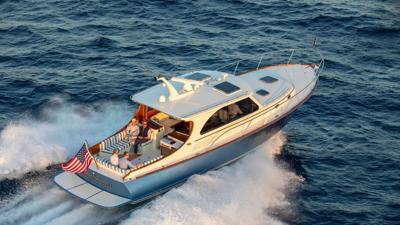
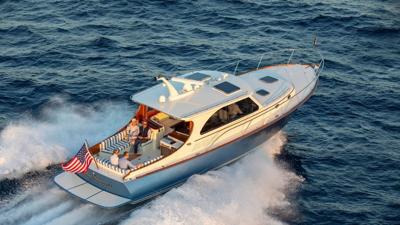
The yacht industry is undergoing a fundamental restructuring. No longer reserved for the ultra-elite owner, time on the water is becoming a modular, customized commodity. While the industry is set to double in value over the next decade, the real growth is happening in how guests use their hours on board—prioritizing connection, and 'low-friction' access over traditional ownership.
From Hinckley’s new 'social-first' Picnic Boat 45 to Armada Club’s membership model that turns docked megayachts into private venues, the barrier to entry is dissolving. Even Dream Yacht Worldwide is challenging the status quo by offering per-cabin bookings that allow travelers to join a curated itinerary without the responsibility of a full-crewed charter.
Smaller Yachts Take On A Bigger Role
Ownership in the 30–50 foot yacht segment is projected to grow at the fastest rate in the recreational boat market, according to a new report. Hinckley’s history traces back to 1928 on the working waterfront of Southwest Harbor, Maine. The company built its reputation on craftsmanship and seaworthy design, then moved into sailing yachts and advanced composites as the brand evolved.
The Picnic Boat, introduced in the 1990s, continues that lineage, and Picnic Boat 39 reflects how its clients want to spend time on the water. The design centers on seating, sightlines, and flow around conversation.
“We consistently heard that owners use their boats to gather, and they wanted that space to feel intentional, connected, and beautifully crafted,” said Scott Bryant, Vice President of Sales and Marketing at Hinckley.
“The biggest shift we’ve seen is toward simplicity, but not at the expense of quality,” says Bryant.
Ardent buyers stated a clear priority of creating experiences and spending more time with family. They want sunset cruises with friends, weekends on the coast. But they don’t want the hassle of coordinating a captain and crew on a large vessel.
“They want to step aboard, leave the dock easily, and enjoy the water without layers of stress,” explains Bryant. Every element of the Picnic Boat 39 layout supports connection so that the person at the wheel remains part of the group rather than set apart.
“Every seat is integrated into the experience, including the helm. Sightlines, ergonomics, and materials were refined to encourage conversation without sacrificing performance. It’s a highly social platform, built with the same composite construction and engineering discipline that defines every Hinckley,” continues Bryant.
It’s no surprise that a Hinckley Yacht draws attention as it enters a harbor. The design is iconic, the finish unmistakable; it’s the kind of boat people pause to watch as it sails by. That recognition comes naturally, yet it doesn’t drive the decision to own one.
Access Without Ownership
Not every host wants to own the setting, and Armada Club removes that step entirely by turning superyachts into private venues that can be reserved for a single evening. Members can board fully staffed vessels designed for entertaining. Dining rooms, open decks, and wellness spaces sit ready for use in port or at anchor.
“Some of the world’s best chefs are working on yachts, and the interior and exterior dining spaces often surpass even the finest five-star resorts,” said Claire Hagen, co-founder of Armada Club.
Onboard gyms, spas, and treatment rooms allow members to use yachts as private wellness spaces without committing to an entire charter. “I see the wellness side becoming equally as popular as dining, because some of the best gyms, spas, and facilities in the world are on board,” Hagen said.
Security has become increasingly important for ultra-high-net-worth individuals and family offices as anxieties regarding privacy and digital surveillance continue to rise. Cybersecurity is among their top priorities, with one report showing that 83% of respondents expressed concerns about deepfakes and identity theft, and incidents have increased sharply since 2023.
That shift has contributed to growing interest in members’ clubs. At the same time, the global yacht charter fleet has expanded to 3,829 vessels over 24 meters, up 7.4% year over year.
“For many, going out for a meal is not an option,” said Jonny Harris, founding director of Armada Club. “Even when they hire private spaces, there is always a risk to privacy.”
Armada Club treats the yacht as a controlled setting, keeping every detail contained on board. Guests dine, meet, and spend time together on the water, away from crowded dining rooms and public venues.
The Social Horizon
Dream Yacht Worldwide reports growing interest in a different path onto the water—shared sailing—which removes the need for ownership or booking a full private charter. Travelers can book a single cabin on a sailing yacht and join a small group, usually no more than a handful of couples, for a week at sea. A skipper handles navigation, and a hostess prepares meals so guests can settle in without having to plan or coordinate.
That structure creates a social dynamic that differs from both ownership and exclusive access. Guests arrive individually or in pairs and share the journey along the same route. Days are split between sailing, swimming, and gathering on deck, moving between anchorages, and sharing meals and excursions together.
The company welcomes more than 130,000 travelers each year, and interest continues to rise among U.S. travelers choosing cabin cruises on small sailing yachts, each limited to six cabins, as an alternative to traditional cruises. “We’re seeing a lot of travelers who have never considered a sailing vacation before — couples, solo travelers, even friends traveling together — who want the private charter experience but don’t have a full group or don’t want to plan everything themselves,” said Loic Bonnet, founder of Dream Yacht Worldwide.
Demand has accelerated in key destinations. Thailand has seen a 220% increase in revenue since 2023, with bookings more than doubling. Interest in French Polynesia has rebounded; 2025 was the company’s strongest year, and revenue was up 75% among U.S. travelers. The Bahamas continues to attract steady demand, particularly in quieter regions such as the Abacos.
“You’re not one of a hundred passengers, you’re one of maybe ten,” Bonnet said. Smaller yachts anchor close to shore and access areas that larger vessels cannot reach, allowing guests to swim off the stern or step onto less-traveled beaches.
A typical day is pretty fluid, which is part of the appeal, according to Bonnet. Morning light spreads across the deck as the boat moves toward a new anchorage. Guests slip into the water before breakfast or sit with coffee as the shoreline shifts. Time passes between short excursions, swimming, and quiet hours at anchor. “Afternoons are usually relaxed — sailing, reading, or stopping in a quiet cove — and then evenings are social, with a shared dinner on board and time under the stars,” says Bonnet.
“We also hear a lot about the social side, sharing meals, getting to know people from different places, and that sense of connection that naturally happens in a small group,” Bonnet continues.
Ultimately, this shift represents a democratization of the horizon. By stripping away the traditional barriers of entry, these models invite a new generation of travelers to claim their place on the water.


Commented