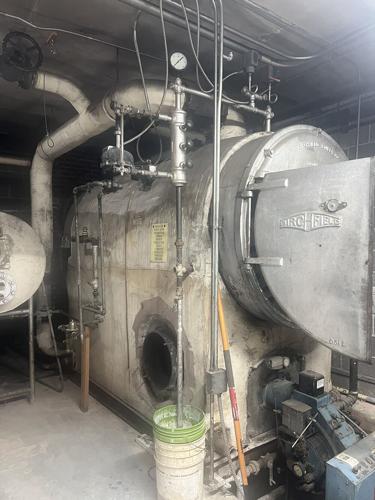
Replacement of the 100-year-old boiler at Mosier Community School, scheduled to be completed with federal Renew America’s Schools Funding dollars through the Department of Education, is up in the air.
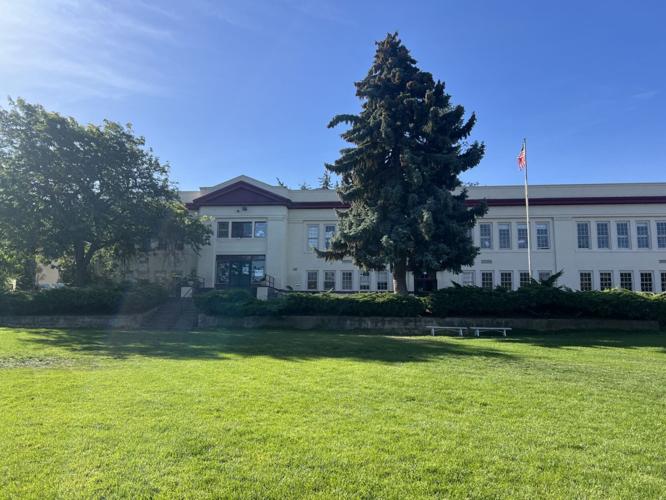
MOSIER — Until about a month ago, $860,000 in Department of Energy (DOE) funding was on track to help Mosier Community School (MCS) upgrade its 100-year-old building, where an equally old oil boiler provides the only heat and off-the-shelf window air conditioners give the only relief from 100-degree summers.
Shortly after Donald Trump’s presidential inauguration, the certainty of that money vanished — along with the grant’s website, and most of its employees.
For four weeks, MCS’ contacts at the program went silent. Phone calls and emails went unanswered. Grant documents could not be submitted.
Michelle Dawkins, executive director of MCS, would learn that some of the program’s workers had been fired, as part of the Trump administration’s efforts to downsize the government and dismantle federal spending. The 23 other schools also awarded Renew America’s Schools Funding said they have been awarded were experiencing similar issues.
A $500 million DOE program, Renew America’s Schools was created by a bipartisan bill to promote the installation of energy improvements at K-12 public schools throughout the U.S. Funding was awarded to schools in 2022, 2023 and 2024 — totaling $372.5 million for about 410 different facilities, according to the project’s site.
Replacement of the 100-year-old boiler at Mosier Community School, scheduled to be completed with federal Renew America’s Schools Funding dollars through the Department of Education, is up in the air.
Contributed photo
Brent Foster of Green Thumb Projects LLC, who wrote the grant, reached out to other schools who were awarded grants through the same program. Together, they’ve held virtual meetings every Monday, troubleshooting. “That seems to have helped our cause a little bit,” Dawkins said.
They’ve also been writing letters to Rep. Cliff Bentz and state senators Ron Wyden and Jeff Merkley.
As of last Tuesday, she still couldn’t say whether the grant money would come through. But a contact at the DOE has reappeared. Mosier School has a contract with the government, having already been awarded the funds, and recently was able to submit a few grant documents. “Last week, I had no hope, and this week I feel I have a little sliver of optimism,” Dawkins said.
Every year, MCS spends about $30,000-$35,000 on heating oil for the asbestos-wrapped, ancient boiler in the basement. “Our maintenance person ... he is keeping it running — barely,” Dawkins said. The grant would save them about $20,000 or $25,000 every year, she estimated.
For now, summer school is impossible with Mosier’s 90 or 100-degree days.
“It would be too hot for kids to be in the building.” In winter, the ancient boiler’s death could leave students retreating home in 20-degree cold.
The HVAC will also improve air filtration. “Right now we have a lot of the flu, and strep throat and coughs and cold. So, having air circulation to help that out ... will help our students be healthier.”
With that bit of hope, work on Mosier’s HVAC plan is moving forward again, with the support of the MCS board. If worst comes to worst, MCS will have to pay for the project itself, putting other safety upgrades on hold.
“We were counting on that $860,000 grant in order to make this happen,” Dawkins said. The grant would have enabled them to use their own extra funds for other necessary up-dates: Install solar panels on the roof to offset the HVAC’s electricity costs, replace old windows, change fluorescent lights to LED, and replace worn-off treads on century-old stairs (“We have an incredible amount of stairs here ... they’re worn and slippery,” Foster said).
MCS serves 170 kids and can’t get a bond on the ballot like the larger schools in Hood River or The Dalles. The school has already spent its own money in significant preparations for the HVAC installation.
MCS was awarded the grant in 2022. Some schools, awarded their funds in 2024, didn’t yet have a signed contract with the government, which leaves them in a worse position. “These grants are not easy to write. They’re very lengthy. I feel for those schools, and hopefully, they’ll follow through,” Dawkins said.



Commented