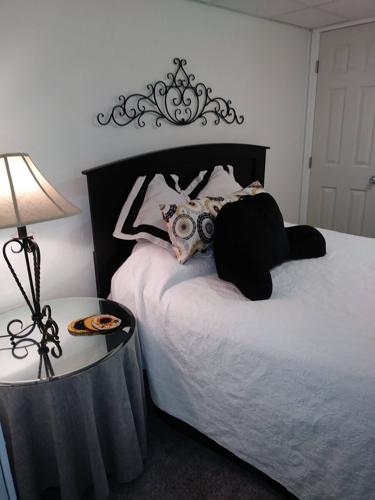
Create a room that is fully furnished with coordinating rugs, lamps, bedding, and towels. You are creating a space more similar to a hotel room than to a dorm room.
Last week covered the first five steps as you rearrange your house (and your thinking) to rent one room to your first lodger. This week the preparations continue with creating the room to rent and making room in your kitchen so you can share it.
6. Re-imagine that spare room. I have tried renting furnished and unfurnished. Furnished is the way to go. You are renting a single room, not an apartment. Lodgers won’t need as many things to move into your house. You can charge more for a furnished room. Anything you buy for it will pay dividends for years.
Because you own and maintain all the furniture, you will never encounter any freeloading bedbugs, termites, or lice that might be stowaways in on a lodger’s furniture. It is extra work (and cost) on the front-end, but you will begin to see furniture and everything else in that room as valued tools that are helping you craft a handsome profit. Looking for inspiration? Search “Furnished Room for Rent.” Note your reaction to the rooms with no curtains, bedspreads, or art on the walls. Compare how you feel as you look at those photographs. Put yourself in the shoes of a weary worker, who needs a welcoming and restful place to spend each evening, and perhaps to use to work remotely now and then. Which photos do you think indicate the property owner cares about quality of life?
Create a room that is fully furnished with coordinating rugs, lamps, bedding, and towels. You are creating a space more similar to a hotel room than to a dorm room. Make sure the painted walls are in good condition. The first part of creating the room has to do with staging it for the ad and for the walk-through visit with prospective lodgers. I always mention to lodgers that they are welcome to change the bedding and the art on the walls once they move in. You want your lodger to feel at home insofar as possible in that room.
Purchase a $10 over-the-door shoe holder and install that inside the closet door. Purchase a few large, attractive metal hooks and install them high on the wall near the closet or the room door. These open up floor space in any room, making it easier for the lodger to feel at home once inside the room.
If you don’t already have them, purchase light-blocking drapes for windows. People work all hours nowadays, and need the ability to sleep in their rooms during the day. Put a coaster on the nightstand by the bed for a water glass, and new box of tissues.
If you have wood or laminate floors, buy large, thick area rugs or throw rugs for the room. Those help make the room quiet and also more comfortable for the lodger. I prefer to buy semi-expensive throw rugs that are oversized but small enough that I can take to them to the nearby laundromat to wash in the extra-large washing machines there. I like to hang them out to dry on my backyard clothesline. Also, with a throw rug, if the lodgers accidentally ruins it, you can throw it away and then deduct the cost of buying a new one from the damage deposit.
Create a room that is fully furnished with coordinating rugs, lamps, bedding, and towels. You are creating a space more similar to a hotel room than to a dorm room.
Contributed photo
Clean the floors so that they could pass a military inspection. Wash the drapes. Clean the windows inside and out, along with the screens. Dust and polish all the furniture. Clean and line-dry all the bedding. Thoroughly clean the insides of all dresser and nightstand-drawers. I always purchase two new pillows for the bed; I set those, still in the plastic wrapping, atop the freshly made bed for the new lodger on move-in day. I tuck the pillowcases right under the sheet at the top of the bed. I show them where the pillowcases are; that way they know the pillows are new. Also, each bed is furnished with an electric mattress pad beneath those fresh linens. That way, no one complains they are cold at night, and I save money on the heating bill by turning off the heat at night during the winter.
If at all possible, empty one of the hall closets near the bedroom so that the lodger has the closet in the room, and also a second closet for more items (usually off-season clothing). Living in an area that has four seasons requires a place to store extra clothes, boots, hats, and gloves.
Once you clean the room, hang a few pieces of art on the walls, put a live plant on the dresser or the windowsill, and set a bouquet of fresh flowers on the nightstand. Take many photographs from all angles. Take some photos with the drapes closed, and the lights on, and some with the drapes open. Open the closets and photograph those also. All of these will be useful when you communicate with potential lodgers. You can offer to send them photos of the room for rent.
7. Make space in your kitchen. It helps to look at your kitchen as a kind of parking lot where every “vehicle” (food and equipment) is paying for space, either by you or by someone else using it. It requires thinking hard about what you really need, to live day to day.
People who have moved around a bit will find this easier. It would be tough for people like my friend who keeps five big appliances poised for work on her counters and her freezer stuffed with single-serving-sized plastic bags of complicated meals she prepares in big batches. To share a kitchen, shift your focus from long-term storage of foods you prepare ahead of time, to short-term parking of foods you’ll prepare fresh each day. You are giving up “parking space,” so to speak, so that those spaces become money-makers for you. Empty half your freezer and half your refrigerator to make space for the lodger’s food. Empty two cupboards in the kitchen for the lodger’s groceries and any special cooking tools they like to use that you don’t already have, such as a wok, a Dutch oven, or a coffee grinder. Put into storage all of your own appliances save the one you use every day, such as a coffeemaker. That clears valuable kitchen-counter real estate for your lodger and the one appliance that lodger uses every day.
It’s important to model, always, the behaviors and habits you expect of lodgers. To that end, the only appliance I leave on my counter is a stainless-steel, electric teakettle — and they are all welcome to use it. That leaves counter space for the brutish blender my day-sleeper lodger uses each afternoon to make the carbo-loading smoothie for her busy night tending bar. Put your precious, fancy dishes and silverware into storage for now, or on a top shelf high out of the way, so lodgers know those aren’t for every day. Leave in the cupboards for both you and your lodger to use a collection easily replaceable glasses and some plain, inexpensive dishes. Retailers sell single plates, cups, saucers in white that suit most tastes. As for silverware, pots, and pans, make sure these, too, are items easily replaced. Make sure you have two can openers, two corkscrews, and two paring knives in case one of these is temporarily misplaced.
Watch how your cupboards, like you, open up to make room for the new. For example, one of my current lodgers, a woman from Bejing, has room near my three teacups for the delicate, footed soup bowl she brought with her from China. Near that she keeps a vase in which she stores her bamboo chopsticks, also a memento from her home, so far away. Seeing those things there every morning makes me smile, makes me feel a part of something bigger.
Opening my freezer one morning a few years ago to see a two-foot-long, folded-over black beef tongue parked there freaked me out, though. My sweet, tiny, Bolivian housemate who was sipping tea at the table laughed at my gasp. She explained it was for a special, weekend feast she was planning for family members living nearby. It’s fun to know how my tiny galley kitchen is a space for connection and understanding; it’s become my own little international food court.
The first, biggest step in sharing your house is adjusting to strangers being in it. Imagining strangers in your kitchen to accommodate just one other person is at first so stressful. You will learn how to trust your lodgers aren’t going to burn your house down, clog up your sink, ruin your refrigerator, or destroy your countertop appliances.
Full disclosure: I have had perfectly good lodgers make mistakes and ruin a few things in my kitchen. One day I came home from teaching to two of them, standing in the kitchen like guilty 9-year-olds, fessing up how they had set a plastic, electric tea kettle onto a still-warm electric stove burner, thereby simultaneously ruining both a burner and a tea kettle. I sent a silent prayer to the still-unnamed patron saint of property owners (is there one?). I did not lose my temper or a lodger. I replaced the items that afternoon. The purchases were a tax write-off anyway.
Keep in mind the many colleagues in your house-sharing business: Your plumber, handyman, appliance repair person, insurance agent, lawn mower, snow-shoveler and tax accountant (more on the tax advantages in a later column). You are never really alone. Welcome to the upside of the new economy. The letting-go process allows for so much letting-in, letting-be and making room.
Next week: Composing your ad and vetting lodgers.
•••
The information provided in this column does not, and is not intended to, constitute legal advice. The information herein and links to other websites are to provide readers with general information. Please contact your attorney for legal advice with respect to any particular issue. Views expressed herein are those of the writer, not those of the publication.





Commented