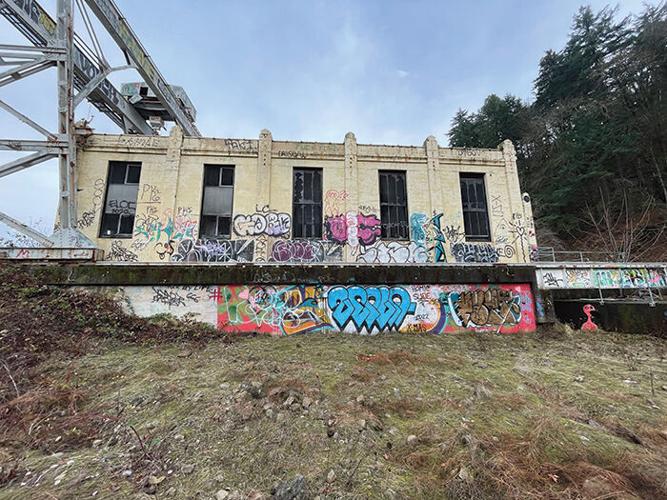
The powerhouse building, originally built in the very early 1900s, is now covered in graffiti and filled with trash. The county is considering boarding it up. Laurel Brown photo
The powerhouse building, originally built in the very early 1900s, is now covered in graffiti and filled with trash. The county is considering boarding it up. Laurel Brown photo
HOOD RIVER — From recreation to Indigenous uses that date back centuries, the Hood River is a cherished resource in the Gorge. However, the last decade has shown uncertainty as dumping and unauthorized camping continues to take over public lands.
The Hood River was once the site of a small hydroelectric dam and powerhouse building built in the early 1900s. Visible from Indian Creek Trail, the land was deemed the Powerdale Corridor and the dam operated until 2006 when it was ruled economically unviable.
After consideration from a large stakeholder group, 400 acres were split between Hood River County and the Columbia Land Trust around 2013. Columbia Land Trust (CLT) is a private nonprofit nature conservancy out of Vancouver, Wash.
As a condition of the new ownership, CLT granted a conservation easement along the corridor that prohibits commercial or industrial uses except for a few existing orchards on the edge of the parcel. Camping is not a permitted land use.
Goals for the Powerdale Corridor include protecting wildlife, enhancing habitats, retaining recreational uses, and reserving tribal fishing and treaty rights. Any interest in repurposing the powerhouse were rejected due to conservation efforts and road access concerns like dangerous highway traffic.
Stakeholders are still involved in an advisory committee and multiple groups assist with management planning for the corridor: Hood River Watershed Group, Hood River Valley Parks and Recreation District, Oregon Department of Fish and Wildlife, and the Confederated Tribes of Warm Springs. Kate Conley, natural area manager from CLT for the Powerdale Corridor, said, “It’s a joint management agreement in a way.”
Unfortunately, Powerdale maintenance has proven difficult due to public misuse such as littering and dumping, fires, camping, and more. Together these entities are working to reevaluate the property and create a cleanup plan for the land.
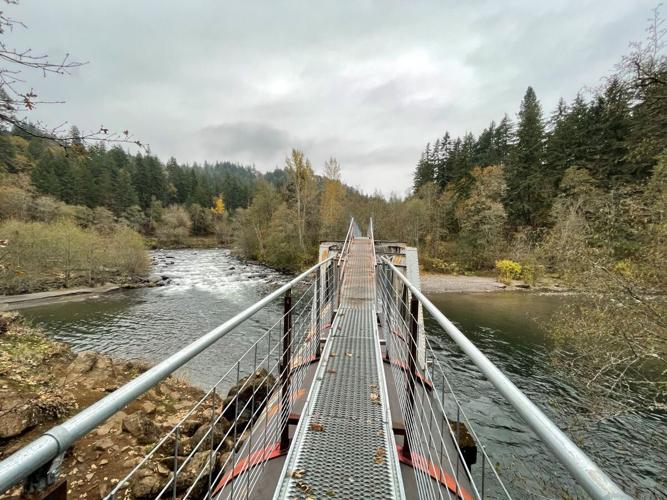
The Hood River Pipeline trail is an elevated walkway through the Powerdale lands. Here it crosses high over the Hood River.
Photo by Laurel Brown
Problems and degradation of the park
Matt Jordan, county maintenance and facilities supervisor, personally attested to deterioration of the land over the last 15 years and explained a general feeling of the space being a “No Man’s Land.” He said he’s witnessed the transformation to abandoned camps and trash piles that only seems to get worse.
Jordan said they installed a trail camera and discovered that most activity at the powerhouse occurred at night between midnight and 4 a.m. He said cars were in and out with frequent dumping, littering, camping, and fires. Shortly after, the camera was stolen.
Trash pickup occurs once per week around the parking lot, but garbage inside the powerhouse is at least ankle-deep. Behavioral problems related to mental health and drug use have been reported, but outreach teams for homelessness and substance abuse were removed from the location due to safety concerns.
Jordan said he wants to change the perception of “anything goes” in the Powerdale Corridor but recognizes the need for intervention when displacing campers. Mid-Columbia Community Action Council (MCCAC) and Mid-Columbia Center for Living have resources for those people.
Both organizations operate with different parameters but must ultimately collaborate to diagnose and deal with homelessness and behavioral problems along the Hood River. Al Barton, executive director at Center for Living, and Kenny LaPoint, executive director of MCCAC, reported there are more services available today than ever before in the Gorge, but many people refuse or deny the assistance.
The goal is to support people until they have their own healthy living situation in the community. “I personally am not interested in running shelters for the rest of my career, I’m interested in getting people in a position where they don’t need shelter anymore … we need to provide resources for people [camping in the Powerdale Corridor],” LaPoint said.
There have been discussions with surrounding property owners in Hood River in case campers move to their land. The shelter in Hood River closed on March 31 and will not reopen until the colder months, so a noticeable increase in the homeless population is already anticipated.
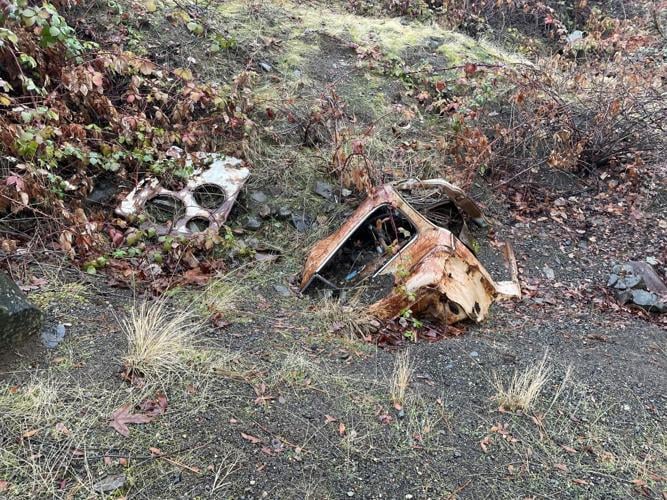
An old vehicle is rusted and buried near the Powerdale parking lot.
Photo by Laurel Brown
Park designation and cleanup plan begins
A management plan was created when CLT and the county took ownership of the Powerdale lands, but a new cleanup plan is needed to get the space back in order. Step one is designating the land as a park, which the Hood River County Board of Commissioners approved in March. The official designation will happen once a formal proposal is presented.
This will not be a ribbon-cutting occasion but a choice to help with site management. Park status will assist the sheriff’s office in enforcing established rules from Hood River County Revised Code Title 12. Patrol efforts will keep the area safe, impose closing times, and enforce rules against littering, digging, or camping.
Funding and installing an automatic gate, waste removal and camp cleanup, and sealing the powerhouse come next, but estimates for these services range from $15,000 to $50,000. Conley mentioned that, due to resources, CLT has taken on most of the responsibility for management of land entities thus far.
Infrastructure and funding for the gate must be secured if the county wants their efforts to be sincere. All steps must be taken at once to ensure cleanup is effective, which may include temporary closure of the space. A small parking fee for future park maintenance was also suggested.
Recently The Watershed Group has offered to help raise funds for the first cleanup phase of the land. There are also anticipated future funds for fish and salmon habitat care, though this does not yet help with installing a gate.
The county hopes to find synergies in recreational use, habitat restoration, and camp cleanup as the Powerdale park designation continues.



Commented
Sorry, there are no recent results for popular commented articles.