
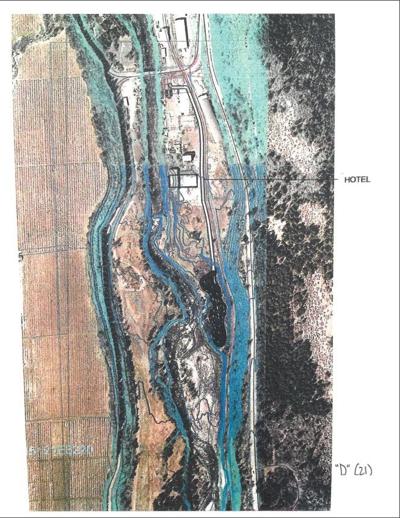
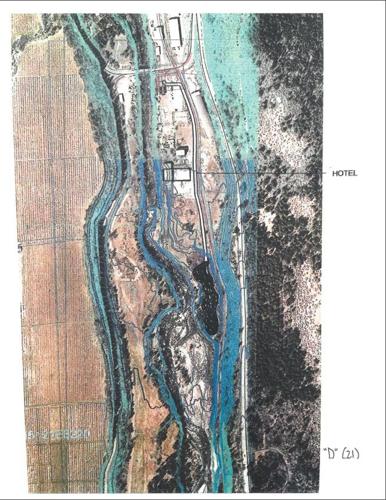
The destiny of DeeTour hotel, an add-on to a proposed concert venue at Dee Highway and Lost Lake Road, remains to be seen.
Dozens packed county chambers Monday night for an appeal hearing on the project, but Hood River County Board of Commissioners granted a request from the developer to push back the meeting by one month.
Proponents with Apollo Land Holdings LLC — land owner Jason Taylor and several attorneys — and opponents, including Hood River Valley Residents Committee leaders, were present. A smattering of other local residents who testified at previous planning commission meetings attended. However, the hearing never began in earnest.
Commissioners voted 3-0 to continue the hearing on Dec. 19, due to only three board members being eligible to vote on the matter that night.
The board was down by two: Chair Ron Rivers was visiting family on vacation; Commissioner Bob Benton recused himself due to a potential conflict of interest with Apollo, and sat in the audience. That left a trio: Commissioners Les Perkins, Karen Joplin, and Maui Meyer.
Will Carey, county legal counsel, said the Hood River County charter requires at least three votes to make a decision — regardless of whether any members are recused.
“Everyone can see we only have three decision makers present, and by our county charter it takes three affirmative votes to (move) on a decision,” Carey said.
He said in similar cases the county’s precedent is to offer the “moving party” the chance to pick up the hearing at a later date.
“So traditionally, as far back as I can remember … the decision makers have allowed the moving party to request a continuance until a date when we can have (the full board) … I think that should be offered.”
Mike Robinson, an attorney for Apollo, took the county up on their offer.
“Thanks, Mr. Carey, for letting us know about the county charter provision. We just learned about that. Our request is that you continue the hearing until the 19th of December,” Robinson said.
“(We) want the entire (board) to vote on this to hear it … it’s my understanding that your county administrator expects all four members to be physically present at that night. Our request would be that you continue it, leave the record open of course, folks can put in evidence between now and then. I’m sorry that folks are here tonight, I hope that you’ll grant our request.”
Commissioners briefly considered conducting part of their hearing, but then decided to okay the continuance. Commissioner Les Perkins called it a “disadvantage” in having a fourth member — Rivers — absent, and moved to table the hearing. The three commissioners agreed.
“Sorry everybody,” Meyer told the audience as they filed out.
At issue was an appeal on the controversial 50-room hotel. In early 2016, planning staff approved Apollo’s plans, but Planning Commission denied it, siding with an appeal by HRVRC. Apollo representatives launched their own appeal in response, which brought the conflict up to the elected board of commissioners this week.
Until December’s meeting, the record remains open for limited comments on the project.
Carey explained “they can submit information speaking the record” if the parties have standing, which means they have testified before.
STRs, marijuana
Hood River County’s emerging legislation on two hot issues — short-term rentals and marijuana businesses — drew close to the finish line Monday.
The board held a first reading on Ordinance No. 338, which covers both matters, closing a series of hearings that have stretched for months. Commissioners plan to hold a second reading on Dec. 19 to adopt the rules.
The ordinance limits STRs with a cap of 100. In total, up to 25 rentals will be allowed on farm or certain forest zones via a permit. They will be prohibited on F-2 (primary forest) land and industrial zones. STRs on farm and forest land will be relegated to the “primary dwelling” (or home on the property). They can only be rented out 180 days or less per year. The permit would be valid for two years.
The marijuana ruleset allows growing operations in farm and some forest zones, processing in exclusive farm use (EFU) and industrial zones, and retail outlets (dispensaries) in commercial zones. All marijuana businesses will be banned in rural residential zones.
Hearings in October clarified rules for lighting equipment, setback from neighboring properties, and a provision requiring only one marijuana business license of a kind per property.
A buffer requires marijuana businesses to be at least 1,000 feet away from schools, parks, and several other public gathering places. There’s also a 50-foot setback from neighboring property lines, or 80 feet from an existing dwelling.
The board meets again to adopt the rules, and continue the DeeTour hotel appeal hearing, at 6 p.m. Monday, Dec. 19, at 601 State St.


Commented