
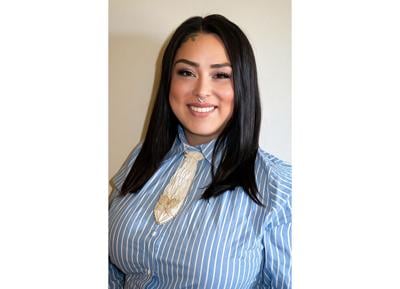
By Carina Miller
The Columbia River Gorge Commission and I are about the same age. We’re both elder millennials.
We both showed up in the late 1980s. We’ve survived recessions, culture wars, end-less criticism, and more identity crises than we’d probably like to admit. We’ve both spent much of our existence being told what we’re supposed to be by people with very strong opinions.
The Gorge Commission was born from the Columbia River Gorge National Scenic Area Act of 1986 and a partnership between Oregon and Washington to protect one of the most spectacular landscapes in North America while supporting the communities that call it home. For nearly 40 years, it has done the difficult work of balancing conservation, economic vitality, land use, recreation, culture, and community.
That probably sounds like government jargon, so let me translate it.
The commission helps make sure that when your grandkids stand at Rowena Crest someday, they see the same river bends we see today. It helps protect the orchards where we buy peaches from roadside stands, the forests we hike through on weekends, the trails we take our kids on, the views we slow down for, and the cultural places that tell the story of who we are.
Most people don’t think about the commission because, honestly, that’s usually a sign it’s doing its job. Nobody wakes up in the morning grateful for zoning ordinances. Nobody posts on social media about successful intergovernmental cooperation. Nobody stands at Crown Point and thinks, “Wow, what excellent regional planning.” But they enjoy the view, fish there, hike there, build memories there.
For 40 years, the commission has quietly worked to make sure the Gorge remains a place where those things are possible. Over the last decade, that work has only be-come more important. The Gorge is facing the same issues all communities are: How do we respond to climate change? How do we reduce wildfire risk? How do we make room for people while protecting what makes a place special? How do we ensure future generations inherit something worth loving?
The commission has spent recent years updating its Management Plan, creating a Climate Change Action Plan, incorporating equity into its work, improving public access, and permitting systems, expanding accessibility efforts, and developing tools to measure the long-term health of the Gorge. Those projects may not make headlines, but they all come back to one simple question: What kind of Gorge are we leaving behind?
That question feels personal to me because while the commission and I may be the same age, my connection to this place goes back a lot farther. I am Warm Springs, Wasco, and Yakama, with ancestors from Celilo and many of the other bands whose histories are woven throughout the Columbia River Gorge. Long before there were scenic area boundaries, county lines, permits, commissioners, or management plans, our people gathered here. The Gorge wasn’t just scenery. It was a place of connection. A place of trade, a place of governance, a place where communities came together.
Like many Native people, I grew up hearing stories. One of those stories was about She Who Watches. As a kid I was taught, she was a bad omen, that she was not to be looked at. Then I got older and like many things in life, I learned there was another version of the story. A version where She Who Watches was a woman chief placed high above the river to watch over her people. A version where the waters covering her were not an ending but a promise. A version that said our people would rise again and until that time she would be there, watching over us, through this all.
I’ve always preferred that version, maybe because I’ve spent much of my life learn-ing and unlearning things; it’s easy for me to question tradition and question social constructs. Maybe because, as a Native woman, I’ve spent years trying to sort through the ways internalized colonization and misogyny can quietly settle into us over generations.
Or maybe because I understand her, I understand what it feels like when everyone has a different idea of who you’re supposed to be. A representative, a symbol, a leader, a disappointment, a success story, a bad omen, sometimes all of it all at once. And if I’m being honest, I wonder about her sometimes. Does she get tired or angry? Does she hurt watching everything that has happened along the river she was left to watch? I know I do.
As I’ve become a mother, and as my work on the commission has evolved over the last decade, there have been plenty of moments when the future felt heavy. I look at my kids and wonder what kind of world they’re going to inherit. Between climate change, political division, and all the uncertainty that seems to surround us these days, it can be difficult to feel hopeful.
Then I’d show up for a commission meeting. What I found there, year after year, wasn’t despair. It was people, really good people. People who care deeply about this place. Commissioners reading hundreds of pages before meetings because they want to get decisions right. Staff spending years building partnerships, solving problems, and doing work most of the public will never see. Tribal leaders advocating for future generations they may never meet. Community members showing up because they care enough to participate.
Because I had the privilege of serving on this Commission, I got to see that work firsthand. I got to see people choosing stewardship over cynicism. I got to see people showing up again and again because they believed the Gorge was worth it. And that gave me something I didn’t realize I needed. Earned hope, not naive hope. Not the kind that comes from pretending everything is fine. The kind that comes from watching ordinary people dedicate themselves to something bigger than just them.
As we celebrate the commission’s 40th anniversary, I hope more people learn what it is and see a place for themselves in it. As honored as I have been to serve as a Tribal commissioner, I hope future appointments continue reaching communities that haven’t always been represented in these spaces. I would especially love to see someone from the Gorge’s Mexican and Latino communities serve on the Commission someday. Their families have helped build the culture, agriculture, economy, and identity of this region. Their voices belong at the table helping shape its future.
Looking back on my nearly decade of service, I realize I learned as much about my own family and history as I did about policy or land use planning. Long before commissions existed, the peoples of the Gorge came together here in hard times, good times, and sometimes for no reason at all other than community mattered. In many ways, I think the Commission still does that. It pulls us together, it keeps us connected, it reminds us that this place belongs to all of us.
And in a world that often feels dark, maybe that’s the most important thing it does. Maybe that’s what watching over She Who Watches really means. Not standing on a rock above the river but standing beside one another and continuing the work of caring for a place we all love.
•••
Carina Miller is an enrolled member of the Confederated Tribes of Warm Springs. She served one term as an Agency District representative on the 27th Warm Springs Tribal Council. She has co-chaired the energy committee of the Affiliated Tribes of Northwest Indians and chaired the Native American caucus of the Democratic Party of Oregon. Miller has a Bachelor of Science in Ethnic Studies from the University of Oregon. Currently, Miller serves as the Tribal Government and Stakeholder Relations Manager at Eco Trust of Oregon. In November 2025, she was elected to Chair the Columbia River Gorge Commission for the third time. She resides on the Warm Springs Reservation in Oregon with her husband, Mitchell Lira, and their four children.


Commented