THE DALLES — A fire that evacuated areas of Bargeway and River roads earlier this year caused about $2,000,000 in losses, according to reports from state investigators. They found that someone may have set the fire deliberately, but the suspect is still unknown.
Mid-Columbia Fire and Rescue (MCFR) secured the scene and stopped the fire, which was first reported at 3:03 p.m. on Aug. 2. MCFR overhauled facilities at Oregon Trail Mini-Storage, where one building was destroyed. Personnel stayed on scene until Caleb Barnes and Clara Butler, two of Oregon State Fire Marshal's (OSFM) 22 professional fire investigators, arrived in the morning at request of MCFR’s Division Chief Adam Cole.
Their report was filed on Aug. 5 and released in response to a public records request. OSFM confirmed via email there have been no further developments.
The two investigators concluded the fire originated in dry, brushy vegetation outside the northwest corner of NORCOR’s juvenile detention facility, near a path used by houseless persons visiting a nearby greenspace. It was hot, 99 degrees Fahrenheit. The fire spread rapidly through dry, hot fuel, blown by a 20-mile-per-hour wind.
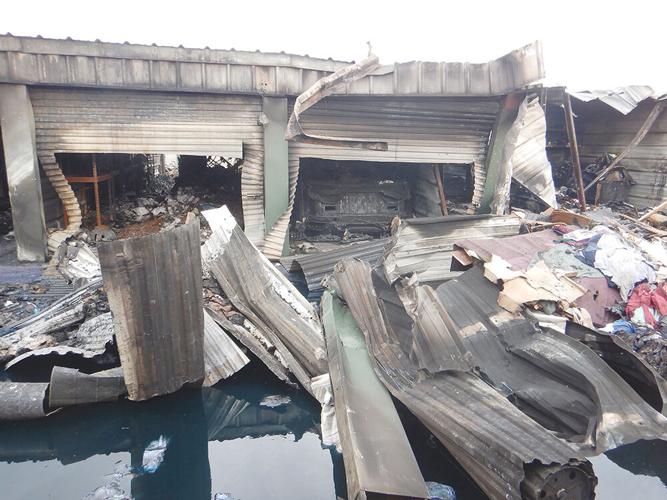
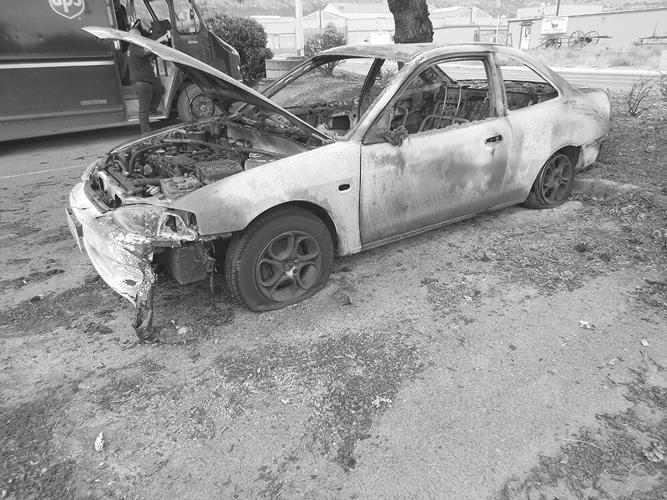
Embers blew into storage units at nearby Oregon Trail Mini-Storage, destroying about 37 units, wrote Barnes, the lead investigator, in the final report filed Aug. 5. Embers from those burning units crossed the street to ignite dry vegetation near three private vehicles parked at a USPS building. One vehicle burned, igniting the next, which ignited the next; destroying three USPS drivers’ private cars. The fire kept pushing east into The Dalles, skipping across dry lawns of businesses and right up to touch a row of propane tanks, where it was finally stopped. A fire reported in nearby grain elevators was possibly ignited by blown embers from NORCOR’s close call.
“Weather was not the cause of the fire but it did play a major role in it’s development,” Barnes noted in his report. “The heat and lack of fuel moister were compounded by the strong winds that made this fire difficult to contain and extinguish.”
Around $2,000,000 in property was destroyed, including significant storage unit contents.
Surveillance video did not capture who started the fire, nor how, nor did they film “anyone of interest.” The fire’s origin point was outside the camera angle of all NORCOR’s surveillance. After watching surveillance video, the investigators went to the scene, examined the ground, and flagged indicators of the fire’s behavior (where it moved forward, back, sideways), and spoke to local law enforcement.
Three United States Postal Service drivers’ private cars, burned in the Aug. 2 blaze.
Photo courtesy OSFM
“Early interview information was that a maintenance worker saw a known arsonist in the area of the fire shortly after the fire was discovered,” read Barnes’ notes, titled “Interviews by Others.”
Days later, Detective Travis Elton, who lead law enforcement investigations for the incident, emailed details to Barnes. NORCOR’s maintenance worker, Mike Shaw, claimed he saw the alleged “known arsonist” look over the fence from the storage facility area, then run away.
“Based on early interview information I thought the suspect was more certain, but once I received the interview information from Detective Travis Elton, I’m less certain,” Barnes wrote. “... But have not ruled him out yet.”
When Shaw emerged from the maintenance building, the fire had already traveled about 100 yards. The alleged suspect at the time was at least 60 yards away from the fire’s origin. Other than Shaw’s alleged sighting of the initial suspect — more than 100 yards to the east of the fire’s starting point — no video or witnesses placed them the area at that time. Neither Oregon Trail Mini-Storage camera’s, nor NORCOR’s, nor any other surveillance showed that initial suspect at the scene. Neither did any witness report observing them.
That initial suspect had been renting one of the units at the storage facility; their unit burned.
“I considered the ignition source could have been a hand-held flame brought into contact with the dry vegetation during the strong winds, and I can not rule out this hypothesis,” Barnes wrote in the final report.
Barnes did rule out all other causes: Lightning (none had struck in the area), failure in a nearby power pole (no damage or evidence on the pole), a driving vehicle (the road area where the fire started was locked), the possibility of a houseless person’s cooking fire (no evidence of such a thing on the ground), and discarded smoking materials like a cigarette (no sign of such materials in the area of origin or nearby).
If additional information becomes known, the investigators have the right to reexamine the case and modify their opinions and conclusions as necessary.



Commented