
A skeleton hanging on a door or standing in your neighbor’s yard for Halloween looks like a finished structure. But the skeleton inside a living body is constantly changing. Around menopause, those changes can tip toward bone loss, often without pain or another obvious warning.
I am a skeletal biology researcher at Washington University School of Medicine in St. Louis. My work examines how hormonal and metabolic signals influence bone renewal. In my assessment, the quiet nature of bone loss makes menopause an important time to bring skeletal health into the conversation.
Bone loss can start accelerating before the final menstrual period. Natural menopause is confirmed only after 12 consecutive months without a period, when there is no other explanation. Bone loss can therefore accelerate before someone knows that their last period was their final one.
Why bone changes during menopause
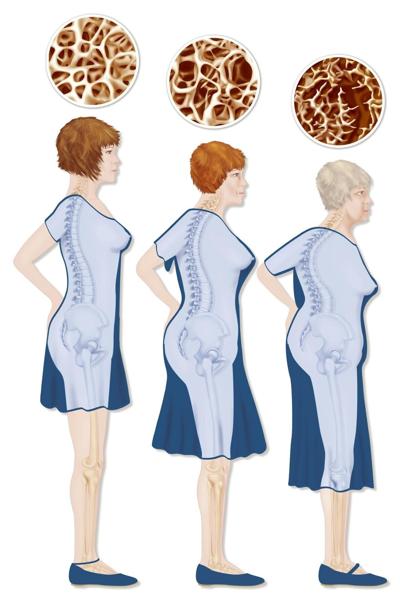
Bones are living tissues that continually renew themselves. During this process, called remodeling, cells known as osteoclasts remove old bone while other cells – osteoblasts – build its replacement. Estrogen helps regulate this renewal. As estrogen levels decline around menopause, removal can outpace replacement, contributing to bone loss and osteoporosis, a condition in which bones become more fragile and porous.
Osteoporosis can affect women and men. It becomes more common with age but can also occur in younger people. A person often has no noticeable symptoms until a fracture occurs.
The timing is revealing. An analysis of 862 participants in the Study of Women’s Health Across the Nation, a long-term U.S. study of women in midlife, tracked changes in bone density in relation to their final menstrual period. On average, loss at the lower spine and near the hip was fastest from about one year before that period through two years afterward. It then slowed rather than stopped.
These findings do not mean that everyone experiences the same amount of bone loss or develops osteoporosis. They show why the menopausal transition itself deserves attention, rather than treating bone loss as a concern only for older women.
Fracture risk and bone loss involve more than age
To assess a person’s risk of breaking a bone, clinicians consider factors such as low body weight, smoking, excessive alcohol use and whether a patient’s parent experienced a hip fracture. A bone density scan measures bone mineral density and helps assess fracture risk. It provides useful information alongside medical history and other risk factors.
The U.S. Preventive Services Task Force, an independent panel of experts in preventive care, recommends screening for osteoporosis in women age 65 and older. It also recommends screening younger postmenopausal women when their health history and other risk factors indicate a higher chance of a fracture. This does not mean every woman needs a scan as soon as her periods change.
These recommendations address routine screening. People who already have osteoporosis, have broken a bone after a minor fall or have a disease or take medicines that cause bone loss need evaluation tailored to their circumstances.
A U.K. trial illustrates how identifying people at high risk and recommending treatment can help. More than 12,000 women age 70 to 85 received either usual care or screening, followed by treatment recommendations for those at high risk. Over five years, women in the screening group were less likely to break a hip. However, when the researchers considered osteoporosis-related fractures across different parts of the body together, they did not find a statistically significant reduction. The findings support screening linked to treatment in older women, but do not tell us when screening should begin during the menopausal transition.
Movement and nutrition support the skeleton
Bones respond to the forces placed on them. Weight-bearing activities such as walking and stair climbing make bones support the body’s weight. Resistance exercises using weights, bands or body weight create additional forces on bones as muscles pull against them. Balance training, such as tai chi and exercises that practice shifting weight from one foot to the other, can improve stability and help prevent falls. Activity for bone health therefore involves more than one kind of movement.
An Australian trial published in 2018 tested whether supervised heavy resistance exercises and impact movements could improve bone density and physical function in postmenopausal women with low bone mass. After eight months, participants in that program had better results than those following a less intensive home exercise program. The women were carefully screened, and the training was closely supervised.
These improvements are encouraging, but improved bone density is not the same outcome as fewer broken bones: The trial did not establish whether its program reduced fractures. People with osteoporosis, previous fractures or physical limitations may need guidance on appropriate movements and loads. Building muscle strength and balance can support mobility as well as bone health. Choosing suitable exercise depends on a person’s own circumstances.
Nutrition contributes in a different way. Calcium supplies mineral that helps give bones their strength, while vitamin D helps the body absorb calcium. Adequate protein also forms part of a balanced diet. Calcium-rich foods include dairy products, fortified alternatives, canned sardines or salmon with edible bones, and vegetables such as bok choy and broccoli.
Calcium or vitamin D supplements may help when a person’s intake is insufficient or they have a deficiency that needs treatment. They do not replace osteoporosis medicines when those are needed. Nutrition and treatment work together.
Treatment depends on the person
Systemic menopausal hormone therapy — treatment that delivers hormones throughout the body — can relieve bothersome hot flashes and night sweats and help prevent bone loss and fractures. Its benefits and risks depend on age, time since menopause, medical history and the treatment used.
For women younger than 60 or within 10 years of menopause onset who have no medical reasons to avoid it, the balance of benefits and risks from menopausal hormone therapy is generally favorable for treating troublesome symptoms and preventing bone loss. This does not mean hormone therapy is suitable for everyone. Patients and clinicians should discuss their symptoms, bone health and individual risks, and revisit the decision over time.
Other osteoporosis medicines can slow bone breakdown or stimulate bone formation. Clinicians also consider other medical conditions and medicines that can weaken bones, including hormonal disorders, digestive conditions and long-term glucocorticoid treatment. Menopause may be only part of the explanation.
One example is primary hyperparathyroidism, in which one or more parathyroid glands in the neck produce too much parathyroid hormone. This can raise blood calcium and weaken bones. Identifying it can change the care plan. It illustrates why investigating the cause of bone loss matters, rather than simply attributing it to aging.
Access to care matters, too
Advice about scans and treatment assumes people can obtain them. Looking beyond individual choices shows how access to care can shape the options available. One example comes from a 2025 audit of 22 Asia-Pacific countries and regions. It documented substantial differences in access to osteoporosis care. Bone density scan waits ranged from the same day to nearly a year, and gaps in coverage for medicines limited the affordability of treatment. The regional audit concerns osteoporosis broadly, not only menopause.
In other words, making prevention possible requires both public awareness and health systems that make scans, follow-up care and treatment accessible and affordable.
Menopause offers an opportunity to ask about the skeleton while a person still feels well. The answer may involve a risk assessment, suitable activity, nutritional changes or medical treatment. A bone health conversation can begin long before a fracture starts it.
This article is republished from The Conversation, a nonprofit, independent news organization bringing you facts and trustworthy analysis to help you make sense of our complex world. It was written by: Priya Bhardwaj, Washington University in St. Louis
Read more:
- Menopause is a major health milestone, yet health records barely track it ‑ new research
- Osteoporosis, the silent disease, can shorten your life − here’s how to prevent fractures and keep bones healthy
- The Women’s Health Initiative has shaped women’s health for over 30 years, but its future is uncertain
Priya Bhardwaj is employed by Washington University School of Medicine in St. Louis. She serves on the Endocrine Society’s Bone and Mineral Special Interest Group steering committee and ASBMR Women in Bone and Mineral SIG Commitee.


Commented