HOOD RIVER — On Aug. 10, a team from Protect Our Parks Hood River (POP) joined Mike Parziale, supervisor with Hood River Valley Parks and Recreation, for a Morrison Park clean-up. The morning’s primary goal was a major push to remove some of the heavy overgrowth of invasive blackberries at the eastern entrance to the park.
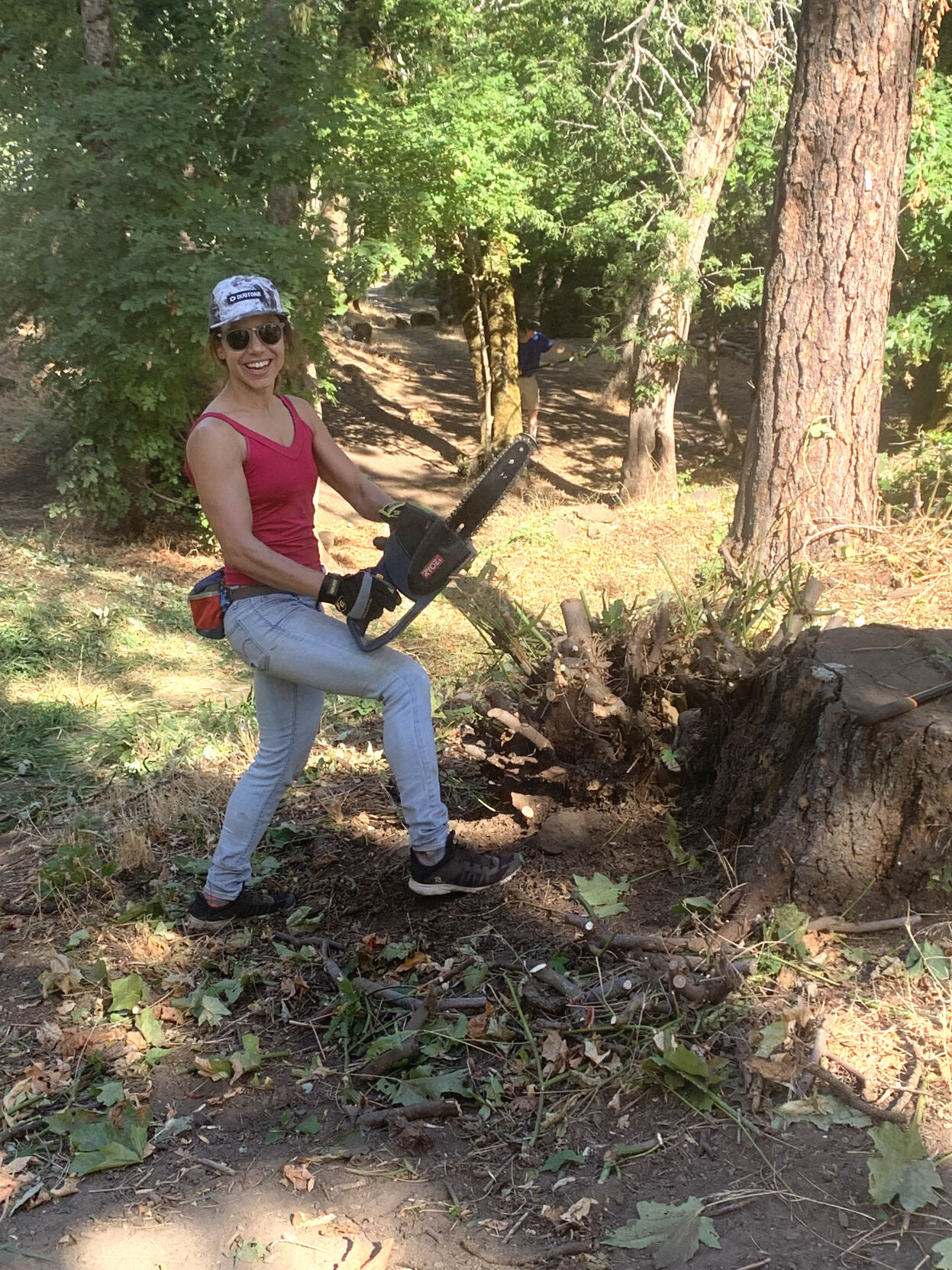
Gabriela Jorge, Hood River, helps with the Morrison Park cleanup earlier this month.
Photo courtesy of Protect Our Parks
The assembled team from Protect Our Parks included Gabriela Jorge, Devin Carroll, Josh Sceva, James Ropner, Jim Klaas, and Tracey Tomashpol. Team members brought some smaller tools, but Hood River Valley Parks and Recreation brought serious equipment, including a brush mower that, combined with sweat equity, can reduce blackberries to mulch, said a press release.
Minutes after the group assembled, Parziale began move the 300-pound mower through the blackberries. Other team members raked debris and used “weed whackers” to take down tall grasses and smaller blackberries. Jorge wielded a chain saw on larger logs, while everyone hauled dead branches to a debris pile for later removal by the parks and recreation team. Within three hours, the stream was visible and flowing freely, and several smaller white oak saplings stood revealed as well.
Morrison Park is home to a substantial number of Oregon white oaks, a native tree. Less than 5% of oak and prairie habitats remain, so preserving oak on private and public lands is critical, said the press release. Once established, they’re drought-hardy and attract native birds, bees, and butterflies. The blackberries, in contrast, create dense thickets that crowd out native plants that help shade streams and reduce the heat in water.
Sceva, a long-time parks advocate, knows how valuable a park like Morrison Park can be if cared for.
“There’s great potential here for a walking path that eventually connects the west side of the city to the waterfront,” he said. Sceva pointed to other park restoration efforts by volunteers at the city’s oldest park, Waucoma Park. In that park, the city also installed a water system to allow volunteers to water endangered trees when necessary, and native plants give habitat to smaller animals.
A pleasant surprise during Tuesday’s cleanup was the overall lack of trash on the east side of the park. A few lost discs buried in blackberries appeared, and Klaas uncovered chunks of what appeared to be an old swimming pool. More worrisome was the open stormwater pipe leading from Rotary Skate Park across the street and dumping directly into the stream.
In addition to the weed removal, Carroll spent time relocating tee-pad signs. Carroll and Ropner have built six tee-pads at the park over the past 8 months. However, the placement of some new tee-pads changed the optimal location for the signs, necessitating the relocation.
The POP and parks team will look for another spell of cooler weather to continue the work.
“Mark and Mike really helped coordinate today’s work, and we’re grateful for their support,” said Board Member Tomashpol. “We know they have a lot of parks to maintain, and we were excited to be able to work alongside Mike. The work he did in a few hours would have taken many days otherwise.”



Commented
Sorry, there are no recent results for popular commented articles.