
Ever since college, I’ve had a deep fascination with our shameful history around slavery, the Civil War and the failure of the victorious North to ensure rights granted to freed slaves after the war.
But if I hadn’t also developed an appreciation for barbecue and blues music, I likely would not have suggested to my wife, Kathy, that we take an Amtrak train to Memphis, Tenn., in October 2018.
Our plan? Use Memphis as a launching pad for a deeper exploration of some iconic sites in the civil rights struggle.
Like most Americans, I left high school with almost no knowledge of our long and regrettable racial history. Whether that omission was by negligence or intent, it sure wasn’t part of my core curriculum.
Everything I had come to know about the South lay tangled in a knot of gentility and cruelty, hospitality and horror, brutality and beauty. Still, who of us wants to cast that first stone — least of all Oregon, which adopted several laws and a clause in its constitution banning free African Americans from settling here?
We stepped off that Amtrak train early on a humid Sunday morning in Memphis, prepared to visit this slice of America with eyes wide open.
From our downtown hotel, we set out on foot to see if the Mississippi really did flow through town (yes), and whether the ducks really do descend to the lobby of the Peabody Hotel (yes, they do, but we couldn’t see them through the wall of other visitors).
From our downtown hotel, we set out on foot to see if the Mississippi really did flow through town (yes), and whether the ducks really do descend to the lobby of the Peabody Hotel (yes, they do, but we couldn’t see them through the wall of other visitors).
The legendary Beale Street blues zone was quiet at mid-day, so we continued south along old Main Street, undergoing one of those revivals that involves new art galleries and restaurants next to bruised brick “retail opportunities.” Think Hood River before boardheads.
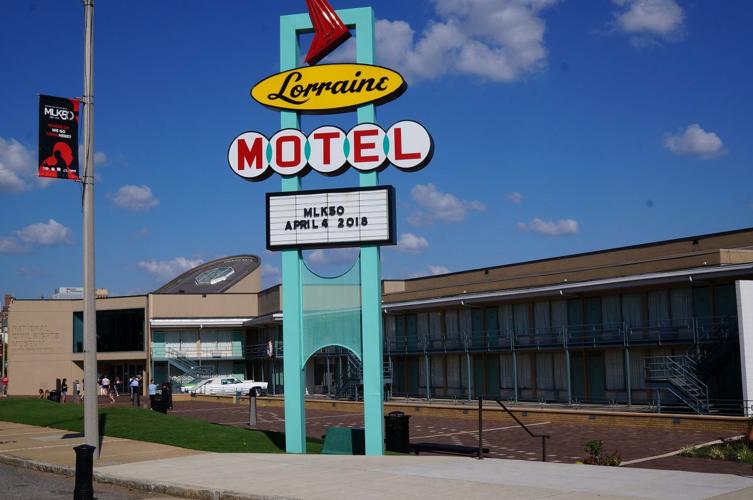
Then we looked down a side street. There it was: The sign for the Lorraine Motel. For those who may not recall, this was where an assassin’s bullet felled the Rev. Martin Luther King on April 4, 1968. Preserved much as it was on that tragic day, the structure has been expanded to house the National Civil Rights Museum (www.civilrightsmuseum.org).
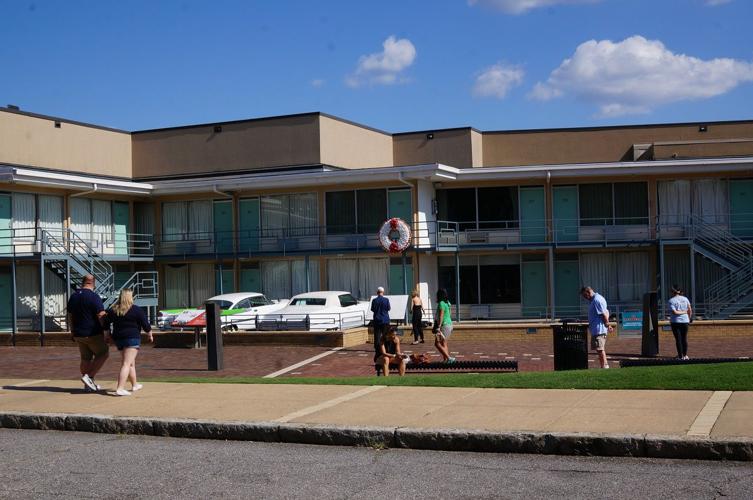
We had intended to visit, and Sunday morning seemed the perfect time. It was quiet outside, in the parking lot below the balcony where King died. Visitors moved about slowly, reading exhibit signage, somber, reverential. We heard many foreign tongues, there and inside the museum.
The trail of exhibits would leave us stunned. Starting with the history of slavery (315 years, 20,528 voyages, 10 million slaves and nearly 400,000 delivered to the U.S.; bit.ly/1RzR3VX), exhibits take visitors through the economics of the tobacco, cotton and sugar plantation trade in the antebellum South, the Civil War, and the brief period after the war when former slaves could vote and hold public office.
Step by step, we marched through chapters on the rise of the Klan, court decisions that stripped away rights and legalized segregation, and the landmark court cases and public protests that led the way to the passage in 1964 of the Civil Rights Act and in 1965 of the Voting Rights Act.
The museum ultimately leads visitors to a view inside the motel where King was staying, and the balcony where he was shot.
Across from the motel, the Legacy Building (bit.ly/2E79tzG) offers a detailed civil rights timeline, and history of the manhunt that led to arrest of assassin James Earl Ray. The building includes the room from which Ray took aim.
I knew a fraction of all this, from studies at the University of Oregon.
I knew a fraction of all this, from studies at the University of Oregon.
Immersing ourselves in the cumulative enormity of the cruelties inflicted on millions of fellow Americans left my wife and I in tears.
From Memphis, Kathy and I rented a car and headed toward Oxford, Miss. It’s a lovely little town, home to Square Books and the University of Mississippi. Fifty years on from the unrest that accompanied integration by James Meredith, it is a quiet, welcoming place.
Like other sites at the center of the civil rights struggle, it has acknowledged its place in the struggle, with a memorial to Meredith outside the Lyceum admin building.
From there, we continued south for a quick stop in Birmingham, Ala.
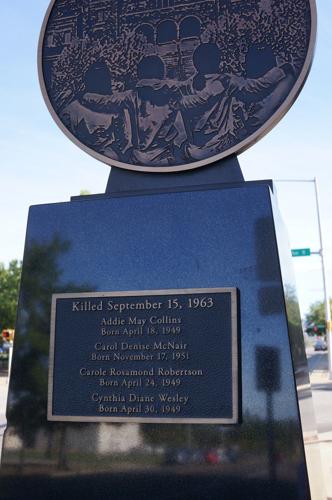
Downtown Birmingham is calm these days. No snarling police dogs. No water hoses blasting school kids into walls. Just history, for those who wish. Powerful, poignant sculpture in Kelly Ingram Park, within view of the Sixteenth Street Baptist Church, site of the bombing that killed four black girls in 1963.
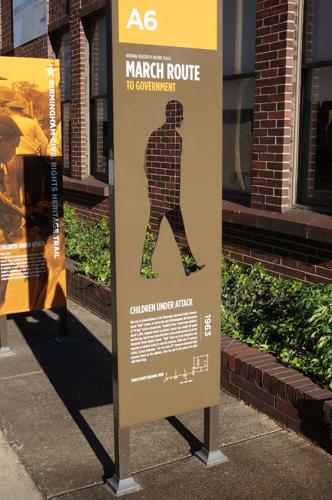
The Birmingham Civil Rights Institute (www.bcri.org), across from the park, is also responsible for the remarkable Civil Rights Heritage Trail, a series of dramatic, sculptural exhibits marking key sites of the Birmingham civil rights campaign (bit.ly/2Nrazup).
It puts you in the footsteps of the marchers who turned the nation’s eyes on persistent and pervasive injustice.
For something a little lighter, check out Rickwood Field (rickwood.com), America’s oldest ballpark, and one-time home to the segregated Coal Barons (white) and Black Barons baseball teams. Many Major League greats played here, before the Majors would let them on their fields.
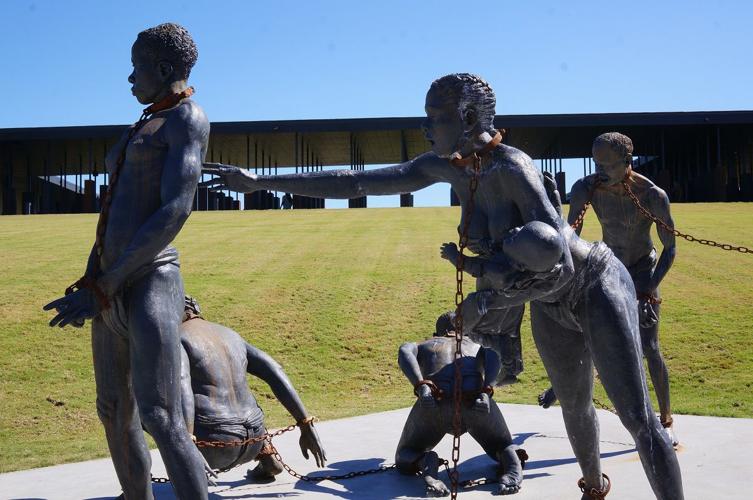
The ground zero of our trip lay down the road, in the state capital of Montgomery. Two years earlier, I had read of the opening of a new museum and a companion memorial to what Tuskegee University documented as 4,745 lynchings — 3,446 African Americans, and 1,299 whites — between 1882 and 1968.
Hardly your classic “umbrella drink” vacation, right? But I appreciate that Americans often travel as pilgrimage, whether to the 9/11 Memorial & Museum (www.911memorial.org) or the Oklahoma City National Memorial Museum (oklahomacitynationalmemorial.org).
We who visit these places go in part to remember, in part to reflect, in part to recover and reform. If we truly care about the evil behind terrorist acts, we can’t sweep aside and ignore the extended campaign of terror that was lynching.
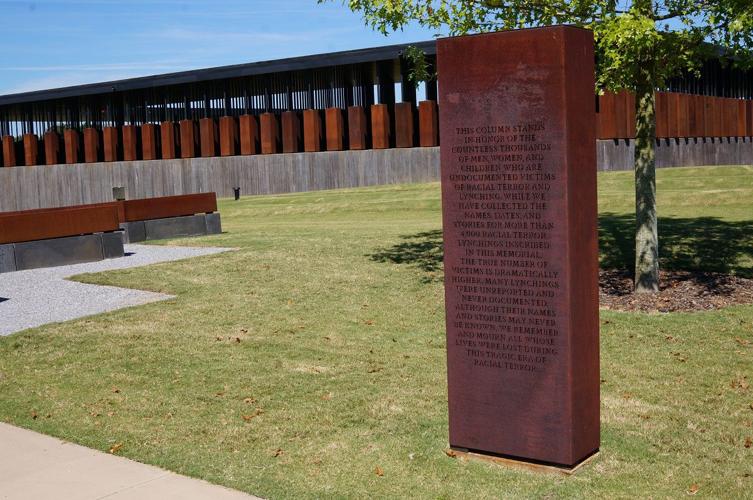
Developed by the Equal Justice Initiative (www.eji.org), the National Memorial for Peace and Justice (museumandmemorial.eji.org) collects and honors the memory of people — mostly black Americans, but white, Asian, Latino and others, as well — who were targeted for trivial reasons, then hung, burned and mutilated by white mobs, sometimes as large as 10,000 people (lynchinginamerica.eji.org/explore).
It’s impossible for me to imagine the mindset of people who would chop their victims to pieces for souvenirs, photograph them for picture postcards or, most ghoulish of all, smile for the photographers.
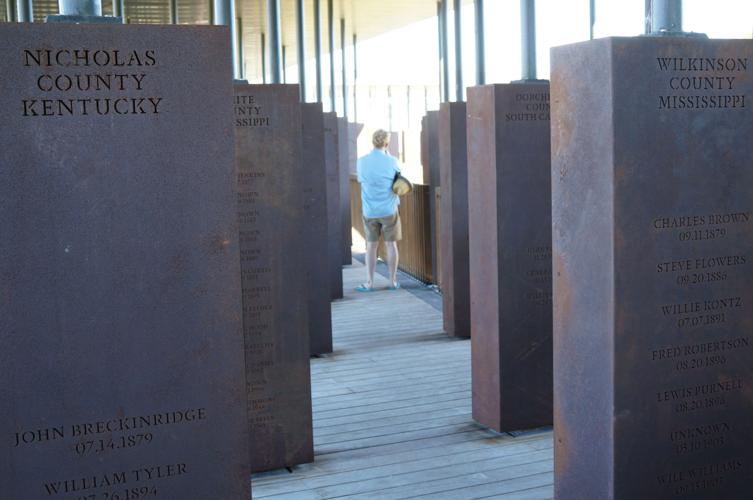
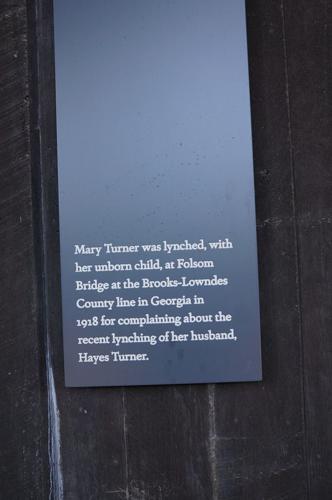
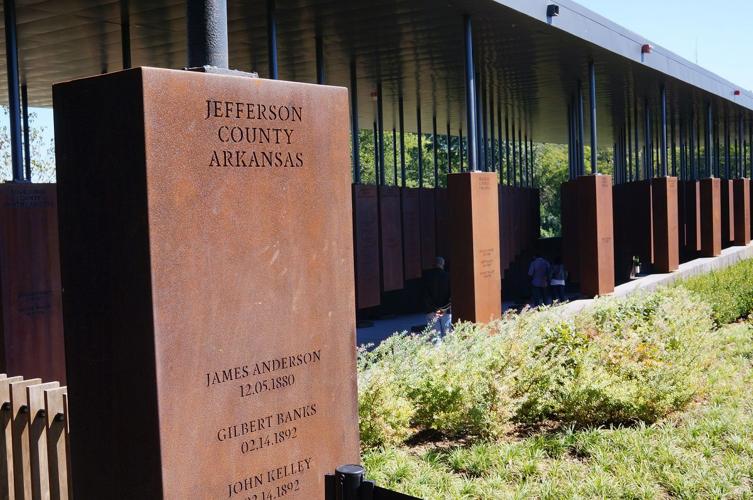
Visitors walk through the memorial beneath 800 steel monuments, engraved with the names of each of the people lynched in each of those 800 U.S. counties. Selected narratives leave the mind reeling.
I could go on, but let’s stop. This trip was one of the most sobering — and enlightening — experiences of my life. If you share my view that we all need to be smarter about history so we can be smarter about shaping our future, I suggest that you go, too — and take the kids. They’re the ones who will prevent this from ever happening again.


Commented