
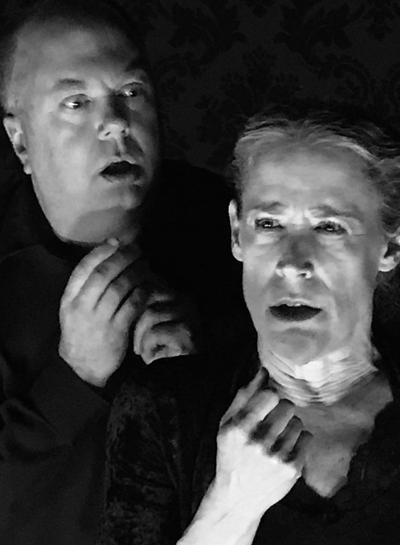
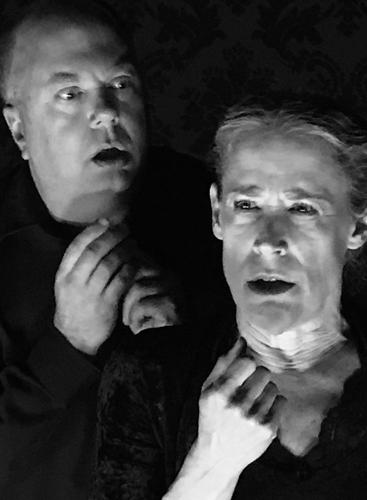
Ambiguous Theater presents “The Turn of the Screw” by Jeffrey Hatcher from a book by Henry James, a “provocative tale of suspense, horror and repressed sexuality,” according to a press release.
This adaptation by Jeffrey Hatcher gives the famous story yet another turn of its own, notes director Tom Burns. The plot seems simple enough; a governess journeys to a lonely English manor house to care for two recently orphaned children, Miles and Flora. But the governess discovers she is not their first governess. Her predecessor, Miss Jessel, drowned herself after her affair with the sadistic valet, Peter Quint, who was himself found dead soon after under mysterious circumstances.
Now, the new governess has begun to see the specters of Quint and Jessel haunting and even possessing the children, and she struggles to find a way to stop the fiends before it is too late.
But one frightening question tortures the would-be heroine: Are the ghosts real, or are they the product of her own fevered imagination?
Kathleen Morrow plays the governess whose flashes of fire never seem unwarranted or hysterical. David Dye portrays the other four characters including Miles, who is about as creepy as a 10-year-old can be. With a minimal set consisting of a 10-foot curtained cube, a single chair, and a bank of footlights, the play focuses on the mounting tension between the governess and the not-so-innocent children.
Are they possessed by Quint and Jessel?
What trauma caused Flora to stop speaking?
Why was the creepy Miles banished from school?
Are the children evil or merely clever? Are there really ghosts at the mansion or are they in the governess’s imagination? Does she see them or is she going mad?
Burns said, “Hatcher proudly points out that his play does not provide any answers, and in fact he admonishes directors of his play to … ‘give the people something to argue about on the way home.’ The audience is the jury and must decide.”
“The Turn of the Screw” offers unusual directing challenges. There are only two actors, playing are seven characters but only four appear, and there may or may not be ghosts. And there are no props or sound effects.
“There is a spare set with only a single chair. But rather than limiting the action, this stripped-down story provides a white-hot urgency and focus to the psychological thriller,” Burns said.
The most difficult directing challenge in “The Turn of the Screw” was to “preserve the aura of ambiguity,” he said.
“If the audience sees a ghost on stage, the audience believes there is a ghost. Obviously, since the audience saw it.
“But if you merely suggest that the ghost is not real, or a figment of the imagination, the director must find a way through which the audience can see.
“We worked constantly to avoid providing answers to the obvious questions,” Burns said. “If we’re successful, each member of the audience will feel they have the final answer. And they will be right. Or not …”
“We worked constantly to avoid providing answers to the obvious questions,” Burns said. “If we’re successful, each member of the audience will feel they have the final answer. And they will be right. Or not …”


Commented
Sorry, there are no recent results for popular commented articles.