
“Because it’s there.”
British climber George Mallory’s simple reply to a question by a New York reporter in 1923 about why he wanted to climb Mount Everest has become the stuff of legend. It has taken on a life of its own and given a generation of climbers an eternal compass to guide and reflect on the inherent risks in pursuing lofty summits.
Consider the historical setting for the fateful British expedition. Mallory and members of his climbing party were survivors of The Great War, having experienced up close the horrors of war. Britain was in a period of recovery and now looked to this endeavor to lift the country out of a dark place. To this day, the mystery remains if Mallory and climbing partner Sandy Irvine made it to the summit on June 8, 1924, the day they disappeared into the midst near the summit.
At present, all of the world’s highest peaks have been climbed. And while these peaks still draw amateur and professional mountaineers, the new risk-taking involves trying to ascend peaks in record speed or ascending new routes.
So why are some drawn more than others to risk? Is it a nature versus nurture question? I believe that some of us are just hard wired from birth to be naturally drawn to explore, to wander off trail, to forge our own way in life, to reject conformity and follow our inner true north. In a world that is overprescribed with laws and expectations, you can go into the mountains and behave as you wish, be responsible for your own survival, and be liberated from the burden of societal expectations.
From the time I was old enough to read, my mother put books before me about the Himalayan exploits of Sir Edmund Hillary and Tenzing Norgay, the first to (officially) have climbed Mount Everest. She must have sensed a spirit of adventure in me that lives on today.
I was fortunate to be raised by a risk taker, a woman who defied societal norms and divorced my father when I was 13 to escape an abusive marriage. She did things her way and despite raising eight children, she made the time to pursue her dream of becoming a writer. “There’s no such thing as can’t,” she used to say. She lived a full throated life, making her way as an artist, not knowing from month to month how the bills would be paid.
To the very end, she was thirsty. When given the option to prepare for hospice or endure a surgery that involved great risk, there was no hesitation to go for the surgery.
I cannot explain fully, or expect people to understand, why I am so drawn to summits, willing to endure the cold and ascend in the dark, and embrace the perceived risks of climbing. Honestly, I am less of a mountaineer and more of a happy wanderer that occasionally finds a way to scramble to the tops of our Cascade Range of volcanoes. These rambles help me get to know the edges of life, to get up close and explore these precipices and overhangs, for it is there that I become aware how valuable my life is. Out on the thin edge of risk, I am intensely alive. Life becomes richer in the thin air in the universe of summit light.
There is simply not enough space here to wax on about life lessons carried back from summits. Climbing helps you deal with the ups and downs of the daily grind of life in the lowlands. Being able to witness a view of endless horizons inspires looking at life in general from the big picture, of taking a broader view of things, and encouraging taking leaps of faith to fill the empty places in your life.
Last spring, as I approached the final summit wall, a circling cloud of mist and fog engulfed me. As I reached the summit ridge, I ascended into a swirling vortex of mist and tiny ice crystals that seemed so surreal that I just dropped to my knees and soaked it all in. Tears flow easily in the presence of otherworldly light. The Greeks believed that the fifth and highest element of life after air and water, fire and earth, was what they called “quintessence” — an ethereal substance that holds the heavenly bodies above earth. It was thought to be the pure essence of what the gods breathed.
Mount Hood and the skirt of wilderness that surrounds it is my church. It is a cathedral of endless inspiration and as long as I have the ability to put one foot in front of the other I will return again and again. One need not summit to experience the joy and lessons from this environment. Take to the trails that wind around it but don’t stay on them. Trails are entry points, portals to a world of wonder, so take a risk and go scramble over ridges, follow streams to their source, and discover hidden meadows that bring on a smile so wide it hurts with delight. As Aristotle said, “The un-risked life is not worth living.”
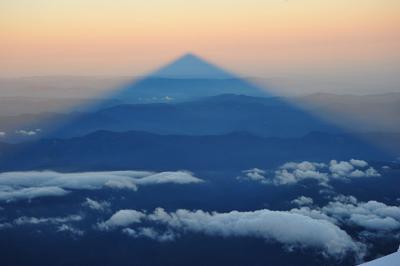
To be able to start climbing at midnight as an emotionally broken man and hours later become transformed and touched by a summit light so piercing it casts the shadow of my soul in the west — this is not an exercise in risk but a willingness to earn a bit of healing for a brief moment in time.
There is no conquest of a mountain. People don’t live on the summits of high peaks. They go for the brief spirit of discovery. As long as my heart is strong and the body is willing, I will always seek out these fleeting moments of enchantment.
Because It is there.


Commented