
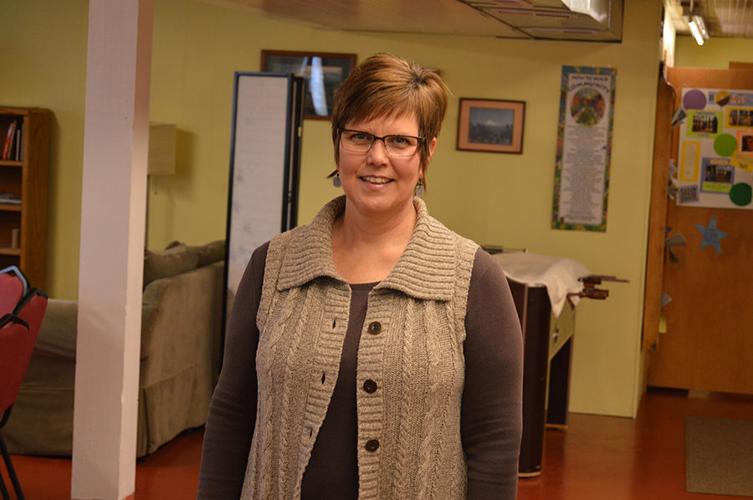
The Mid-Columbia Unitarian Universalist Fellowship is holding a special ceremony today, March 7.
At 3 p.m., the congregation will install Pastor Judy Zimmerman as their new minister. The church meets at the Rockford Grange on Barrett Drive in Hood River.
Zimmerman describes the church as “a younger congregation,” and said the installation “is a formal public affirmation of the covenant between the minister and the congregation they serve,” a process that is “uncommon in most Protestant denominations,” she explained.
“(It symbolizes) an ongoing commitment, a deeper level of connection between minister and congregation,” she said. The installation will be “a fancier church service,” with Unitarian officials attending: Representatives from the Regional Association body, and ministers and religious educators from the Northwest.
Civic leaders from around the Gorge have also been invited, as the church serves the Washington side of the Columbia from Stevenson to Goldendale, and in Oregon from Cascade Locks to The Dalles.
The service is a special one, an exchange “between the leadership and the congregation and myself,” Zimmerman said. A reception with light refreshments will follow.
While Zimmerman will be installed today, she’s been serving as minister since April 2013, and in Hood River since Aug. 1, 2014.
“One of the nice things about being a minister is that your days are often not typical,” she said. “There’s no regularity to it, but there are some common features.”
Her day starts with coffee, the newspaper, and prayers.
“I will usually do some sort of prayer, spiritual reading and mediation” — she cites a Buddhist medication practice — “nearly every day, unless something unusual happens.
“Most of us do some kind of prayer early in the day,” she added.
The biggest portion of her work involves researching and writing her weekly sermons.
“We’ve a very learned clergy,” she said. “We want people to have lots and lots of graduate education, go to seminary, but even more than that is great. Research takes a lot of time — half of my work week is sermon preparation.”
She also has at least one or two appointments “of some kind” every day.
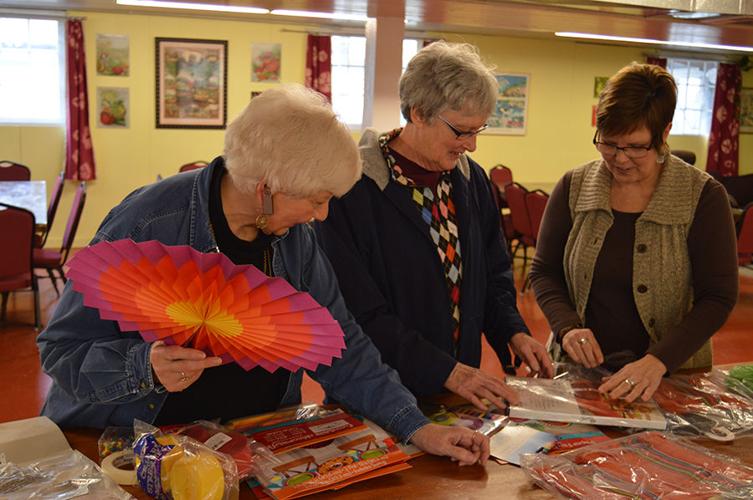
“We make jokes, we do ministry by committee,” she said. Those meetings recently have involved the planning of her installation, consulting with the Fellowship’s pastoral care team and lay leaders, meeting with the social justice committee and the Columbia Gorge Climate Action Network, and serving as vice chair and church representative for Gorge Ecumenical Ministries (GEM).
Zimmerman is often called to counsel church members, usually at the person’s house. Sometimes it’s to discuss a recent death or chronic health issue, or the loss of a job. She also periodically makes hospital calls.
But ministry involves “a lot of quiet work,” she said. “A lot of ministry is hidden, and people don’t see it … it’s definitely a contemplative job. But there are times you’re joyfully people-d out, but there’s also time to spiritually recharge yourself to do the work to guide others so they can grow spiritually.”
Ministry is a profession she was warned against, she laughed. And she agrees. “If you can do anything else but ministry, do it because ministry is impossible.
“What I mean by that is that I never feel like I get it all done and am meeting everyone’s needs like I’d ideally like to do. I don’t know what a 60 hour work week is like … if you can find some way to serve the world but not be a minister, do it.”
Ministry is Zimmerman’s second career — her first is as a psychology professor at Portland Community College, where she’s taught for over 20 years; many Unitarian ministers are bi-vocational, she explained. That background “has been a great help,” she said. “I still do that; I still teach a little bit. Eventually I’ll stop doing that.”
A former Roman Catholic who left as a teenager, she joined the Unitarian church as an adult in California. What led her to ministry was a crisis of faith.
“I was still going to (UU) church and was active in my church, but I knew something was majorly wrong with my religious faith — I had that preverbal dark night of the soul. I felt I got a celestial thump on the head. I had this awareness I needed to be a minister — it came from really deep inside when I was in a terrible place.
“You can’t ignore it; it’s a pebble in your shoe. I’d been volunteering part time as a hospice worker — I was doing respite care and already had a connection to that kind of work.”
Ministry allows her to grow — her own faith, as well as that of the community she serves.
“We don’t grow alone, we grow healthy communities … so we can be the best people we can be,” she said. “I see my job in ministry what Dr. Martin Luther King called ‘love community’ — nurtured membership.
“We also serve the wider world. It’s a two way street. I understand not liking church, but let’s not throw the baby out with the bathwater.”
Zimmerman is “living my own dream.” She gets to minister in the Columbia River Gorge, an outdoor playground. And as an outdoor athlete, she enjoys spending time in nature, be that cross country skiing, road cycling or going for long walks.
“Being out in nature and exercising is how I recharge,” she said. “I could be a gym rat, but I want to be outside.”


Commented