
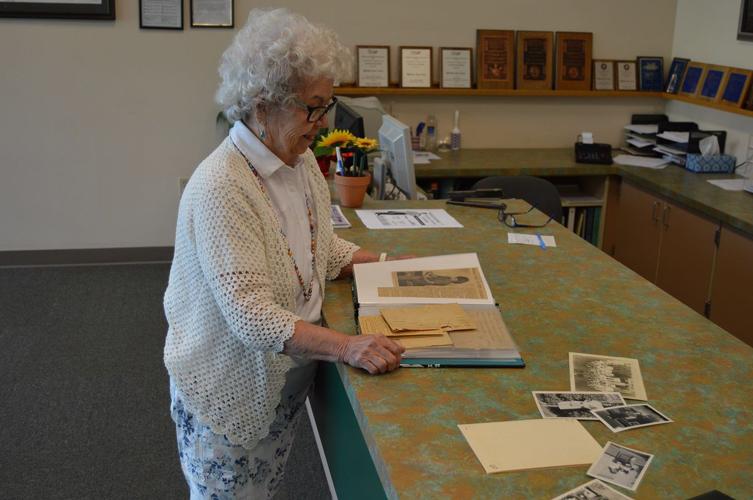
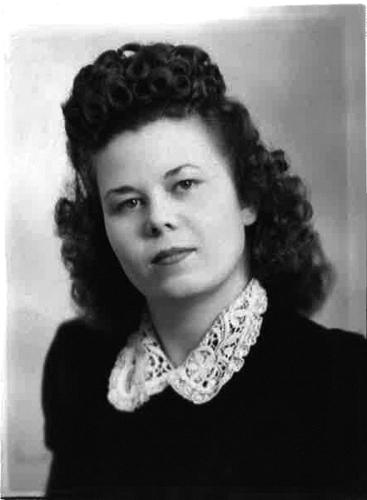
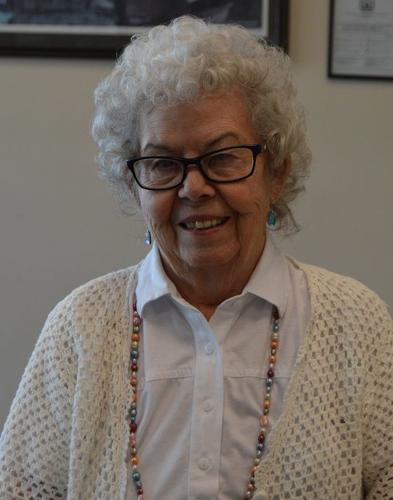
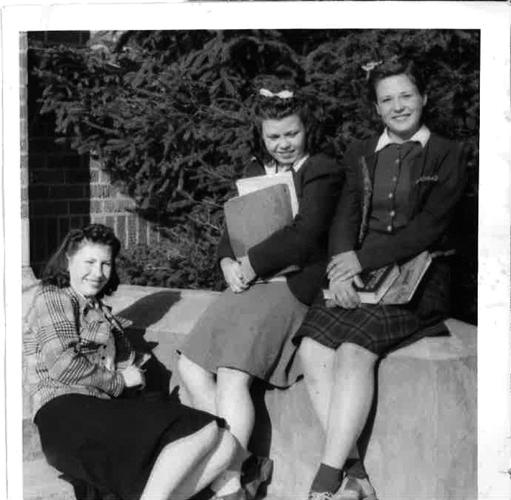
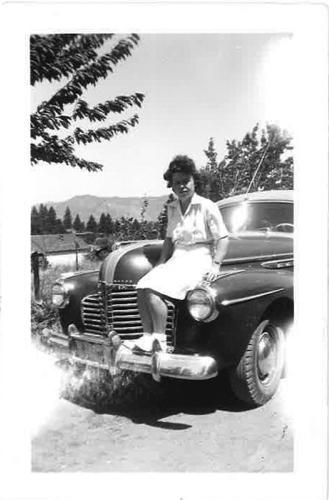
Ora Cantrell turned 93 on February 1, and she’s seen a lot of changes in Hood River during her time here — stories she figures it’s time to share.
Cantrell’s family moved to Hood River from Wyoming in 1935, when she was 12. Like many families during the Great Depression, hers was displaced because of economics.
“We lost our farm,” she remembered. “We didn’t have any grass — the grasshoppers were eating all the grass. My sister and I used to herd the cows around to find something for them to eat.”
The family received spray to kill the grasshoppers, and Cantrell would drive the horse and cart “back and forth” in the pasture while her father, Oscar Lincoln, spread the poison. But it didn’t help — the cows were already too starved.
“I didn’t know this at the time, I didn’t know what was causing all the problems, but the (government sent men) to come out and shoot the cows that were too poor (to move). We’d already lost some from starvation, and the ones that wouldn’t make it to the nearest train depot were shot. I remember the guys with their guns and holsters. Then my daddy and I took the cows that would make it on horseback to the nearest train depot. I don’t remember much about that trip except my mother being surprised when we got home — she didn’t expect us to be home so soon — and I can remember all these men at the train, like, gobs of them there with their cows.”
With $64 and a trailer hitched to a ’27 Chevy purchased to make the trip — “We never had a car in Wyoming,” Cantrell remembered — the family headed west.
They were originally bound for Yakima, having seen chamber of commerce brochures advertising apple crops, but when the family came to the crossroad, “we didn’t have more money to buy more gas.”
Then her father, 50, remembered a cousin he used to play with as a teenager growing up in Kansas, who had moved to the Hood River Valley.
So that’s where they came.
They arrived in downtown Hood River in the middle of the night, met by empty streets — except for one light coming from a machine shop. Her father went in and asked if the man, who was working on his car, had heard of the cousin.
“Daddy went in and said, ‘Any chance you know Paddy McFerrin?’ and he says, ‘No, I don’t know a Paddy McFerrin but I know a Floyd McFerrin.’”
And then he led the family to the McFerrin place on Barrett Drive, middle of the night and all.
It turned out the cousin was working nights on the Bonneville Dam project, but his wife was at home — and Cantrell’s family was welcomed in. They stayed with the McFerrin family for a couple of weeks before finding a place to rent in the Rockford area, a small, two room house.
Things started to look up from there. They began by picking fruit. That fall, her father started working with the WPA, and her mother at a cannery.
Eventually the family was able to purchase an acre and a half on Avalon Way — for $400 — even though times were still tight.
“All our neighbors were in our same situation, I think,” she said of the Depression years. “(Dad) kept telling us, ‘You don’t need money to be happy.’”
The family began attending Valley Christian Church when they moved to town, a compromise between her Methodist father and Lutheran mother. Eventually, they joined the Riverside Community Church congregation.
“We hadn’t been in a church in Wyoming because there wasn’t any where we lived,” she said.
In those days, Hood River “was just a bare town,” she said. The family would pile into the car and go downtown on Saturday night “and just stand on the street, and there’d be a handful of people.”
When Cantrell graduated from high school in 1941, she went to work for Western Union in Albany, Ore., before returning to Hood River. She worked a variety of jobs over the years, from the Oregon-Washington Telephone Company to the
Orgon Lumber Company. But her favorite was as Deputy County Clerk.
“We didn’t have Xerox machines, no copy machines whatsoever,” she said, “and I typed every deed, every mortgage, anything that people take to get recorded, I typed. I loved to type.
“The first copy machine we got, Doreen Embler was County Clerk Pro-Tem, and I remember, it almost looked like a small trashing machine. She was sitting way up there making copies some way or another.”
With the birth of her children, she rolled back her hours to part time, but was soon pulled back into fulltime work.
From July 1961 to November 1985, she worked in the sheriff’s office — as a dispatcher, answering telephones for the city and county, and calling in daily road reports to KIHR.
“Oh, it was nerve-wracking,” she said of her time in dispatch. “I didn’t know if I would make it. I’d go home crying at night, it was just terrible.”
When she quit dispatching, she moved into the office, taking care of time sheets, bills and other paperwork.
In 1945, she married Cletus Cantrell, who had been among the first men drafted into the army in 1941.
“He went in in February (1941), and in December he came home from Fort Knox for Christmas on furlough,” she said. “That’s when the war was declared, when he was here. He had to go back to Fort Knox, and then he was sent overseas soon afterwards and he didn’t come home until 1945.”
One interesting fact about Cantrell: She can claim Abraham Lincoln as a relative, as he was her father’s third cousin. In 1982, Lincoln’s birthday was observed on Feb. 1 for the first time — Cantrell’s birthday — and a story about her and “her most famous relation” ran in the Hood River News. She still has the clipping.
“A girl from the Hood River News came when the president made the first Monday of the month in February Lincoln’s birthday … it was the first time I got to celebrate my birthday on my relative’s birthday,” she said.
She’s always been family-oriented, and that hasn’t changed.
“I live for my family,” Cantrell says of her life now. “I’m enjoying life — that’s all that counts.”


Commented
Sorry, there are no recent results for popular commented articles.