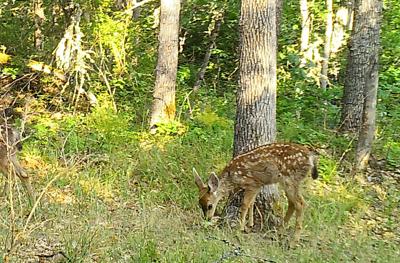
A young fawn explores a grove of oak trees south of The Dalles in the photo above, taken with a trail camera. Young animals are often seen alone in the spring — but they are not orphans, say ODFW officials. They encourage those who find them to leave them in place since many young animals, like these fawns, are left alone for much of the day but are well cared for by their mothers.
A young fawn explores a grove of oak trees south of The Dalles in the photo above, taken with a trail camera. Young animals are often seen alone in the spring — but they are not orphans, say ODFW officials. They encourage those who find them to leave them in place since many young animals, like these fawns, are left alone for much of the day but are well cared for by their mothers.
Oregonians are getting back outdoors just in time to encounter newborn fawns, elk calves and other young wildlife in the wild or even in their backyard. This is the time of year when deer fawns are born — and there is a chance you will come upon one that’s all alone.
The Oregon Deparmtnet of Fish and Wildlife (ODFW) has a request for those who do come across a young animal: Please don’t assume any young animal is orphaned just because it’s alone — and don’t pick it up.
It’s natural for mother animals to leave their young alone for extended periods of time while they go off to feed, said ODFW in a press release, andtThe mother will return when it’s safe to do so (when people, pets or predators aren’t around). Unfortunately, every year around this time, ODFW offices and licensed wildlife rehabilitators are flooded with calls from people who picked up a deer fawn, elk calf, fledgling bird learning to fly or other young animal they assumed was orphaned because it was alone.
Wildlife rehabilitators are licensed and trained to care for truly orphaned or injured wildlife and return them to the wild, but spots in their facilities need to be saved for real cases — especially this year, as the coronavirus has led to more limited capacity at these facilities, said the press release.
Animals taken away from their natural environment miss the chance to learn important survival skills from their parents like where to feed, what to eat, how to behave as part of a group and how to escape from predators. Usually this leads to a shortened life span for the animal — or a life in captivity.
Because of the damage it can do, removing or capturing an animal from the wild is a violation of state law and violators can be prosecuted.
Tips for helping
Follow these tips if you encounter young animals in the wild:
Never assume an animal is orphaned — and don’t move it. This applies to young marine mammals, who are also often left alone on the beach, but rarely orphaned.
Call your local ODFW office, Oregon State Police office, or a licensed wildlife rehabilitation center if you see an animal that you know is orphaned because you observed the dead parent or the parent hasn’t returned after constant observation for up to a day, or if the animal is clearly injured or in distress.
Keep your dog or cat away from young wildlife, especially in the spring.



Commented
Sorry, there are no recent results for popular commented articles.