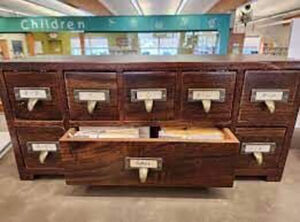
A seed library is available at the White Salmon Valley Library from mid-January through October. All seeds are free, and those who take seeds are asked to bring seeds back from at least one crop grown in their garden.
A seed library is available at the White Salmon Valley Library from mid-January through October. All seeds are free, and those who take seeds are asked to bring seeds back from at least one crop grown in their garden.
Fort Vancouver Regional Libraries (FVRL) has a funding measure on the Aug. 5 ballot that will shape hours of operation and services in the years ahead — regardless of outcome — and affects Klickitat and Skamania counties.
Full disclosure: I live in Odell, so however this election pans out, I’m not going to be affected one way or the other. Regardless, I am encouraging voters in both counties to approve this levy.
Libraries are a great equalizer because they’re open to everyone and they’re one of the few places you can go without having to spend anything.
But just because libraries are free to use doesn’t mean they’re free to run.
Voting yes means FVRL will be able to extend hours of operation; expand access; and adapt programs, spaces, and technology to meet the needs in the communities in which they are located.
Voting no will mean reduced service levels to match available funding, which in turn means reduced operating hours, staffing and program cuts, and fewer new materials and computer upgrades — among others.
I won’t go into specifics because you can read more online at fvrl.org/levy.
But I do have a cautionary tale to tell.
On June 30, 2010, the Hood River County Library and its branches closed after voters opted not to form a library district separate from the county, which had operated the system up until that point, during that year’s May election.
You can read all about it in the Hood River News archives. But I remember that election clearly — we were told that, should the district not come to fruition, the library would close. People didn’t believe it, though — I heard many times that the library would never close and the money needed to keep it open would somehow be found, regardless.
(It’s probably inferred, given the topic of this editorial, but yes, I did vote to approve the district. Some things are more expensive to NOT have.)
When the new district failed, the library indeed closed. For an entire year.
No computers, no books, no movies, no programs, no place to hang out when it was too hot or too cold, no meeting spaces for community organizations, no place to get homework help.
People were flabbergasted — how could this happen? How does a community function without a library?
It only reopened after supporters placed a new proposal on the November 2010 ballot, which did pass. And I think it passed in part because it did close, and people realized how important libraries are once those services were taken away.
That’s why I’m encouraging a yes vote on Aug. 5. It’s easy to lose something. It’s harder to bring it back.



Commented