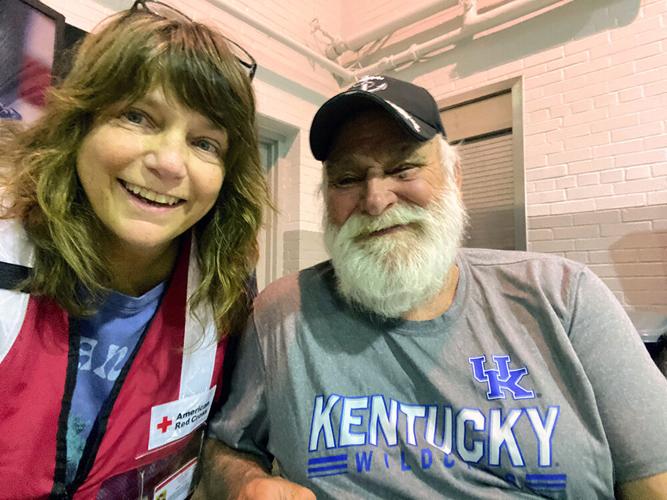
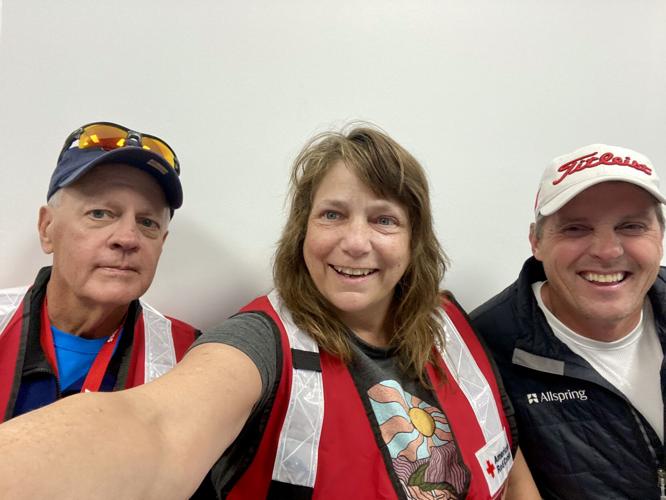
Hood River local Nan Noteboom, pictured at left, was recently deployed to Kentucky to help with Red Cross relief efforts. She worked the evening shift at a shelter in Livermore, where she made friends with Kenny, at right, one of the many residents displaced by floodwater.
Hood River local Nan Noteboom, pictured at left, was recently deployed to Kentucky to help with Red Cross relief efforts. She worked the evening shift at a shelter in Livermore, where she made friends with Kenny, at right, one of the many residents displaced by floodwater.
Photo courtesy Nan Noteboom
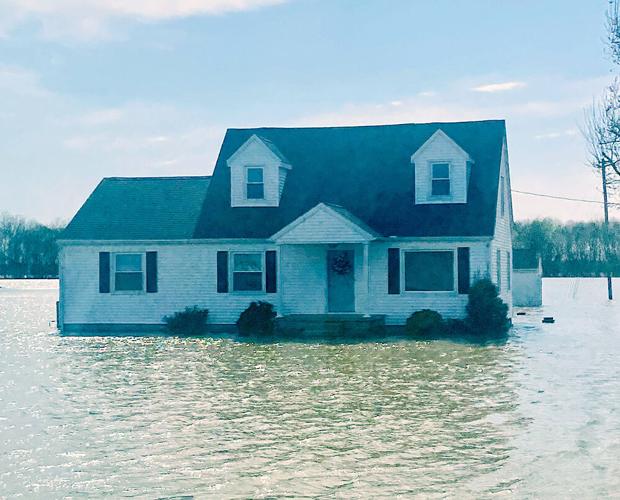
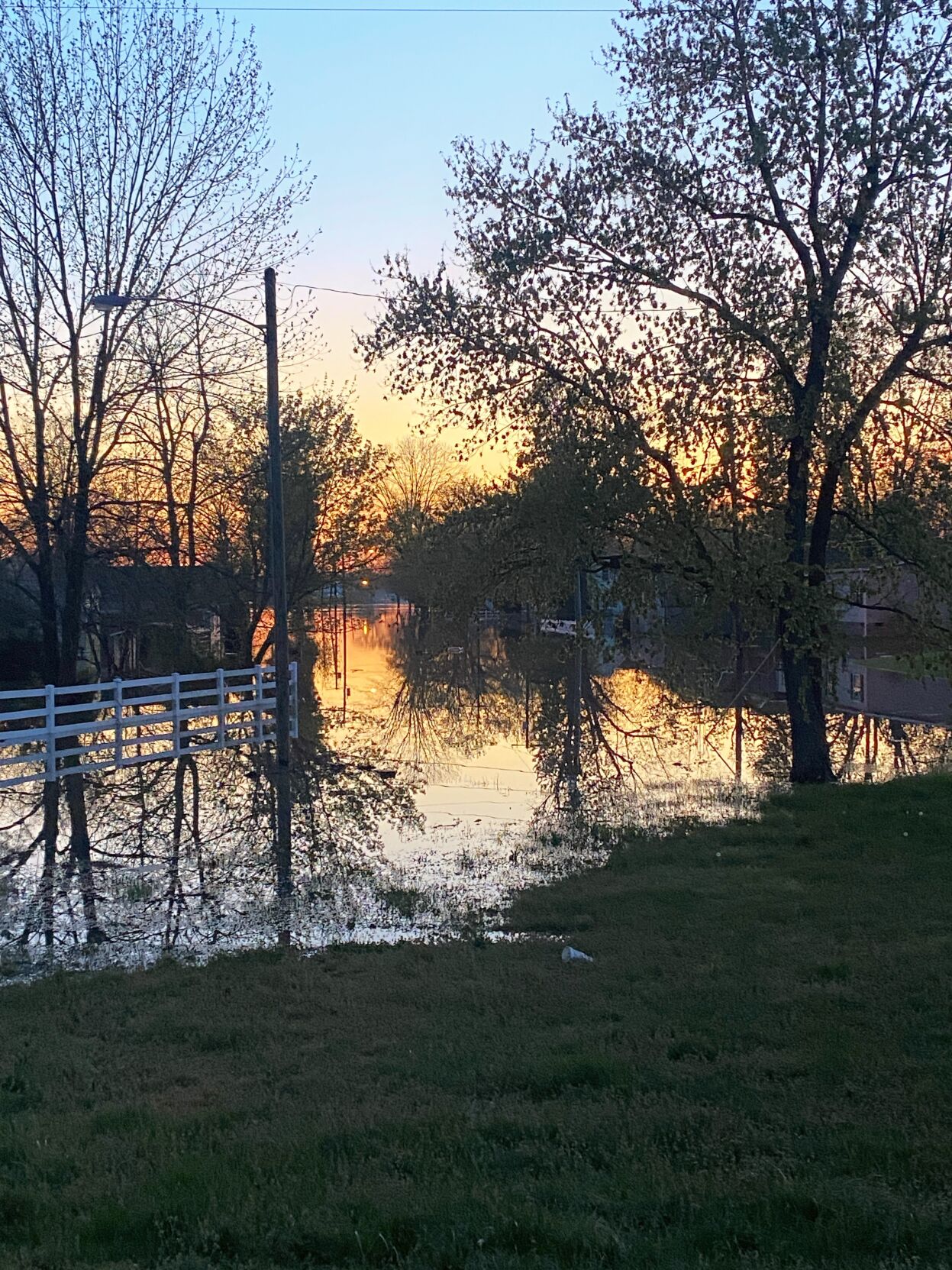
Noteboom has shared her photos from her time in Kentucky with Columbia Gorge News, including this home surrounded by flood water.
Photo courtesy Nan Noteboom
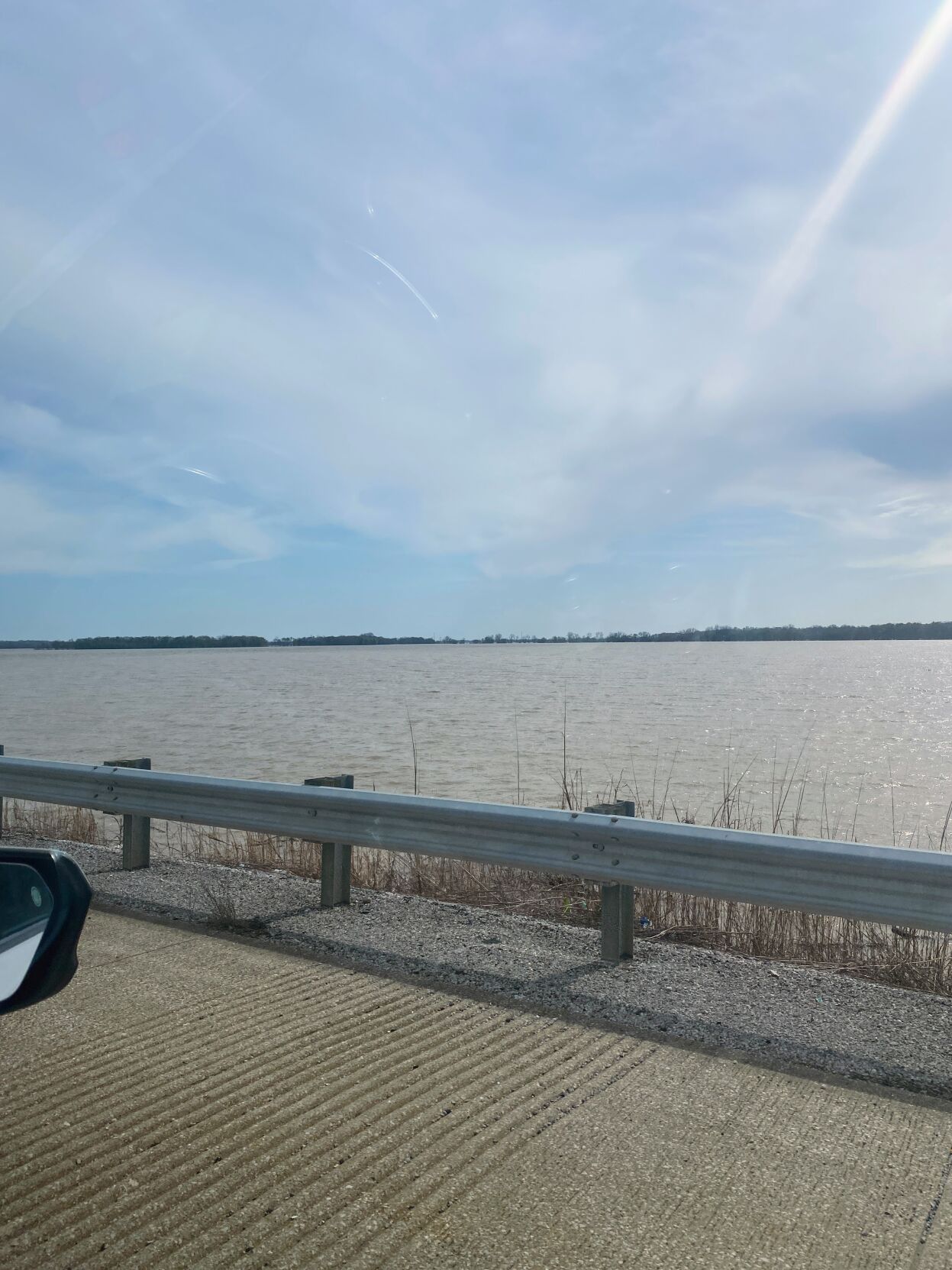
Tobacco field under water in Kentucky.
Photo courtesy Nan Noteboom
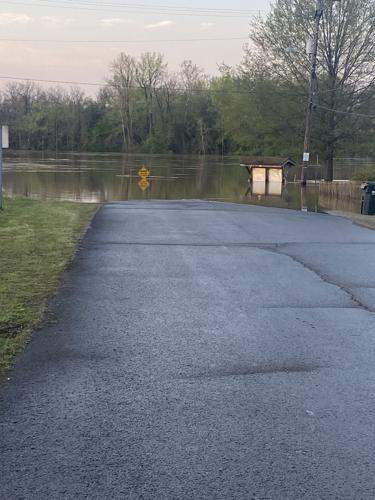
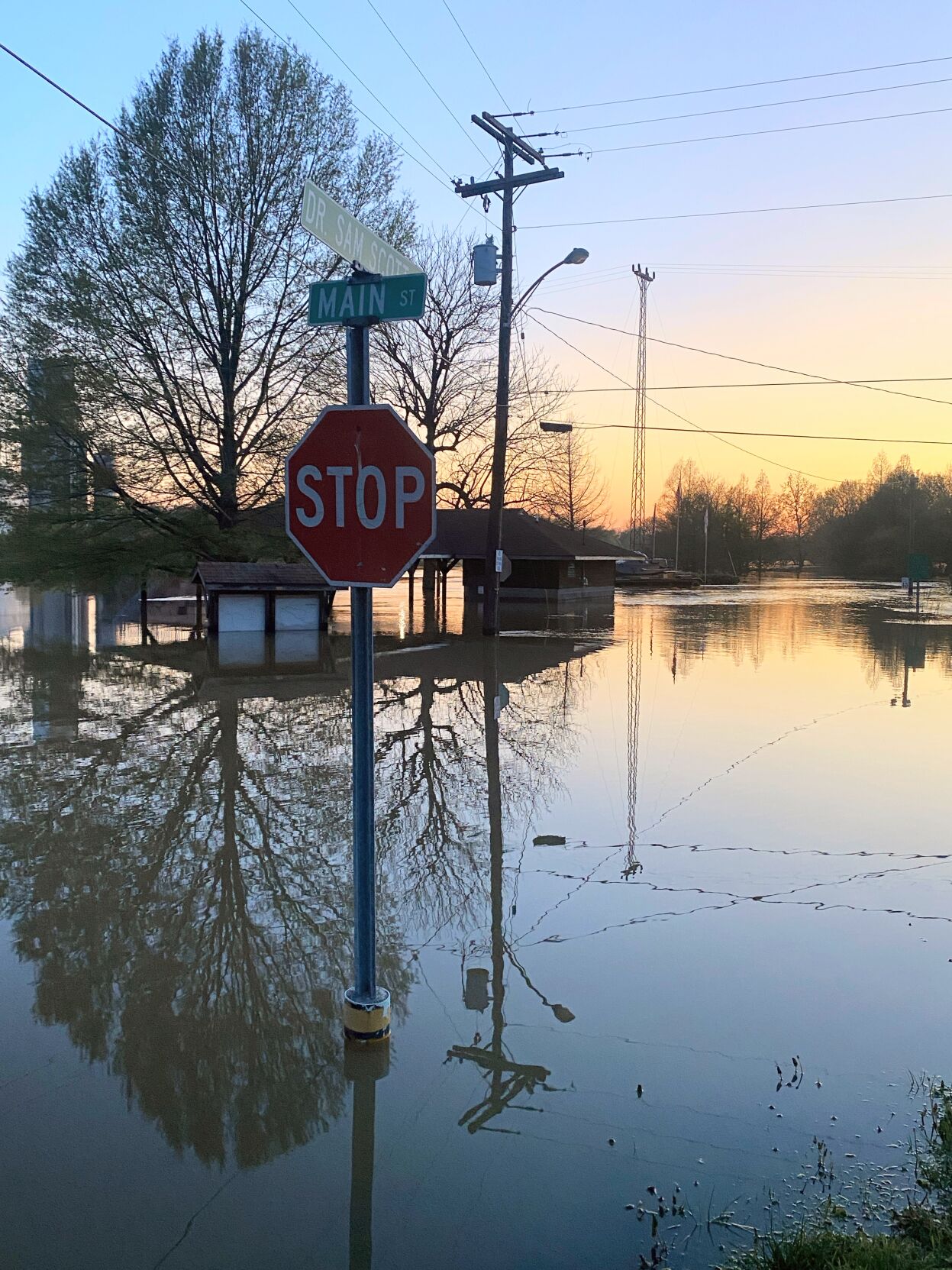
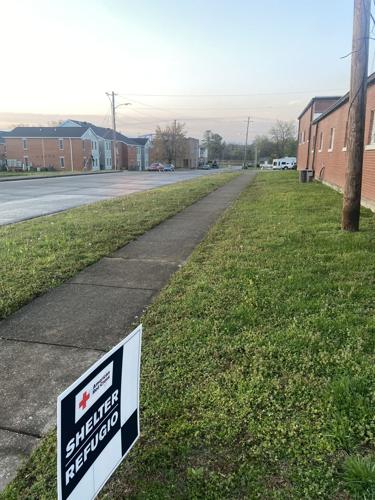
Main Street, where the Red Cross shelter was located, ends in floodwater.
Photo courtesy Nan Noteboom
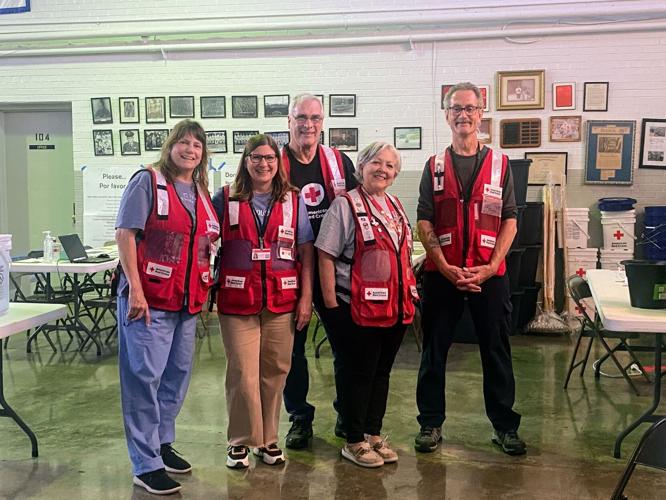
Nan Noteboom, middle, with other Red Cross volunteers.
Photo courtesy Nan Noteboom
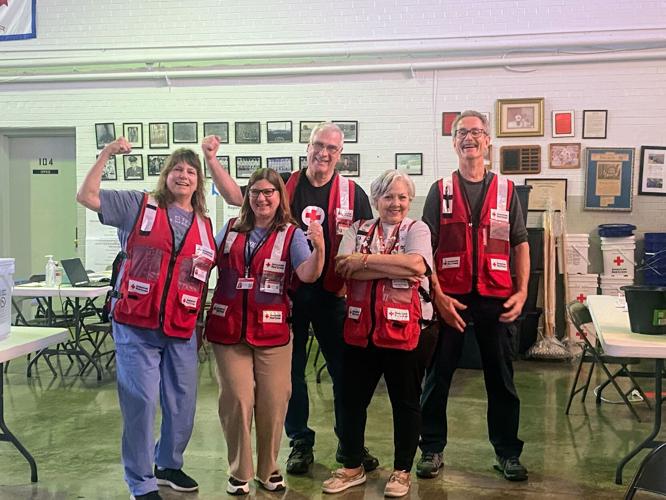
Nan Noteboom, far left, and other Red Cross volunteers.
Photo courtesy Nan Noteboom
Volunteering for the Red Cross.
Photo courtesy Nan Noteboom
Main Street in Livermore, Kentucky.
Photo courtesy Nan Noteboom
Kenny, one of the patrons of the Livermore shelter, lives on Second Street, pictured here covered in water.
Photo courtesy Nan Noteboom
The view of Main Street Livermore from the Red Cross shelter.
On April 6, I was deployed by the Red Cross to provide disaster relief in Kentucky due to flooding. I had 20 hours’ notice for a two week deployment. On April 7, I flew to Louisville to get my assignment and complete my mission. All my expenses were paid by the Red Cross. They simply cannot maintain their army of volunteers required if they don’t take good care of those volunteers.
I arrived with dozens of others from all over the U.S. After a day and a half of waiting, including spending several hours resting my head on my backpack (there were not enough chairs in the mobilization center), I also came to the conclusion that my backpack had the faint scent of cat pee. We had to part ways. I was finally assigned to a shelter; others were assigned to supply delivery, damage assessment, or feeding.
My assignment sent me to a small town of around 1,000 residents called Livermore, about two hours southwest of Louisville. Ahhh, Livermore. I spent 12 days there and am forever grateful.
Some context: The Red Cross had between nine and 15 shelters open in those 12 days. Around 450 volunteers had been called up. The locals had led the early efforts, and national deployments were used to relieve them. A shelter 10 miles from mine had 60 residents, but was cut off by road closures. My shelter had only four to six folks sleeping inside, but we also served 36 RV’ers who had been displaced from riverside campground (they were living in their campers, not on vacation).
Livermore is a tiny town with a huge heart. Every day, people stopped by to ask what they could do, drop off food, eat a meal, visit shelter guests, or just check on us. The Red Cross provided two hot meals, delivered daily, and we fed anyone who stopped by, including search and rescue teams from Georgia, who came in smelling of, well, swamp water. They’d spend all day taking boats to folks still in their homes, trying to convince them to evacuate, asking what they needed, and troubleshooting. Many people stayed in their flooded home until the exhaustion of battling the water drove them out.
I made friends, some on my shelter team, some of them locals. I loved their accents and the way they called me “Nay-enn.” My best friend was Kenny. He had been displaced from his trailer just two blocks away from the shelter and relied on a wheelchair for mobility, though he was still quite independent. He was smart and funny and really good at puzzles. I was working the 7 p.m. to 7 a.m. shift, and every night when I arrived, we’d take a walk down to the river to see its level.
Kenny was featured in a local newscast and told the world, “I thank God for the Red Cross.” He echoed the gratitude that was a theme of my deployment.
Livermore’s Main Street, in good times, ends in a public boat ramp. Now it just ended in the wide, muddy waters of the Green River. Every day, we all waited for the president to sign the disaster declaration that would provide FEMA funds to those who had lost so much. Imagine three feet of water in your own home: What does that look like? That’s what they faced. I didn’t meet anyone who had insurance.
On reflection, my deployment had highs and lows. The lows were the initial chaos: Disasters are messy and placing hundreds of volunteers in the field in 48 hours is tricky. I slept little, worked 12 hour shifts, and changed motel rooms four times. I experienced a common problem facing nurses: Compassion fatigue. But the highs win. The Red Cross response was amazing: The speed, the depth of care, the inclusion all felt so good. And feeling like I was part of the Livermore community made it all worthwhile.
•••
Nan Noteboom is a freelance reporter for Columbia Gorge News. She joined the Red Cross in 2022 as a way to help others.



Commented