Years ago, on an oak-covered hill, I found a slender white oak that was hollow, like a tube. About three feet up, part of the trunk ended in a little round hole. By sticking my nose down the hole and wrapping my hands around my face to exclude the sun, I could see all the way to the bottom, where half-a-dozen or so pearlescent, streaked eggs gleamed in a little heap of brown fur.
I’d seen two Ash-throated Flycatchers entering that hole.
I was putting their eggs at risk by peeking, had I known it then. Checking nests carelessly disturb can disturb parent birds, whose angry distress can bring nest robbers like Common Ravens and jays; mammalian predators (like chipmunks, squirrels and raccoons) can follow human footprints to nests by scent alone.
Days later, the oak held just a scatter of glossy fragments and the soft nest lining. I don’t know what happened.
Because good tree holes are scarce in the barely-forested deserts where this pale, feisty insect-eater lives, it often nests in odd hollows — exhaust pipes, fence posts, mailboxes, clothes hung out to dry.
The female spends a month incubating and brooding, while the male brings food and extra nest-fluff. Sometimes they decorate their nest with shed snakeskins. Why? Who knows.
I think mammalian reproduction is gross. Always have. But there’s something even more alien about birds, who secrete future generations in little hard pebbles of protein, then discard a patch of belly-feathers and sit on them for weeks.
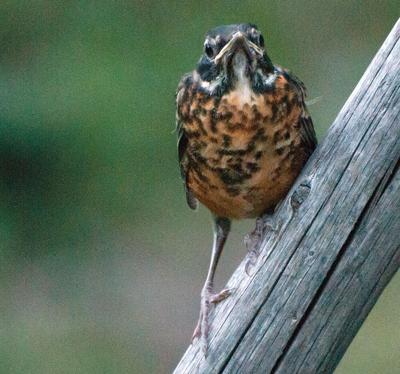
May and June the months to witness this. The morning chorus gets quiet, as more birds sort out mates and territories and settle down to nest. Robins are already ferrying beak-fulls of nourishing larvae to secret spots in the trees.
If you’re lucky enough to locate a nest, please keep it safe. Stay distant enough that you don’t cause the parent birds to change their behavior. Your excited attention can attract crows and jays, so don’t stare at the nest too long. And don’t mow or cut nearby plants — the nest needs shade and secrecy.
If you really want to look, wait until both parents leave, walk calmly and quietly past the nest, glance over — then keep walking in a big circle, to avoid leaving a dead-end trail for a hungry mammal to sniff out. Don’t touch the nest itself, or surrounding foliage.
Nestwatch, a citizen science program gathering data on breeding birds, provides more training in safely monitoring nests. To participate, you take an online certification quiz, then observe the nest on a set schedule, recording specific observations.
Then submit the data to Cornell University for analysis. It’s a fairly easy and informative program, which you can find online at nestwatch.org.
I might be able to participate, if I can locate a nesthole. Because guess who’s fighting like mad over nesting rights to that oak-covered hillside? Several pairs of Ash-throated Flycatchers.



Commented