
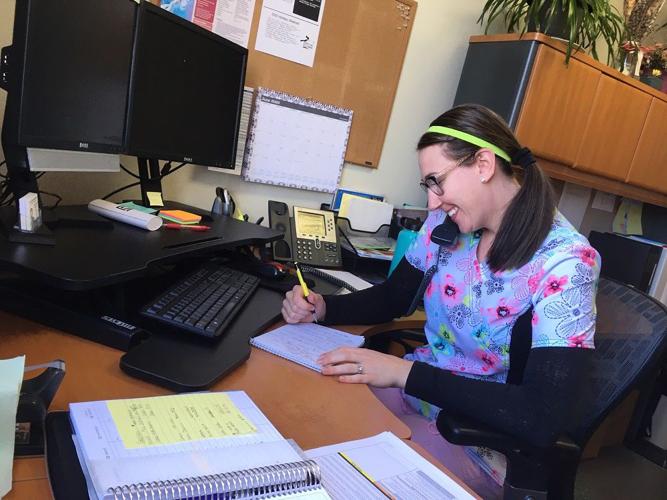
Janelle Sandoz, a nurse at North Central Public Health District, is one of several staffers who are now working as contact tracers, calling people to let them know they’ve been exposed to someone with COVID-19.
Most of the people she calls were already told by the person who has COVID, she said, and “they’ve genuinely seemed thankful to have someone checking in on them.
“It’s been so nice,” Sandoz said, citing “everyone’s willingness to follow the guidance in order to keep the community safe.”
Those exposed are asked to quarantine themselves, which means staying home for 14 days even if they’re not sick, to monitor them for any symptoms. They are asked to even stay away from others in their own household.
By staying home and away from others, it prevents spread of the disease. With no treatment or vaccine for COVID, it is the best method to stop its spread.
“People have been proactive about contacting their employers, making sure they have things set up in place for them to successfully quarantine at home,” she said. “It’s made my job a lot easier.”
She’s contacted about 15 people so far, she said last week. Confidentiality rules mean she can only tell people they’ve been exposed to someone with COVID-19, without saying who it is.
She not only lets them know about their exposure — meaning they’ve spent at least 15 minutes within six feet of someone with COVID — but assesses if they have any symptoms, and their ability to quarantine safely and effectively.
The ideal is staying in a room, alone, with your own bathroom, and using separate towels, dishes and cleaning supplies.
She directs them to resources if they have financial or mental health needs, and asks if they need help getting groceries or medications.
Those who can’t safely quarantine at home can stay at a hotel, at the health district’s expense, on the condition they stay in their room and don’t have guests.
An important part is educating them so they understand why they’re being asked to quarantine, she said.
Contact tracing has gained a new prominence with the COVID-19 pandemic, but there’s a reason people haven’t heard of the longstanding and well-established public health practice.
“It’s confidential in nature so that’s why it’s not widely known,” said Jeremy Hawkins, an epidemiologist for the health district, which serves Wasco, Sherman and Gilliam counties.
Normally, contact tracing, or telling people they’ve been exposed to an illness or disease, is associated with things like measles outbreaks. It’s also done with sexually transmitted diseases.
When someone tests positive with COVID-19, the health district is alerted both by the lab that conducted the test and the healthcare provider who ordered it.
Hawkins, or another staff epidemiologist, then calls the person. Hawkins has been grateful that usually the healthcare provider has not only already called the person with the news, but has also, crucially, told them to expect a call from the health department.
“That’s extremely helpful,” Hawkins said. Others who aren’t told “didn’t know the health department would call them and they didn’t know why we would be involved.”
His calls usually last 30 minutes. He first explains why he’s calling and asks if they have any questions or concerns. He tells them what COVID is and how it spreads, and how to avoid exposing others to it. He tells them how long they need to isolate.
He then asks them when symptoms started and who they had close contact with, so they can not only try to figure out who they got it from, but also who might now be exposed. He asks for contacts they had starting two days prior to symptom onset.
People have reacted to the news with a “pretty wide range of emotions,” he said. Most are calm and just want to know what to expect and what to do. Some are scared of the disease itself, or scared they might have infected loved ones, or worried about how people would react if they found out they had COVID.
“I tell people it’s not your fault that you got this, it was bound to happen to a certain amount of people, and certainly many more to come, as well,” Hawkins said.
“We can follow all the guidance we have and it still might not prevent someone from getting infected. It’s not an indictment of anyone’s personal hygiene,” he said.
As for the calls he’s made, a few have had to pause for coughing fits before continuing the interview. Others clearly have shortness of breath. Most have had symptoms of some kind, but a few have had none.
It can be hard to determine what counts as a close contact — those who were within six feet for 15 minutes. “We really try hard to balance between needing to be cautious and having people quarantine and also recognizing we shouldn’t be requiring that of everybody who has been around this person unless they have a close contact.”
After Hawkins as the case investigator turns over the contact list he’s developed to the contact tracers, the contact tracers ask each person if they are willing to have a contact monitor reach out to them daily to check on them.
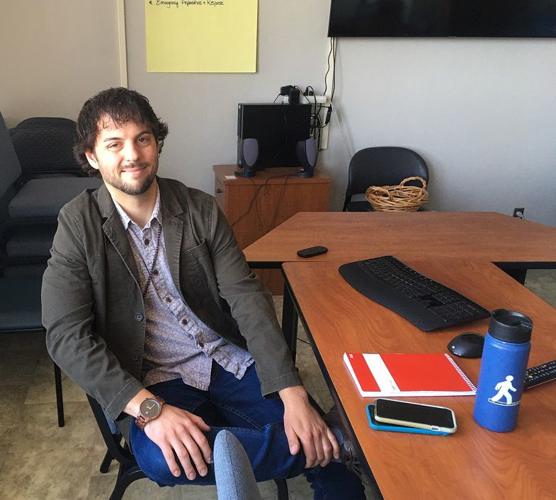
Robin Pashek, a 2017 graduate of The Dalles High School and an incoming senior at Willamette University who plans to go on to medical school, is working as a monitor.
She makes daily calls to people in quarantine, checking for any development of symptoms and asking if they have any questions. A few of the people she’s monitoring have gone on to get COVID.
Pashek said not everybody can afford to stay off work for two weeks, nor can they safely quarantine in their own home. These “are all social issues that play into how it’s being spread.”
“I think people are more willing and able to quarantine if they have support by their employers and community,” she said. “I think when you don’t have that it puts that individual in a really hard spot to be able to do so, which then has adverse consequences for the whole community, which is hard.”
She believes most of the 15 or so people she’s monitored have stayed home, and friends have gotten their groceries for them. She’s also found people are liking the fact that someone just calls them every day to ask them how they’re doing.
A lot of them have told her, “I need to pick up a hobby for these next couple of weeks.”
Pashek said of quarantine, “The point of it is they won’t be spreading it to other community members.”


Commented