
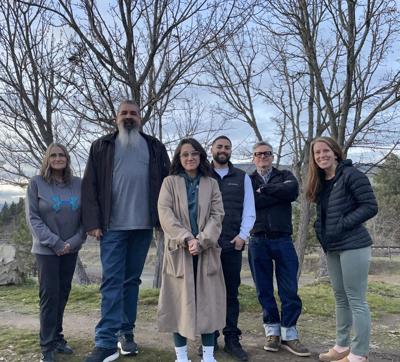
THE GORGE — A new nonprofit organization hopes to open a recovery center that would provide a safe space for people in recovery from substance use disorder to socialize and access resources.
The Gorge Recovery Center nonprofit group began meeting last spring and attained its nonprofit status in December. It hopes to open a recovery center in The Dalles or Hood River by this fall.
Derek Greenwood, an ER nurse and nurse instructor, is president of the board and a person in recovery.
A recovery center is “really missing around here, and in my experience as someone in recovery, I think it’s the most important thing we can do,” Greenwood said. “Community is how you heal.” He noted some experts believe substance use disorder is a disease of lack of community and connection.
The group received start-up money from the Columbia Gorge Health Council. It is seeking state and federal grants as well as opioid settlement funds and welcomes donations from the community.
Opioid settlement funds were made available to states through a national settlement with opioid distributors and manufacturers. Most of the funding is required to go directly to abatement of the national opioid epidemic.
To learn more about getting involved or donating, email gorgerecoverycenter@gmail.com.
Greenwood said people can finish substance abuse treatment and come home thinking, “so who am I going to hang out with now?” Or they can have an appointment with a therapist and “then you walk out into the cold of the day, or night, and say, ‘What do I do with myself now?’
“What keeps people in recovery is that greater network of nonprofessional people they meet in the recovery community,” he said.
That is one of the great values of self-help meetings, where they are around others with shared experiences who are also pursuing sobriety.
Greenwood said he would not have kept his sobriety for 20 years if he didn’t have friends to do healthy activities with. When he quit going to self-help meetings, he relapsed. He regained his sobriety eight years ago.
Victor Veloz, regional manager at Bridges to Change, serves on the board and is also in recovery. He said, “So many people fall into relapse because there is nothing to do — nothing positive anyway.
“We just don’t have anything around for the recovery community,” Veloz said. “They start walking in sobriety, now what is out there for us? We want to have functions, we want to have events, like a Super Bowl party that’s sober.”
Veloz said the group is not anticipating having a large space, just somewhere to have meetings and enjoy activities like foosball and yoga. “Whatever things we can bring in that would draw people in, give people things to do,” he said.
“Besides meetings, there’s no social events to go out and do something. And even people in our programs at Bridges to Change are bored. This would give a place to go and give back, be a part of, to be safe,” he said.
He said the group is trying to model itself after 4D, a “recovery café” with multiple locations in Portland. “We’re not trying to recreate the wheel or anything, so we’re trying to draw from them what we can.”
Veloz said the board hopes to add new members. “We would like a couple leaders from our community to join us, to back us, be part of it, buy into it.”
Greenwood said the board wants the recovery center to be a place where parents would feel safe sending their 18- or 19-year-old son or daughter to, and where an 85-year-old grandmother in recovery for 40 years also feels comfortable.
“You can have a cup of coffee, maybe play a game of pool,” to have positive healthy things to do, he said, “and you’re connecting with friends who are modeling good healthy behavior.”
The idea for a recovery center came from a 2022 conference Greenwood organized in concert with the Columbia Gorge Health Council, One Community Health, and PacificSource, where 60 people from 20 agencies discussed how to better address substance use disorder in the Gorge.
The board would like to see at least three to four different self-help meetings per day at the recovery center, plus classes in parenting, finance, and employment.
There are self-help meetings throughout the Gorge, which wouldn’t exist were it not for churches, Greenwood said. But there are fewer churches now, and some are starting to require large liability insurance coverage, putting them out of reach of self-help groups.
The board includes addiction treatment professionals and prevention professionals. Its bylaws require that a majority of board members be in recovery themselves.
Ultimately, the recovery center will be what the recovery community wants it to be, Greenwood said. “And our recovery community is vast,” including friends, family and employers of those in recovery. “We are all affected by substance use disorder.”
He said people associate substance use with the homeless. “It’s much more than that; it’s our sons and daughters, it’s people who are still employed, it’s people who are in high school, it’s retirees, it’s people who are doctors and lawyers and own businesses around here.”
The group is endorsed by Pacific Source, the local Medicaid coordinated care organization, and has representatives from One Community Health, Mid-Columbia Center for Living, Bridges for change, a recovery group, and Hood River County Prevention, among others.


Commented