Every June 14, National Strawberry Shortcake Day puts one of summer’s most iconic desserts back in the spotlight. Most home bakers have a version they make: biscuits from a box, berries from the store and a can of whipped cream. But trained bakers know the difference between a shortcake that’s merely fine and one that people ask about, and it comes down to a single ingredient handled a specific way.
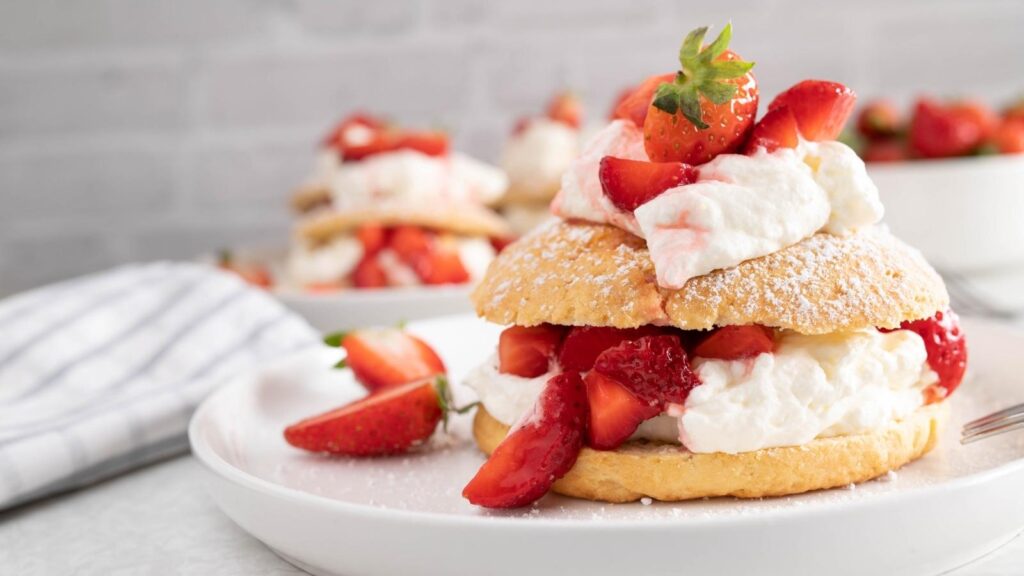
Two ingredients determine whether your strawberry shortcake is forgettable or the one everyone asks about. Photo credit: Depositphotos.
Kristin Hoffman, the trained chef, baker and educator behind Baker Bettie, has spent years teaching home bakers the fundamentals that cooking shows skip. Shortcake, she says, is one of those recipes that looks forgiving but isn’t. The ingredient list is short, the technique is straightforward, and that’s exactly why every choice carries weight.
What a trained chef knows about shortcake
The ingredient that matters most isn’t the strawberries. It’s the butter, and specifically how cold it is when it goes into the dough.
“Cold butter is what creates the flakiness in a shortcake,” Hoffman said. “As the butter melts in the oven, it creates these little pockets of steam throughout that give the shortcake its tender, flaky texture.”
The science is simple: cold butter stays in discrete pieces when worked into flour. Those pieces don’t fully incorporate; they melt during baking and leave behind layers of air. Warm or softened butter blends into the dough instead, producing something closer to a dense scone than a proper shortcake. The fix is straightforward. Keep the butter refrigerated until the moment it’s needed. Work quickly and stop mixing the moment the dough comes together.
Butter quality matters as much as temperature
Temperature is the technique, while quality is what determines the flavor. Shortcake has no sauce to hide behind, no spice blend to carry the top notes. With so few ingredients, butter functions as a primary flavor, not just a fat. A butter that tastes flat or processed will produce a shortcake that tastes the same way.
Hoffman uses Challenge Butter for that reason. “I love working with Challenge Butter because the flavor is rich and consistent, which is extremely important when butter is one of the primary flavors in the recipe,” she said. In a dish this simple, consistency across batches matters as much as the quality of any single one.
What else separates good from great
Butter is the foundation, but the rest of the assembly deserves the same attention. Strawberries should be macerated: sliced, tossed with sugar and left to sit for at least 30 minutes before serving. The sugar draws out the fruit’s natural juices and concentrates the flavor in a way that fresh-sliced berries alone can’t match. Skip this step, and the berries taste like an afterthought.
“Strawberry shortcake is all about the strawberries,” said Jere’ Cassidy, owner of the dessert and baking blog One Hot Oven. “When they’re sweet and in season, they don’t need much help. They’re perfect in shortcake with homemade strawberry whipped cream, made by folding crushed strawberries into freshly whipped cream.”
Whipped cream should be made fresh and kept cold. Canned cream works in a pinch, but it can’t replicate the texture of cream whipped to soft peaks just before serving. And assembly order matters: shortcake on the bottom, a spoonful of cream, then the macerated berries and their juice, then the shortcake top. The juice slightly soaks into the biscuit, tying the layers together.
The result is a dessert where nothing is hidden, and nothing needs to be. Every element is exactly what it is, which is the whole point of strawberry shortcake in the first place.
Jennifer Allen is a retired professional chef and long-time writer. Her work appears in dozens of publications, including MSN, Yahoo, The Washington Post and The Seattle Times. These days, she’s busy in the kitchen developing recipes and traveling the world, and you can find all her best creations at Cook What You Love.



Commented