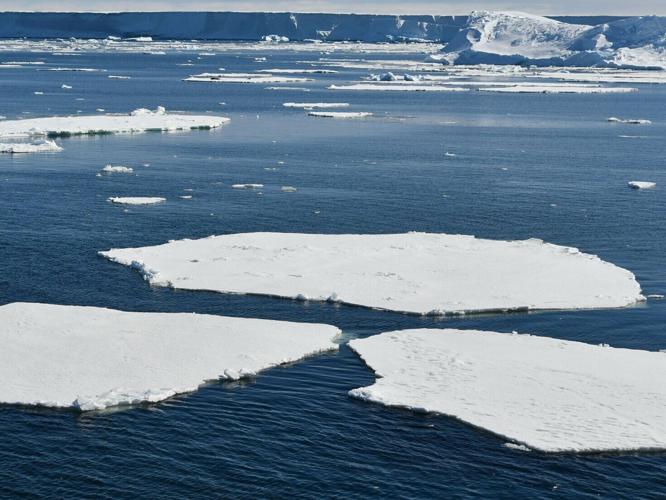
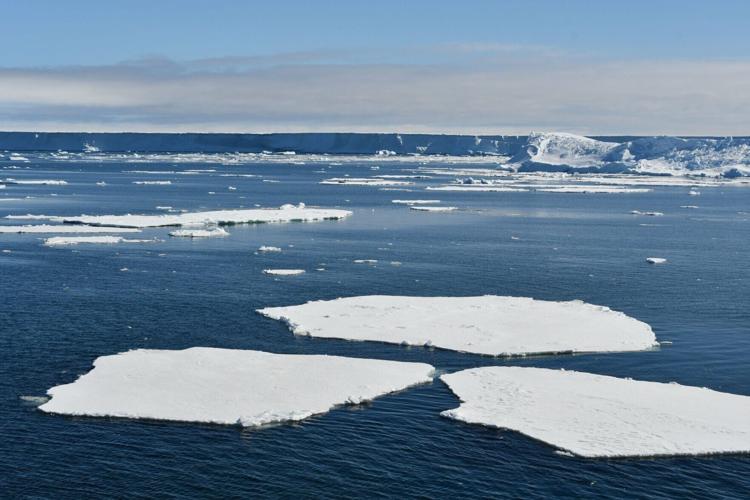
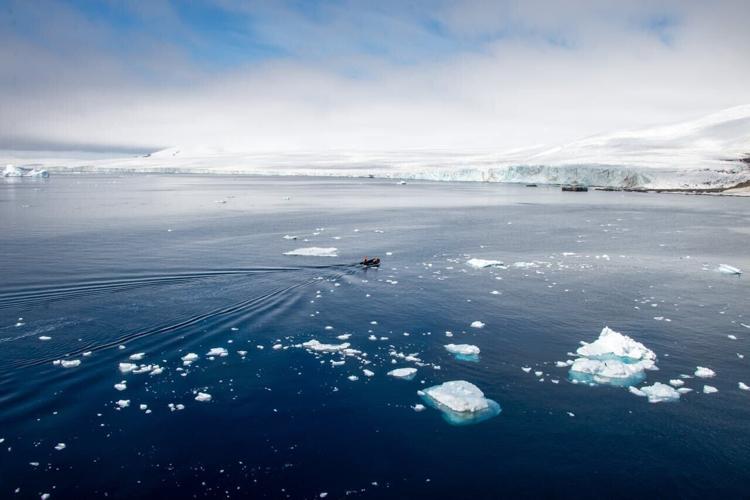
Melting ice in Antarctica. (Laura Cimoli via SWNS)
By Talker
By Stephen Beech
Deep-ocean heat has moved closer to Antarctica — threatening catastrophic sea level rises, reveals new research.
The decades-long study of oceanographic data provides the first evidence that warmer water has moved nearer to the continent which is surrounded by fragile ice shelves.
The University of Cambridge-led research compiled long-term ocean measurements collected by ships and robotic floating devices.
It shows that a warm mass — called "circumpolar deep water" — has expanded and shifted toward the Antarctic continental shelf over the last 20 years.
Previously, scientists didn't have enough ocean observations to detect the warming trend.
Study lead author Joshua Lanham said: "It's concerning, because this warm water can flow beneath Antarctic ice shelves, melting them from below and destabilizing them."
Cambridge postdoctoral researcher Lanham explained that ice shelves play a key role in holding back Antarctica's inland ice sheets and glaciers, which collectively hold enough freshwater to raise sea level by around 58 meters (190ft).
He said it's the first time that scientists have observed the shift in deep-ocean heat throughout the Southern Ocean.
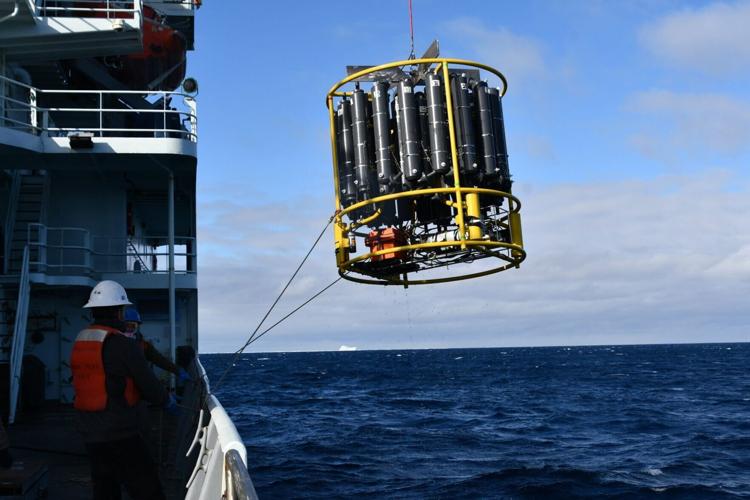
Water monitoring sensors being deployed over the side of a ship as part of long-term international ocean monitoring program. (Laura Cimoli via SWNS)
By Talker
Lanham added: "It's something that had been predicted by climate models due to global warming, but we hadn't seen it in data."
Previous observations of the Southern Ocean, which encircles Antarctica, were limited to transects recorded by ships around once a decade.
The information, collected as part of a long-running international program, provided detailed snapshots of temperature, salinity and nutrients throughout the water column.
But, without continuous data, scientists were more uncertain about long term changes in heat distribution.
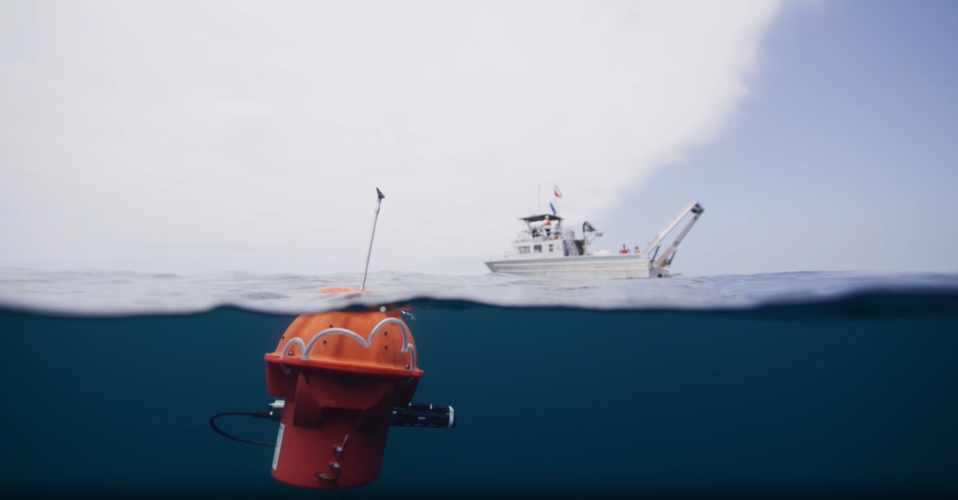
To fill gaps in the record, the researchers, including scientists from the Scripps Institution of Oceanography and UCLA, supplemented the ship measurements with publicly available data collected by a global array of autonomous floats, which drift through the upper ocean.
The so-called Argo floats provide continuous snapshots of the ocean, but the program hasn't been running as long as ships have been collecting detailed hydrographic sections.
Using machine learning, the research team took the Argo float data and combined it with long-term patterns drawn from ships measurements to build a new record capturing detailed monthly snapshots over the last four decades, allowing them to uncover the shift in warm waters.
Study senior author Sarah Purkey, from Scripps Institution of Oceanography, California, said: "In the past, the ice sheets were protected by a bath of cold water, preventing them from melting.
(University of Cambridge / Scripps Institution of Oceanography / Communications Earth and Environment via SWNS)
By Talker
"Now it looks like the ocean's circulation has changed, and it's almost like someone turned on the hot tap and now the bath is getting warmer."
She added: "It makes sense that this pool of warm water is expanding.
"More than 90% of excess heat from global warming is stored in the ocean, with the Southern Ocean absorbing most of the anthropogenic heat."
The research team say their findings, published in the journal Communications Earth and Environment, not only have implications for Antarctic ice melt and sea level rise.
Co-senior author Ali Mashayek, from Cambridge Earth Sciences, said: "The Southern Ocean plays a key role in regulating global heat and carbon storage, so changes in heat distribution here have wider implications for the global climate system."
In the frigid waters around the poles, extremely cold, dense water forms and sinks to the deep ocean.
As the water sinks, it draws down heat, carbon and nutrients, setting in motion a global 'conveyor belt' of currents, including the Atlantic Meridional Overturning Circulation (AMOC), which shuttles water around the Atlantic.
Climate models indicate that warmer air temperatures and added freshwater from ice melt are reducing the formation of dense water in the North Atlantic, potentially leading to a weakening of the AMOC.
Similar changes have recently been forecast for the Southern Ocean.
Climate models have suggested that the production of cold, dense water will decline in Antarctica, causing the warmer circumpolar deep water to draw toward the continent to occupy the space left by the shrinking cold water.
Lanham said: "We can now see this scenario is already emerging in the observations."
He added: "This isn't just a possible future scenario suggested by models; it's something that is happening now, bringing wider implications for how carbon, nutrients and heat are cycled through the global ocean."



Commented