
By Amelia Fiore
Columbia Gorge News
THE DALLES — The Fort Dalles Museum and Anderson Homestead is considering a proposed ownership transfer that could change how the historic museum is funded and managed.
The proposal was introduced by Wasco County and city officials during a special joint meeting on Aug. 27, when they introduced a transfer of ownership from their sectors to the Wasco County/City of The Dalles Museum Commission and the Fort Dalles Museum/Anderson Homestead Foundation. Currently, the commission oversees the museum site and public access, and the foundation is a 501(c)(3) nonprofit that supports long-term funding efforts and preservation of the museum’s artifacts.
Wasco County officials are looking to reduce their role in operating the museum, which is jointly owned and funded by the County and the City of The Dalles. The Fort Dalles Museum commission has been considering the proposal’s potential benefits and limitations of an ownership transfer.
Established in 1850 as the first official U.S. military post east of the Cascade Mountains, the museum site once housed soldiers and their families. The currently Fort Dalles Museum building was built as the post’s Surgeon’s Quarters in 1856. In 1905, the local Sorosis Club, a professional women’s organization, renovated the building into a museum. The city later established a museum commission to oversee the building and its artifacts.
Robert Pollock, the museum coordinator, said the county has been looking to reduce its involvement in the museum before the current proposal. The county initially proposed merging the museum into the Columbia Gorge Discovery Center. However, the Discovery Center, which operates independently of county funding, expressed concerns about taking on the financial responsibility.
“They just couldn’t afford it,” Pollock said. “They’ve got enough trouble with their own funding, and if they took us on, we’d both go down.”
Now, the county suggests transferring ownership of the museum to its existing nonprofit foundation and museum commission. The museum’s commission has been considering the advantages and challenges of transferring ownership to the commission and foundation, as it could create a potentially significant change how the museum is both funded and operated.
Pollock said transferring ownership could reduce some of the hurdles they have faced with the county’s regulations in the past, including their recent attempt at reconstructing the weather-damaged vehicle shed. However, the museum would also need to take on responsibilities the county currently oversees, which Pollock expressed they do not have the resources to do properly. A transfer of ownership could provide more independent opportunities for the museum, but it could also create financial and logistical challenges.
The Fort Dalles Museum has been already been navigating a dwindling crowd of attendees over the past few decades, many of whom now come from cruise ships stopped at the Columbia Gorge river. Daily operations are overseen by Pollock and one other employee, with additional support from a handful volunteers and the museum commission.
The museum also faces limitations related to its historic building, which is not completely accessible to people with disabilities because of its age and structure. Its limited space and volunteer capacity have presented additional challenges to host large events and exhibitions.
In the future, the museum commission hopes to increase community engagement and make exhibits more relevant to The Dalles in the present.
“We’d like to better engage with the community and make the exhibits more relevant and timely,” said Eric Gleeson, vice president of the museum commission. He added that the museum hopes to host more community events and explore how local history connects to the current city landscape.
Pollock said he wants to broaden the museum’s focus beyond local history. “One of the things that happened here over the decades was it tended to shrink its focus to just history of the Dallas or Wasco County in general. And what I have tried to do is broaden that to show that this place is not just locally significant, but certainly regionally significant, and, in many ways, nationally significant,” said Pollock.
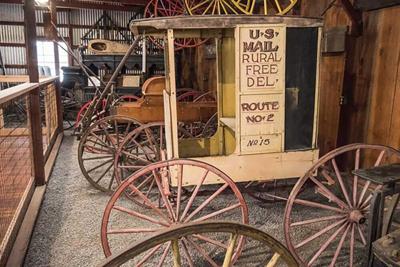
Fort Dalles Museum hosts a unique collection of historical pieces that paint a picture of the county’s past, including old wagons, military items, and pioneer artifacts. If visitors are lucky, they might get a tour from the museum’s unofficial mascot, Midnight, a friendly 13-year-old black-and-white cat who lives on the property.
As of now, no formal decision on the proposal has been made. The museum will be open seven days a week, from 10 a.m. to 5 p.m. through November.


Commented