
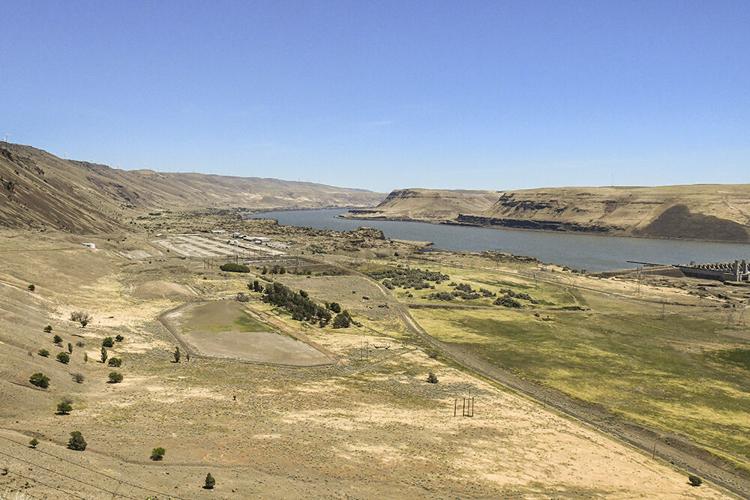

An underground powerhouse, consisting of turbines and pumps, would be installed along an underground pipe, also known as a penstock,
Updated: An updated version of this article clarifies that Tribal members are granted access each year to private property, on which the project site is located.
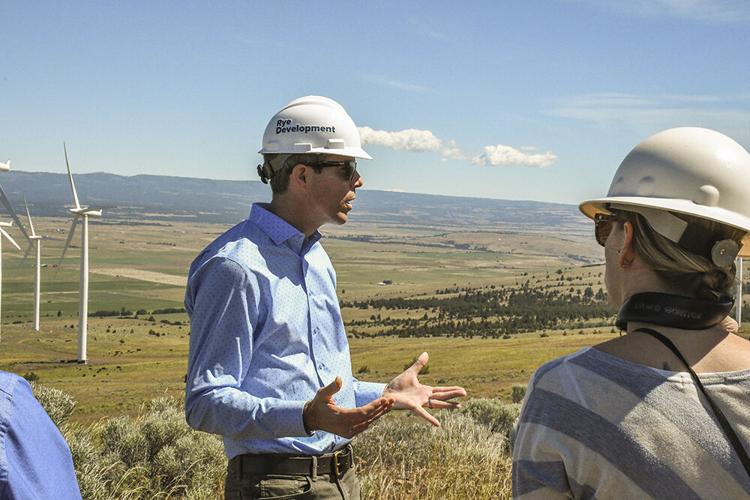
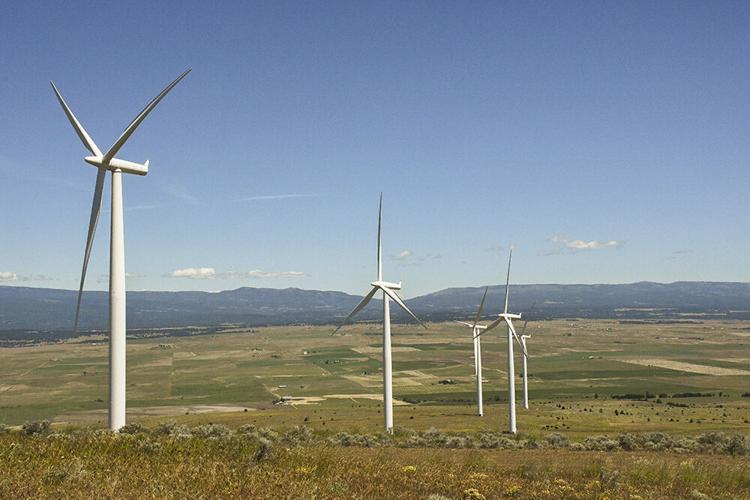
Water gushed from the John Day Dam, and wind turbines from atop the Columbia Hills in Klickitat County spun with regularity one sunny morning in June. Despite both mechanisms seemingly operating at the time, only one was generating electricity.
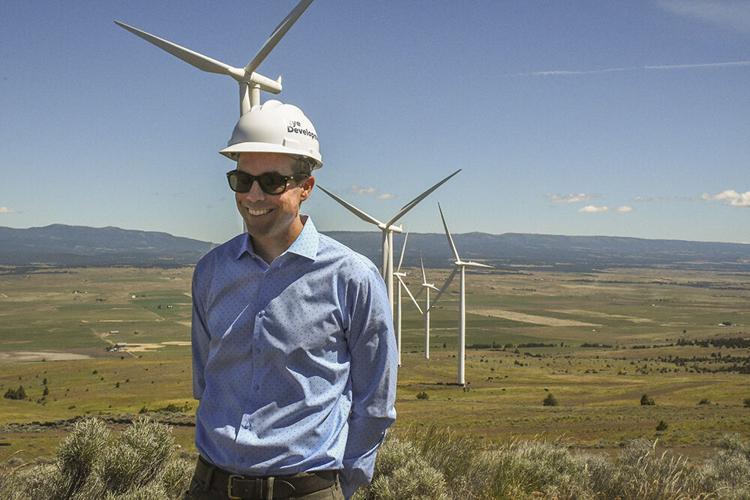
That day, Erik Steimle, Vice President of Project Development for Boston-based Rye Development, said that the water level on the Columbia River was so high that the dam was operating at maximum capacity.
“With the dams running at capacity, there’s no place to use the wind turbine output, so the operators decouple the generators,” he said.
Wind turbines and solar panels are renewable sources of energy that do not emit greenhouse gasses, but they suffer from a lack of storage. By design they cannot function at certain times – only when the sun shines and the wind blows – making them known as “variable” or “intermittent” energy sources.
With the renewable energy industry growing steadily in the past two decades in the Columbia River Gorge, due in part to the natural geography of the region, state-led initiatives to make the electrical grid carbon-neutral as well as innovations in the sector that has made investments in renewable energy more viable, private companies are moving in to capitalize on the demand for storage that troubles renewable energy suppliers.
“The demand for storage is in excess,” Steimle said.
Steimle has been the public face of a $2 billion pump storage project eight miles south of Goldendale in Klickitat County since it was first proposed in 2018.
The proposed project, being undertaken by Rye Development, plans to capture any excess energy generated by intermittent renewable sources, such as solar and wind, aggregate it, and store it for future use. Variability — meet consistency.
If completed, the project would be the biggest of its kind in the Pacific Northwest. Touting a capacity of 1,200 megawatts — nearly three times the capacity of Swan Lake North, the largest pumped storage project in Oregon, located near Klamath Falls and developed by Rye Development — developers say the project would support regional energy and climate goals by decreasing carbon emissions by nearly 1.8 million tons each year. Steimle noted the project will bring an estimated 60 jobs full-time jobs to the area and about $14 million in tax revenue to the county each year.
Impacts to cultural resources would be significant
While developers promote the project as the solution to capacity issues that make wind and solar projects less viable for consistent on-demand power, tribal leaders and environmental groups are raising concerns over the project’s potential to destroy irreplaceable cultural and religious resources in the area.
A recently published draft environmental impact statement, prepared by Washington Department of Ecology, determined that the proposed project, sited eight miles south of Goldendale near the Columbia River, would cause “unique significant and unavoidable adverse impacts on Tribal communities and Tribal members.”
The draft environmental impact statement serves as a comprehensive and objective evaluation of probable significant adverse environmental impacts, reasonable alternatives, and mitigation measures that would avoid or minimize impacts — comments from the public are being solicited.
The public commenting period has been extended through Aug. 9. The public can provide comments at www.ecology.wa.gov/Regulations-Permits/Permits-certifications/Industrial-facilities-permits/Goldendale-Energy.
A final environmental impact statement, expected late this year, will guide future discussions on permit applications. The project requires permits from the federal government, the state of Washington, and Klickitat County.
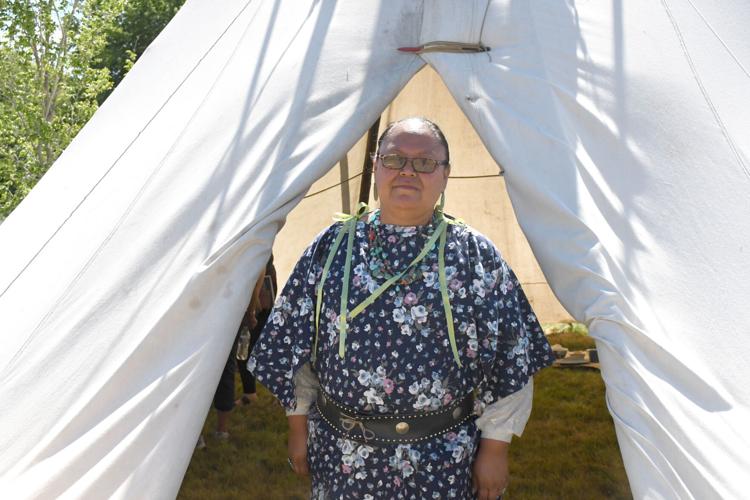
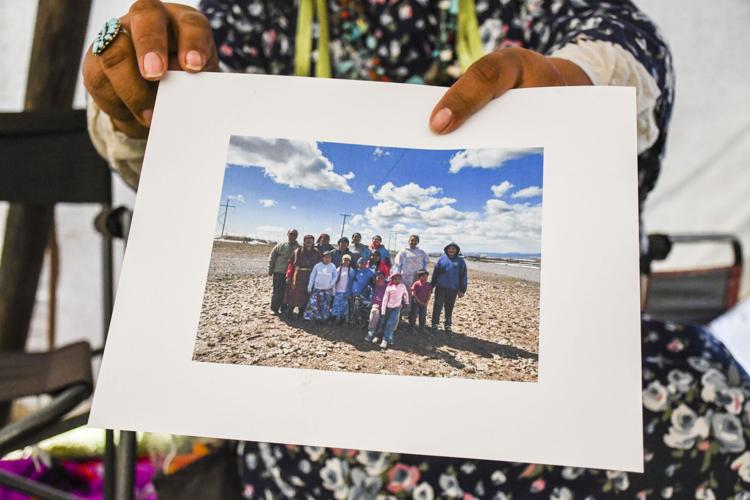
Local resident Elaine Harvey is a member of the Rock Creek Band — Ka-milt-pah — one of 14 tribes and bands of the Yakama Nation.
She has been vocal in her opposition to the proposed pump storage project sited in the area known in the language of her heritage as Put-a-lish.
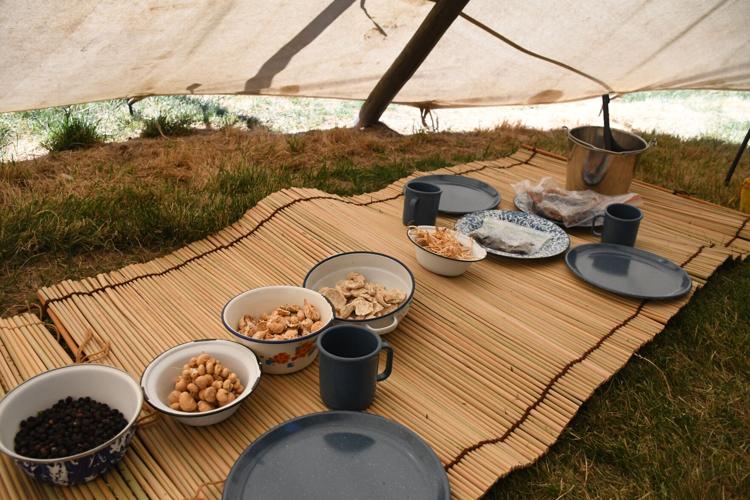
Each year, Harvey, along with members of her family and tribe, access a portion of Put-a-lish and gather roots and plants native to the ridge. Members also gather salmon, deer/elk and berries. in April for the Rock Creek Band's celebration of the first foods of the year with a feast, which is open to the public, as a way of honoring and blessing the gifts of sustenance.
"You have to partake of this feast before you go and gather traditional foods individually," Harvey said.
Access to Put-a-lish is limited, Harvey said. In order to gather the various roots on the mountain, NSC Smelter, which owns the land covering the project area, grants them access. But the level of access to Put-a-lish can vary due to the patchwork of landowners adjacent to NSC Smelter property.
Harvey says she fears that with the development of the project, their traditional sites for root-gathering would be desecrated. She said supporters of the project would argue that the project site is inaccessible already; in response, Harvey said that "we know it's there, and what's important to us is that it's a sacred mountain. There needs to be awareness that we still live here in Klickitat County and practice our traditional ways of gathering foods and medicines. Many of our sacred sites, villages, fishing sites, and food gathering sites have already been lost to green energy projects with no regard to the tribe."
According to the draft environmental impact statement, state officials from the Department of Archaeology and Historical Preservation report that 79% of the area studied is within high or very high risk for the possibility of encountering archaeological sites.
The Confederated Tribes and Bands of the Yakama Nation and the Confederated Tribes of the Umatilla Indian Reservation both separately identified Pushpum as one of many tribal cultural places in the project site area, which is located outside of reservation borders.
Pushpum, according to the Yakama Nation, is the location of ongoing harvests of traditional resources, as well as ceremonies, rites, and traditions, which are closely tied to specific locations.
The Yakama Nation also identified Nch’Ima as another cultural site, which contains “an extensive fishing ground and village site located within and beyond the study area.”
The Umatilla Tribe noted that there remains another cultural site within the area, which has not been disclosed publicly.
According to the draft environmental impact statement, the Nez Perce Tribe emphasized that the resources in the area are “part of a much larger integrated cultural network, and impacts can extend far beyond the study area in space and time.” The Confederated Tribes of the Warm Springs Reservation supported the Nez Perce Tribe’s understanding of the area in comments supplied to the state agency.
While the developers say that nearly all of four archaeological sites, and up to 20% of a fifth site would be disturbed, the Washington Department of Archaeology and Historical Preservation estimated up to 100% of 15 archaeological sites in the project area could be impacted during construction.
According to the Yakama Nation, “the archaeological and TCP (Tribal Cultural Place) sites are irreplaceable to the Yakama Nation’s cultural resource inventory as a source of significant cultural and spiritual meaning for Yakama people” and construction of the project “unavoidably destroys cultural resources through earthworks and reservoir storage.”
Beyond construction of the project, access to resource gathering and other ritual and cultural activities would be restricted, especially in the vicinity of the two reservoirs, according to the draft environmental impact statement.
The Yakama Nation stated in 2021 written comments to Department of Ecology that “no amount of mitigation could address the impacts of this project to our culture today, or for our future generations…Due to the sacredness of this resource, this development would destroy the lives of our Tribal members.”
Steimle told reporters during a media tour of the proposed project site that consultation between the tribes and the federal government remains ongoing – “we’re more listeners in that process.”
For the developers, the area is a choice location for this type of project. Because of existing infrastructure, including road access, electrical transmission lines, and an available hookup at a nearby BPA (Bonneville Power Administration) substation, there would not be as much impact to the site.
“From an engineering standpoint, this is one of the best pumped storage sites in North America,” Steimle said. “It’s been studied since the 1970s.”
Columbia Riverkeeper is one of many non-tribal members expressing opposition to the proposed project.
Along with local environmental advocacy groups Friends of White Salmon, Sierra Clubs of Oregon and Washington, Audobon Society of Portland, Center for Environmental Law and Policy, the Hood River-based organization wrote to elected officials representing Washington and Oregon in 2020 urging opposition to the project.
Simone Anter, staff attorney with Columbia Riverkeeper, said the organization stands in solidarity with tribes opposing the development, and that while the organization has performed a precursory look at the draft environmental impact statement since its publication, its stance has not since changed.
“A project is not green energy if it destroys irreplaceable tribal and cultural resources,” Anter said.
Anter said proposed mitigation efforts from the developer are "fairly non-existent," and are not agreed to by the tribes.
She also expressed concern that impacts to cultural resources were not further studied in the environmental justice portion of the impact statement.
"We are still digging through the documents, and we'll be submitting comments," Anter said.
A public meeting in Goldendale last week showed strong support for the project among fifty participants.
Steimle, in an email, noted: "We appreciate the Department of Ecology’s due diligence in undergoing a very thorough review of the project. We believe the proposed Goldendale Energy Storage Project is essential infrastructure for combating climate change and eliminating our dependence on fossil fuels by providing much-needed storage for local renewable energy resources and enabling more renewables to be added to the grid.
"We have met with Tribal Nations and are committed to working with Tribes to address the protection of, and long-term access to, the cultural and botanical resources of importance to them," Steimle said. "We have made significant design modifications to lessen the impacts on the landscape and visual impacts, including moving the location of the upper reservoir and tunneling or burying the majority of the project features that connect the two ponds."
Site Cleanup
The lower reservoir would be sited on the western edge of the former Columbia Gorge Aluminum smelter. Essentially the site was a dumping ground for waste from the smelter.
Since closing in 2003, the site has more recently been the subject of discussion for future clean-up and redevelopment.
In May, the Department of Ecology announced that it will begin working with the project developer to develop a cleanup plan for this portion of the site. The cleanup would occur before reservoir construction can begin, Ecology officials said.
According to the Department of Ecology, soil from the site of the lower reservoir may be contaminated from leakage, and ground water in the area is impacted by sulfate and fluoride.
Steimle said the current plan is to dispose the wastes and contaminated soil at a permitted landfill.
Ecology is also working with landowner, NSC Smelter, and former owner/operator, Lockheed Martin Corporation, to complete the cleanup of the entire site. This separate cleanup process will occur regardless of the energy storage project.
The project is sited on entirely private land owned by NSC Smelter. Rye Development negotiated a 100-year lease of the land and obtained a contract to purchase water from Klickitat Public Utility District. Rye Development also plans to negotiate contracts with the power providers to utilize their storage project later in the development process.


Commented