
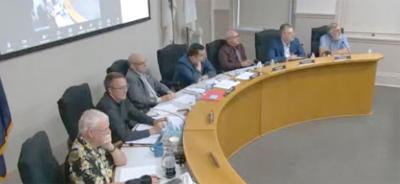
THE DALLES — At a city council meeting Sept. 9, several individuals affiliated with the North Wasco Parks Department spoke out against one of the proposed changes to an ordinance that dictates how the city collects and uses taxes on hotels and short-term rentals.
While City Attorney Jonathan Kara emphasized that these updates aim to simplify and modernize the ordinance, individuals representing the parks district pushed back against the proposed removal of a provision which currently locks in $367,000 of direct funding to city parks.
Following a vigorous debate over whether the ordinance should directly fund parks or input into the general fund, which the parks district can access via the regular budget process, the city council opted to pause and vote on the updated ordinance at a later date.
As part of an ongoing effort to overhaul the decades-old Transient Room Tax (TRT) code, Kara presented eight key changes to the ordinance.
The original ordinance was adopted in 1977 and has been amended multiple times since.
Below is a breakdown of the proposed changes:
1. Renaming the Tax: The proposed amendments would officially rename the tax from “Transient Room Tax” (TRT) to “Transient Lodging Tax” (TLT). Kara said this is simply to align with the terminology used across the state.
2. Removal of Antiquated Terms: The revisions seek to eliminate outdated and complex terms to create a more user-friendly document. “The original ordinance was written in a different time, and many terms are no longer relevant or are unnecessarily complicated,” said Kara.
3. Simplification of Language: For example, instead of using “transient lodging provider” repetitively, the ordinance would use the term “provider” after its initial definition. “This change seems minor, but it significantly improves readability and understanding,” Kara explained.
4. Removal of Project and Entity-Specific Allocations: This highly-debated change describes the removal of specific funding obligations for certain projects or entities, such as the now-complete Union Street underpass and the Northern Wasco County Parks and Recreation District. The current ordinance mandates that 2% of the 8% tax collected be allocated to the parks district. “Including such specific funding obligations in the city’s general ordinances is not considered a best practice from a legal sufficiency standpoint,” Kara argued. Instead, future funding would be determined through the city’s budget process, allowing for greater flexibility and adaptability.
5. Authorization of Electronic Lien Docket Use: The revised ordinance allows the city to use its electronic lien docket system to handle non-payments and other tax-related issues. This change is designed to streamline administrative processes and reduce costs associated with recording fees.
6. Enhanced Refund Opportunities: The amendments propose new guidelines for processing refunds under specific conditions. These include situations where the city refunds providers for overpayment, the city directly refunds occupants, or providers refund occupants. Kara described this change as a “quality of life improvement,” designed to make the ordinance fairer and more responsive to real-world situations.
7. Increase in Interest for Late Payments: The revised ordinance will increase the interest rate on late payments or when the city grants a tax refund payment extension from 1% to 3%.
8. Adjustment of Minimum Percentage for Tourism Promotion Fund: The current ordinance requires at least 21% of TRT funds to be deposited into a Tourism Promotion Fund. However, the city’s existing practice is to allocate 55% of these funds to tourism-related activities. The revised ordinance would officially raise the minimum allocation to 55%, aligning the ordinance with current practice.
Debate centered on parks budget certainty
Parks officials and advocates argued that removing the project-specific allocations to the ordinance could lead to uncertainty and potentially reduce stable funding for essential park services and maintenance.
Scott Baker, executive director of Northern Wasco County Parks and Recreation District, argued that the dedicated funding stream is not only a common feature of TRT ordinances across the state, it also provides essential certainty to his department.
“The reason the TRT was raised from 6% to 8% was specifically to fund park and recreation needs, and removing this from the ordinance takes away a crucial assurance for our operations,” Baker said.
While entity-specific allocations in ordinances is unusual for city codes in general, Baker said the original intent of the allocation for parks was intentionally meant to solidify that funding stream.
Need for clarity on funding process
Tensions spiked when Annette Byers, member of the North Wasco County Parks and Recreation board, questioned whether the city might withhold money from the parks district.
“What happens if the parks district isn’t showing the correct deliverables?” Byers said, “I talked to Mr. Klebes and he said we have to show deliverables in order to get money from the city.”
While Mayor Richard Mays answered that the city’s requirements for deliverables can be as simple as proof of expenditure towards park maintenance and improvements, Councilor Darcy Long jumped into the conversation from her hotel room in Washington D.C. where she’s been participating in The Dalles Community Outreach delegation.
“We still aren’t communicating to one another,” Long said. “Taking the 2% out of the ordinance does not mean taking the 2% away from Parks and Rec, it means taking it out of the ordinance and then the budgeting process is going to be separate. We will have contracts that can be long term.”
Byers, however, dug in.
“You’re creating more bureaucracy, because then we have to come and ask you for everything that we do,” she said.
Another board member, Rachel Carter, reinforced the importance of the $367,000 the parks district expects to receive from the TRT. She asked the council to clarify expectations.
“It does sound somewhat vague when we talk about making a list of deliverables,” she said. “We don’t know what that looks like, because, like we said, we have had this 2% since the beginning.”
City officials argued that the intention is not to strip funding from the parks district but to move toward a more transparent and flexible budgeting process.
“This change allows the council to make more deliberate funding decisions based on the needs and priorities of each budget cycle,” said City Manager Matthew Klebes.
Councilor Dan Richardson emphasized a cautious approach, noting that in the five budget cycles he’s witnessed, discussions have lingered over small amounts of money. He felt shifting the $367,000 of TRT funds into the council’s purview might delay necessary parks projects and actions.
“I feel like we’re rushing into a fundamental change in the way we have participated in funding parks,” he said. “I do think it means we take our time and do it thoughtfully.”
The council ultimately agreed to discuss a budget with representatives of North Wasco Parks and Recreation, create a funding agreement or IGA and then bring the ordinance back for an official vote at a later date.


Commented
Sorry, there are no recent results for popular commented articles.