
An Australian company behind two proposed coal ports in the Pacific Northwest recently sold its North American assets to a Denver private equity firm in an apparent bid to stave off a cash crisis, regulatory filings show.
Ambre Energy, of Brisbane, will sell two Rocky Mountain coal mines and its stake in export docks planned for Oregon and Washington to Resource Capital Funds for $18 million, according to company filings with Australian regulators.
Resource Capital Funds is a long-standing investor in Ambre, maintaining a voting position on the company’s board and loaning its Australian partner at least $95 million.
The deal came as Ambre racked up debt, and it followed Oregon regulators’ rejection of the company’s plans to ship nearly 9 million tons of coal annually from facilities on the Columbia River.
Wyoming Gov. Matt Mead, citing lost tax revenue to the state, filed a petition with Oregon regulators Thursday to participate in a contesting hearing regarding Ambre’s proposal.
Filings with Australian regulators show that Ambre accumulated $32 million in debt since December 2013, with all the financing provided by Resource Capital Funds.
Ambre said it had unsuccessfully tried to raise money from other sources and sell non-vital assets to generate cash.
“The company has struggled in the face of a sharply deteriorating thermal coal market to raise the capital required to fund the operations of (Ambre Energy North America), that is, the development of its U.S. port projects, the optimization of its U.S. coal mining assets, and the implementation generally of its U.S. coal export strategy,” Ambre wrote in the filing.
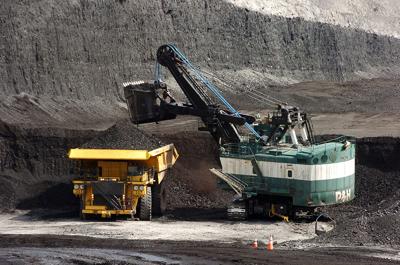
The deal includes the Decker mine in Montana, which Ambre assumed complete control of in September after purchasing 50 percent of the mine owned by Cloud Peak Energy. Ambre relied on financing from Resource Capital Funds to complete the deal.
Resource Capital Funds will also buy the Black Butte mine in southwestern Wyoming as well as Ambre’s stake in the Morrow Port Project in Oregon and Millennium Bulk Terminals in Washington.
The company will operate under the name Ambre Energy North America, and the leadership team will stay the same, said Everett King, who heads the company’s North American operations.
The difficult market conditions are likely the reason Ambre Energy decided to accept RCF’s offer to sell its North American assets, King said. He said the private equity firm’s interest in Ambre’s American operations is validation of the work the company is doing here.
“They like the projects, and they like the team,” King said.
Analysts said the company’s inability to attract new investors speaks to the market’s increasing unease with coal exports. Markets are oversupplied, and prices have plunged as global demand has fallen with the slowing of the international economy, they said.
But they were split on what the deal means for the future of coal exports.
“What this really shows (is) it is not that the projects are dead. It’s that the markets are really pessimistic,” said Clark Williams-Derry, deputy director of the Sightline Institute, a Seattle think tank opposed to coal exports. “They have valued the North American company at virtually nothing.”
Resource Capital Funds’ goal, as a private equity firm, will be to flip Ambre’s assets for a profit, he said.
Hans Daniels, an analyst who tracks the industry at Doyle Trading Consultants, said the jury is out on what the deal means for coal exports’ prospects.
International markets are likely to remain challenging for the next three to five years, making exports a tough sell in the short term, he said.
The relative strength of the U.S. economy is also a disadvantage for American exporters, as the dollar’s rise against its international counterparts makes Powder River Basin coal more expensive next to its competitors, Daniels said.
Yet long-term dynamics are more promising. Roughly 500 million people in India today are without electricity, and Asia will likely continue to rely on coal to power its economies as more people move out of poverty and into the middle class, Daniels said.
Powder River Basin coal remains cheap to mine, meaning it can compete against coal from other markets.
The cost of the deal could also be a boon for Resource Capital Funds, he said.
“If you can pick up Ambre for $18 million or some of these distressed assets in Appalachia for dimes on the dollar, that’s a great deal,” Daniels said. “Usually, whenever a company acquires assets, they buy them for a purpose. They buy because they think there is potential in it.”


Commented