“Do not go gentle into that good night.” — Dylan Thomas
The experience of aging in the embrace of the geological and biological wonder of the Columbia Gorge is well worth writing about. The much-anticipated decline of the super powers of youth — strength, speed, agility, risk taking — when endured in a city setting evoke images of bent figures leaning in crowded crosswalks, figures on park benches outwardly idle yet possessed of inner lives unspoken. This calls into question the definition of retirement itself. Nature never allows us to retire. She pushes us to the top of the hill where the eye-high fire weed bows before us like a welcoming diplomat.
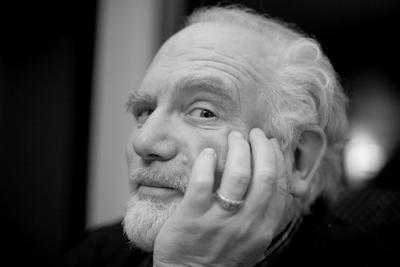
Joel Kabakov
Moving to the Gorge in 2007 made me feel as if a giant reset button had been pushed. The city loafers were the first to come off and be banished to the darkest corner of the closet. Then out came the hikers and the river walkers and a wardrobe affectionately referred to as “gear.” As a composer, my inner wilderness came to the forefront. Trained in the academy as a classical musician, that persona was cast away in a sense as if the “Well Tempered Clavier” of Bach — the catechism, so to speak, of my youth — had evolved to the “ill-tempered accordion,” a new instrument of choice which I took up well into my senior years and which I play devotedly to this day.
Having taught subjects like counterpoint and composition in conservatories and universities, my new area of emphasis in the classroom at Columbia Gorge Community College (CGCC) became World Music Cultures, which enabled me to bring in the indigenous cultures of the Gorge — the flutes, drums, powwow voices — as well as what I refer to as “soundtrack of planet earth” where geography concentrates on aural shapes rather than border outlines.
My lifelong interest in poetry gradually turned from passive to active as I put together my first collection called “Available Light”, Goldfish Press 2017. One of my nature poems from the collection is here quoted:
Columbia Crossing
Riotous wild flowers defy
The vandal winds of noon
A ruler of skies and river
Retracts his wings
Careening
Talons outstretched
Into the rapids below the dam
I watch and conjugate “I am”
In several dead languages
May the tongues whose words for the movement of water
The finite expressions for the consistency of snow
And the constancy of love
May poesy that long ago ceased its harmonious continuum
When the river stopped
Cry out in counterpoint with the rapids again
We walk among the blossoms and the driftwood bereft of literacy
As scriptures encode themselves
In the pagination of windblown silts
Respelling the gorge through millennia.
•••
With the recent advent of extreme climate fires and drought, my wife and I feel like we have reserved seats in a theater waiting for the next shout of “fire!” This month, we literally played host to our friends who twice in the same month were given a 10 minute, stage-three fire warning to evacuate their home in Lyle. Show up at our door they did, complete with cat carriers, the dog, and whatever jetsam they could gather up on their way out to the car.
So there is geological time present in the Gorge itself, the rock faces, the primeval forests, the river as well as ephemeral forms, the towns, the rails, the roads, even the dam, all of which as we learn in the Anthropocene age are soon to return to the state of nature. Nature bats last.
This is not to cast my lot with hopelessness but to feel the call to action which in poetic imagery might become “the road trip untaken” or “shall I compare thee to a summer’s drought?” But to live every day we are given with a heightened consciousness of our impact on the planet and the possibility that human ingenuity can deliver the great science and collective acceptance without which we are left clinging to our afternoon passes to this theme park of the mind we have chosen to inhabit.



Commented