The History Museum of Hood River County’s most recent temporary exhibition is “Salmon Connections,” on now through May.
This exhibition investigates the perennial bond between salmon of the Columbia River and the peoples who have and continue to rely on this fish for their livelihood.
“This is a pressing, contemporary, human issue — one with roots deep in the Neolithic past,” said Museum Director Dr. Lynn Orr. “’Salmon Connections’ lays out the basic components of the controversy.”
The exhibition brings together facts about the five salmon species that make the Pacific Northwest home: Chinook, Chum, Coho, Pink, and Sockeye, as well as Steelhead. In addition, the exhibit illuminates the various sectors that weigh heavily on salmon survival: Habitat, harvesting, hydroelectric power and hatcheries. The narrative is punctuated by artifacts, including items from the museum’s collection and loans from private collectors and other museums, said the press release, including Columbia Gorge Discovery Center, The Dalles, and Columbia Gorge Interpretive Center Museum, Stevenson.
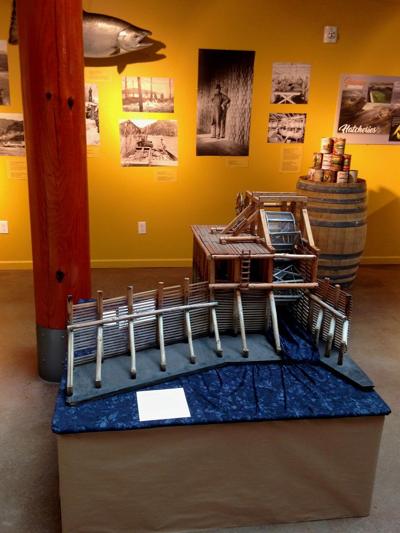
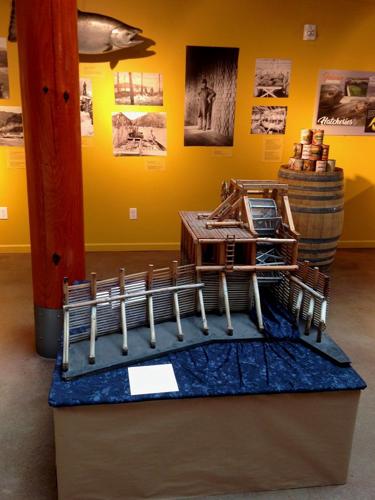
Among the featured objects are vintage photographs, art works of various media depicting salmon, fiberglass models of actual fish (that were caught, photographed, measured, and then released), and specimens of salmon eggs and small fry.
The visitor is greeted by a 10-foot wide wire sculpture of a salmon by artist Carlos Cobos of Scottsdale, Ariz. His mammoth Mabel 16 is named after a pot-belly stove the artist pulled out of the Columbia that forms the fish’s underbelly. The interior of the fish is filled with rusted debris found in the river, underscoring the degraded environment that salmon must navigate.
The History Museum of Hood River County is located at 300 E. Port Marina Drive, off Button Bridge Road, and is open Monday through Saturday from 11 a.m. to 4 p.m. Admission is by donation.



Commented