If you have specific gardening or pest questions, you can submit them online to the OSU Hood River Extension, Columbia Gorge Master Gardeners virtual plant clinic by phone at 541-386-3343 ext. 39259.
If you have specific gardening or pest questions, you can submit them online to the OSU Hood River Extension, Columbia Gorge Master Gardeners virtual plant clinic by phone at 541-386-3343 ext. 39259.
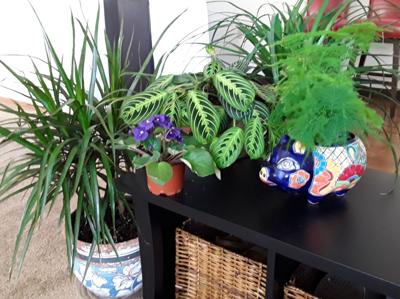
There is something decidedly welcoming and comforting about houseplants, which is what I seek during trying times — and these are trying times. The old standards, philodendron and spider plants, are still around (and I believe those macramé hangers are making a comeback), but there are so many more options to suit anyone’s lifestyle.
Most common houseplants will do well in any home. There are basically five factors to consider when choosing plants for your home: Light, temperature, humidity, water and nutrients, all of which you can control. Let’s talk about each one on its own:
Light: The rooms of your home facing south will offer the warmest light, therefore plants that enjoy the heat and/or direct sunlight should do well in these rooms. If indirect light is needed, simply move the plant away from the window.
Temperature: Most plants will thrive in normal home temperatures as long as their other needs are met.
Humidity: Many plants require more humidity than most homes offer. Bathrooms and kitchens usually offer the most humidity; therefore, ferns and ivies tend to do very well in those rooms. You can increase humidity in other areas by placing the plant pot on a shallow tray of moist gravel or, if you have a plant pot that sits within a decorative container, you can pack sphagnum moss around the plant pot, which will absorb any excess water. Misting plants does not significantly improve humidity.
Water: Plants need a continuous and adequate supply of water, which starts with potting soil that offers good water retention, as well as space for air. Potting soil has amendments that create the right environment for house plants. (Your garden soil, no matter how healthy, is not the soil you want for your houseplants.) Containers need to have at least one drainage hole and do not need any additional material to provide good drainage. Never let plants sit in excess water, water only when dry to the touch, and room temperature water is generally best.
Nutrients: Since potted plants have only a small amount of soil to draw nutrients from, they normally require fertilization every other week from May through November. Since growth slows December through April, fertilizing every 4-6 weeks will be sufficient. A water soluble fertilizer is best and always follow label directions.
House plants aren’t totally problem-free, but most problems (other than pests!) are easily resolved. Some typical problems include:
• Long spindly stems, lacking good color and leaf size: Too little light — move plant closer to light source
• New leaves smaller than old leaves: Too much light — move plant farther from light source
• Leaves turn yellow and turn downward: Too much heat — move plant to a cooler spot, away from direct heat
• Sudden wilting or shedding of foliage during cold weather: Chilling— move plant way from cold drafts
• Tips of leaves brown, lower leaves yellow and drop: Not enough water — water until some runs out the bottom
• Lower leaves curl, stems are rotting: Too much water — water less frequently & do not allow to stand in water
When dealing with pests on your houseplants, non-chemical methods often give very good results without resorting to pesticides. Various methods of treatment may include the simple removal of the infected part, in the case leafminers, for example. Some pests are large enough to be seen and removed by hand and others, such as aphids, can be effectively controlled with a cotton swab dipped in alcohol if it’s a small plant. If used correctly and cautiously, insecticidal soaps can be very effective. Always read the label completely and carefully follow instructions as there may be potential for plant damage.
So whether you decide on large exotics, small flowering, beautifully flowing or just lush greenery, enjoy the warmth and comfort they bring to a home. It’s also a great opportunity to involve kids. Stimulating interest in the planting, growing and nurturing process opens a whole world of discussion and amazement, when they start seeing something grow that they actually planted!
If you have specific gardening or pest questions, you can submit them online to the OSU Hood River Extension, Columbia Gorge Master Gardeners virtual plant clinic, at extension.oregonstate.edu/mg/hoodriver or by phone at 541-386-3343 ext. 39259.
Master Gardeners are a great source for research-based information. Please remember to provide detailed plant or pest problem information, as well as your preferred method of contact.



Commented