
Climbing Mount Hood is not an experience you forget.
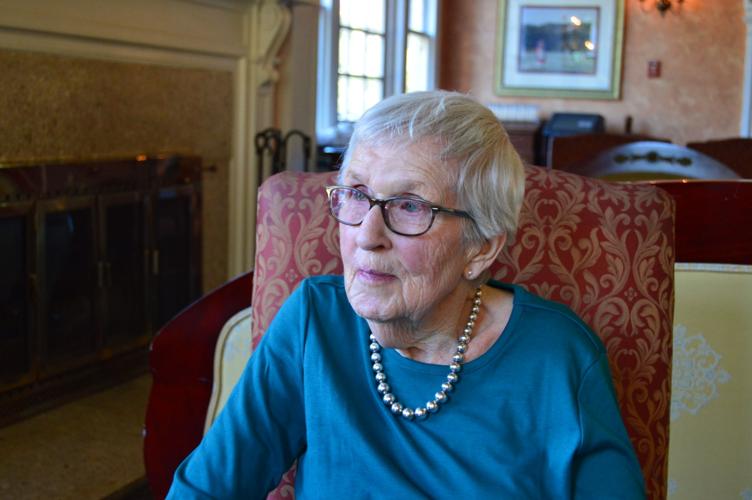
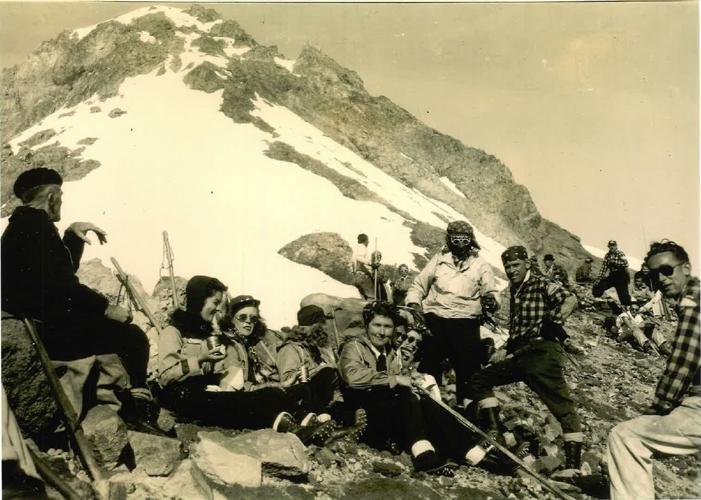
Just ask Peggy McLucas Tetlow, 94. She was 18 when she climbed Mount Hood on July 21, 1940, part of the annual Legion Climb aided by Crag Rats.
That year, the climb was celebrating its 20th anniversary (it would run through 1950), and Tetlow, a high school senior, was a member of the Royal Court.
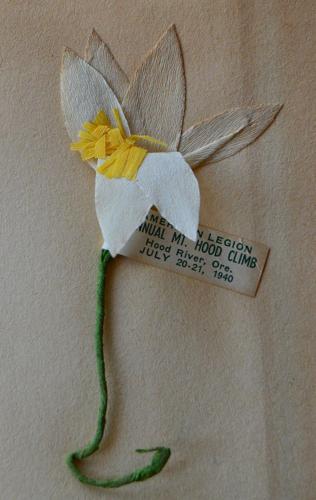
Flipping through the News’ archives, there’s plenty of coverage on the Legion’s 30 years of climbs — the progress of the girls selling avalanche lilies to secure their places on the court, the program that took place at the Tilly Jane Amphitheatre the evening before, the campout preparations, and plans for getting all climbers safely to the summit.
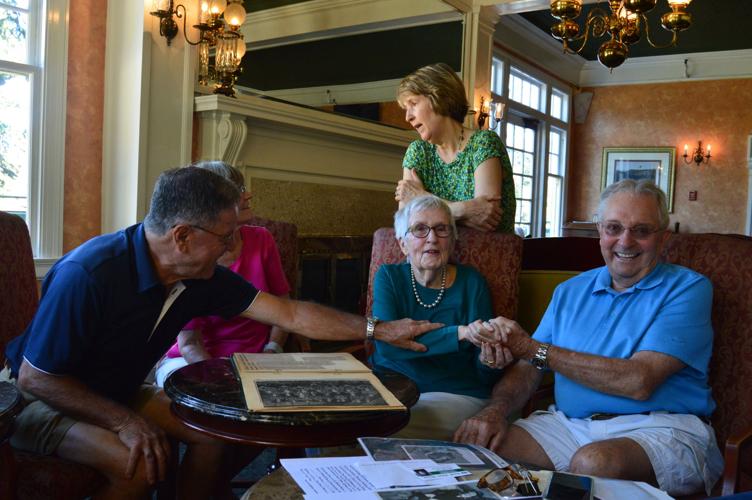
Tetlow, now living in California, was back in Hood River last week with her daughter, Mary Moran, and son-in-law, Dr. James Moran. The trip had several aspects to it, Mary Moran explained, one of which was meeting with Crag Rats to retrace some of the steps Tetlow took in 1940. Armed with a scrapbook filled with News clippings and photographs, the family met at the Columbia Gorge Hotel last week with Crag Rats Helmut and Pam Riedl and Bill Pattison — with Pattison also having the distinction of being an old friend.
For Tetlow, a life-long conservationist, the climb was a pivotal moment in her life, and she’s still proud of the achievement.
“When you live in Hood River, your dream is to climb the mountain,” she said. “My father (a Legion member) was very civic minded and loved the mountain.
“This was an organized group … and the Crag Rats were there to help.”
The Crag Rats were there “every second” of the climb, she emphasized. Pattison explained how the group would go up the week before with ropes and pins to aid climbers, and then offer help all along the route. Still, it wasn’t an easy ascent.
“It was a real struggle to get there — I worked hard,” Tetlow said.
But the effort was worth it.
“I could see the world from the top of Mount Hood,” she remembered. “I could see forever.”
Helmut Riedl said climbers went up the mountain “at a slow pace,” and Dr. Stanley Wells would check every single one of them at Tie-in Rock to make sure they were fit to continue on — if he didn’t give the okay, they had to turn back.
As a princess on the Royal Court, Tetlow climbed the mountain for free, but in 1940, the cost to participate was $2.50 — and camping another $1, which included food.
“That was a lot of money,” Tetlow said. (A quick internet search on inflation shows that $2.50 is equal to $42.24 today — and $1, $16.89.)
She also received a special ski suit from the Hood River Chamber of Commerce climb committee, as well as her meals. What she was responsible for bringing, according to a letter from the chamber, kept safe in her scrapbook: Boots, colored glasses, cold cream for her lips, a sweater and blouse, toiletries, soap and a towel, socks, and a bedroll (“Take plenty of blankets,” the letter advises).
The Legion Climb was eventually discontinued, said Pattison, because the mountain began showing its age.
“In the ‘20s, there was more snow (in the summertime),” he said, “and not as much exposed rock. Even today, we don’t climb much after May 30.”
In a historic light, the climb can be seen as “this innocent moment on the mountain,” said Moran. “Then the war — boom, everyone’s life changed. They went from innocence to World War II in two years — but she was naïve and carefree, going up the mountain.”
Life did change for Tetlow after war was declared. She and her sister, Betty, dropped out of college to join the Navy Waves. While her sister got a job in air traffic control, she trained as a surgical nurse in San Diego and served in the Bay Area. She married Robert J. Tetlow, a landscape architect — he designed the botanical garden in San Francisco — in 1948. And California is where she stayed.
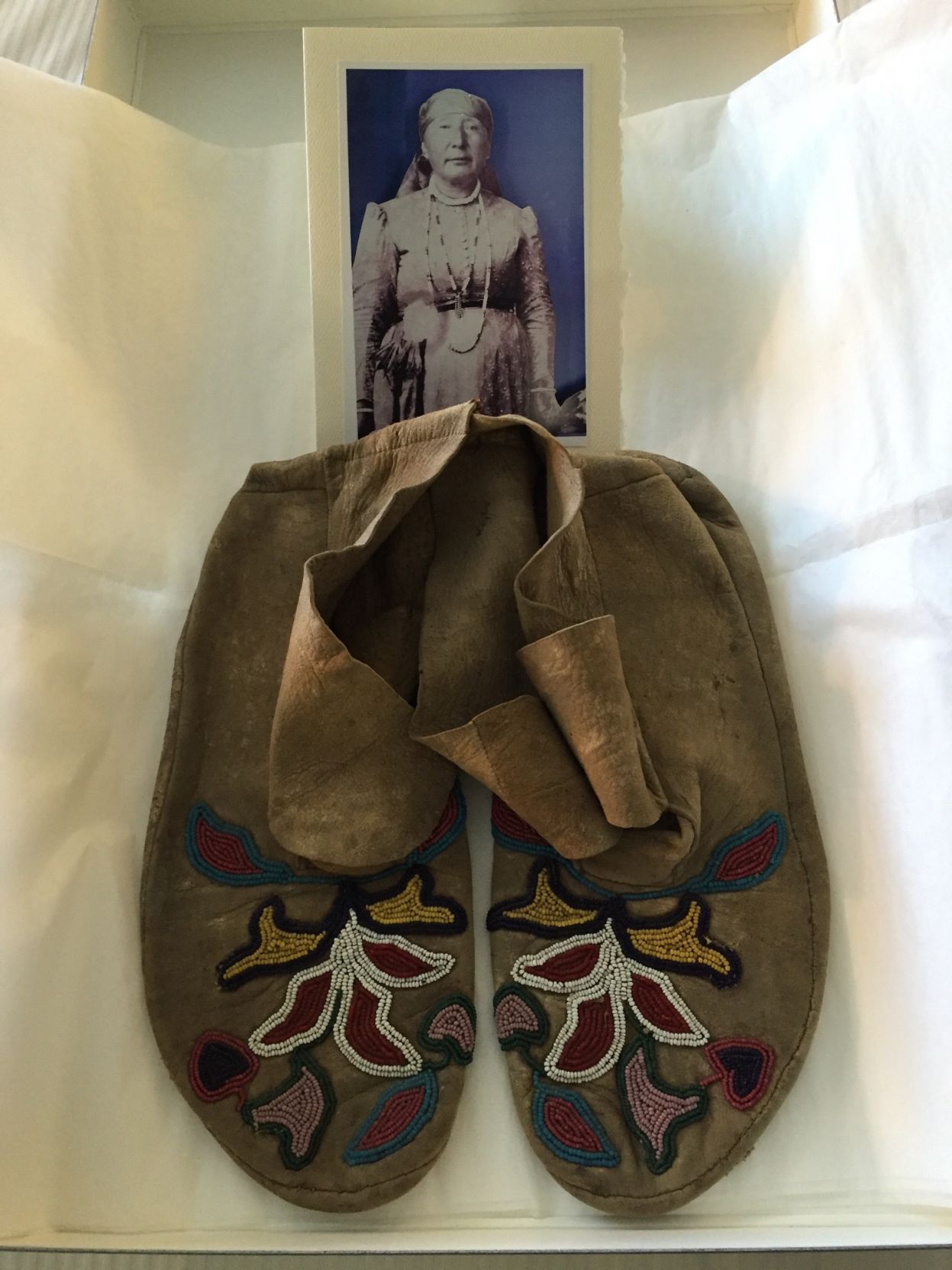
But her Hood River roots run deep. Tetlow was born in 1922 and grew up on West Sherman, the granddaughter of John D. McLucas, a stone mason who created many of the rock walls and sidewalks in town, and daughter of John Dayton McLucas, who served as Hood River postmaster in the 1930s, appointed by President Franklin D. Roosevelt. Her mother, Deforest Gould McLucas, owned Dee’s Smart Shop, and the family was good friends with Martha Alec, known locally as Indian Martha, who worked for grandfather Asher Gould in the family’s home.
There’s an exhibit at the History Museum of Hood River County that tells of Martha and her role in the valley — and that’s another reason why Tetlow was in town.
She’s donated many items to the History Museum, said Moran, but has one special object that she wanted to return home — a pair of moccasins, handmade by Martha as a gift to Tetlow’s father, which he took to France with him during his service during World War I.
“She wants them to be back where they were made,” Moran explained, noting that these special shoes have always been treasured by the family and will now be enjoyed by the community.
So the trip to Hood River was threefold: To see the town where she grew up, to reconnect with her Crag Rat friends, and to donate one more item to the museum.
Tetlow had tears in her eyes as she talked about being back, remembering her life in Hood River, and going over the photos and clippings she’s saved of her climb in 1940, and subsequent climbs after.
“I’m home,” she said simply.


Commented
Sorry, there are no recent results for popular commented articles.