Local officials had a two-pronged message for the public about Ebola: they’re ready in the highly unlikely event of a case here, and the reality is that getting vaccinations is a more pressing matter.
Teri Thalhofer, director of North Central Public Health District, said of the historic Ebola outbreak in West Africa: “I imagine Africa today is much the same as the US was in the past during measles, mumps and polio epidemics.
“My staff and myself are much more concerned at this time with Oregon’s low levels of childhood vaccinations and the approaching flu season. Thousands in the U.S. die every year of this vaccine-preventable disease.”
“While I understand how very scary Ebola sounds given the level of devastation we have seen in Africa, it is still very unlikely we will see it in our local area,” Thalhofer said.
Mid-Columbia Medical Center said in a statement last Friday, “MCMC is prepared to detect, protect and respond in caring for patients who may present with Ebola. We have identified designated areas where we can safely isolate and treat such patients.
“The hospital is prepared to work with Oregon Public Health and the federal Centers for Disease Control to transfer patients with Ebola to a facility where they will receive the appropriate level of care.”
MCMC stated it “takes Ebola preparedness very seriously.” It is working with North Central Public Health, Oregon Association of Hospitals and Health Systems, the Oregon Nurses’ Association and community agencies to ensure it is prepared.
“Healthcare personnel are often the first to encounter a patient who may be showing signs of an infectious disease,” according to the statement. “This is why MCMC has formed a specialized task force and developed a detailed plan to care for a patient with Ebola. MCMC is ensuring that all frontline healthcare providers have the proper training, equipment and protocols to keep themselves and other hospital patients safe should we have to care for a patient with Ebola.”
Thalhofer said her agency called a meeting early last week of members of the local health care community to talk about Ebola preparedness and identify issues that may need more clarification.
“We are also working very closely with our state Public Health Division partners, who communicate regularly with the CDC,” she said.
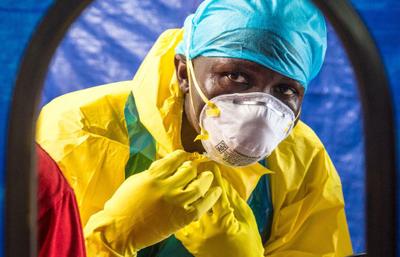
At the meeting, local health partners “felt they had PPE (personal protective equipment) to meet their needs for their specific roles,” Thalhofer said. “All local facilities have access to personal protective equipment.”
“We discussed issues related to disposal of contaminated materials and transport and are working with partners at the Oregon Health Authority to gain clarification,” Thalhofer said of areas that local officials are seeking more information on.
MCMC said it is receiving up to the minute alerts from the CDC and the state of Oregon through the Health Alert Network. “As new guidance is issued, MCMC is incorporating all of these updates into plans and protocols.
“It is important to remember that this situation is rapidly changing,” MCMC stated. “Preparation requires adjustment as more is learned about how best to care” for Ebola patients while protecting healthcare providers and other patients.
With the Oct. 8 death of one man on U.S. soil from Ebola and the subsequent Ebola infections of two nurses who treated him, the country has been intensely focused on the disease. Five other Americans contracted the disease in Africa and three have recovered and two are still in treatment, according to the New York Times.
Transmission of Ebola is through bodily fluids such as blood, vomit, diarrhea, saliva and sweat and is spread through direct contact (through broken skin or mucous membranes in, for example, the eyes, nose, or mouth), according to the CDC. It is not transmitted through food, water or air, it says.



Commented
Sorry, there are no recent results for popular commented articles.