
Residents of Hood River, Wasco and Sherman Counties legally harvested 18 road-killed deer from local lanes and highways in 2019.
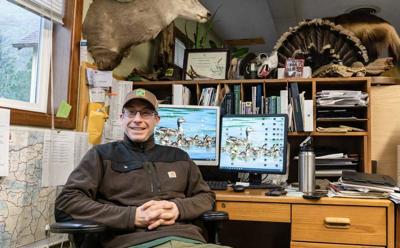
Oregon Department of Fish and Wildlife biologist Andrew Rosenberg said this was a typical return for ODFW’s central and eastern field offices in the first year of legal roadkill harvesting in Oregon.
Rosenberg said most of the 1500 permits issued statewide were issued on the west side, with Bend and Prineville being exceptions.
“Heppner and Summer Lake have only checked in a total of 10 between the two of them, so those rural areas with not many roads and not many people aren’t getting very many check-ins,” Rosenberg said.
ODFW District Wildlife Biologist Jeremy Thompson said the west’s higher permit numbers were largely a result of higher population densities.
“Summer Lake is one of two offices in a county of 6000 people. Half of those 6000 are cattle ranchers that probably don’t want to eat roadkill deer,” Thompson said. “It’s a sheer people-volume issue.”
In addition to the obvious benefit of meat which would have been laying by the road ending up on the table, these permits provide new data points to ODFW.
Rosenberg said the deer heads which are turned in to ODFW field offices as the final step of the permitting process provide useful samples to biologists following the westward spread of chronic wasting disease.
“All of the heads that we’re checking in, we’re sampling for CWD and it’s a great way for us to boost our monitoring effort for that disease,” Rosenberg said.
Chronic wasting disease, Rosenberg said, effects cervids, or members of the deer family. “This isn’t something that we’ve found in Oregon,” he said. “I don’t think it’s in a state that touches Oregon but they have it in Montana and it’s starting to kind of move west so it’s something that we monitor for pretty heavily.”
Rosenberg said typical symptoms of late-stage CWD include obvious malnutrition and odd behavior. “It’s going to be salivating, stumbling around and it can have a weird posture,” Rosenberg said. The disease is eventually fatal.
Thompson said chronic wasting disease is a prion disease similar to mad-cow disease or Creutzfeldt-Jakob disease in humans. It spreads by becoming prevalent in deer habitat to the point where they end up ingesting it. “We’re trying to make sure that prion just does not enter our system,” Thompson said.
Rosenberg said the prion builds up in the environment around infected populations until it is spread through feces and saliva.
Monitoring for CWD in Oregon means ODFW can more quickly and effectively respond if the disease reaches Oregon, Rosenberg said. He said the roadkill salvage program boosts biologists’ samples for the disease.
Before the roadkill salvage program, ODFW relied almost entirely on hunters for their monitoring efforts. Sampling from the annual harvest took place in the field and at check-in stations for hunters in Prineville and Biggs Junction.
Rosenberg said biologists “do a lot of running around all over the state” to check hunters for kills and ask for a sample.
Checking a deer for CWD requires biologists to remove a lymph node at the base of the skull. For elk, the lymph node is taken alongside “something called the obex, which is basically the base of the brainstem,” Rosenberg said.
Thompson said permitting roadkill harvest has also given ODFW data on where animals are being hit frequently.
“There’s a massive movement throughout the west at identifying movement corridors and potential conflict zones on highways,” Thompson said. He said the roadkill salvage data helps identify “critical pinch points” where wildlife crossing structures are needed without ODFW gathering data through GPS collaring.
Rosenberg added that removing carcasses from the roadside minimizes waste and protects scavengers from also being hit later.
“A lot of our eagles that get hit on the road are hit while scavenging, so a lot of that volume is being taken out to be consumed by humans,” Rosenberg said.
Thompson and Rosenberg said the annual movement patterns of blacktail and mule deer affect how likely they are to be hit. Mule deer become more concentrated at lower elevations during the winter and blacktails tend to be hit most during their breeding cycle, they said.
Of the 18 deer salvaged locally, Rosenberg had good news for hunters.
“Most of them were younger deer. Not very many mature bucks—I think only one that I can remember,” Rosenberg said.


Commented