
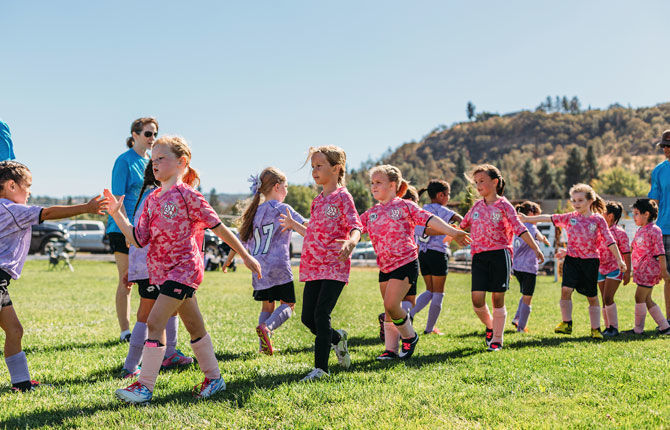
Coordinating soccer games for 650 children and teens is no small task, but a volunteer force makes sure there are coaches and playing fields ready for 10 weeks of action each fall.
“We’re the largest organized sports program in town,” said Scott Radford, assistant regional commissioner for the local chapter of the American Youth Soccer Organization. “So, a lot of us put in over 100 hours per year.”
Practice begins each year in mid-August, with eight weeks of games beginning in September.
There are 24 teams for boys and girls under the age of 6, 20 teams for those 7 and 8, 16 teams for 10 and 11-year-olds, seven teams for ages 14 and 15 and five for those 15 to 17. Games take place either Saturday or Sunday, dependent upon the age group.
Cost to participate — includes a jersey and socks —is $55 per season. Radford has coached for 11 years and been on the AYSO board for eight. His two children play soccer and he says late summer is a good time for him to volunteer because cherries on the family orchard have been picked and production activities are winding down.
“I feel like you really need to give back to the community,” he said.
He and other AYSO board members are recruiting to get other parents and residents involved in the program, which they believe is good for players on several levels: Kids get plenty of exercise, make new friends, learn to be part of a team and hone their athletic skills for advanced play in high school.
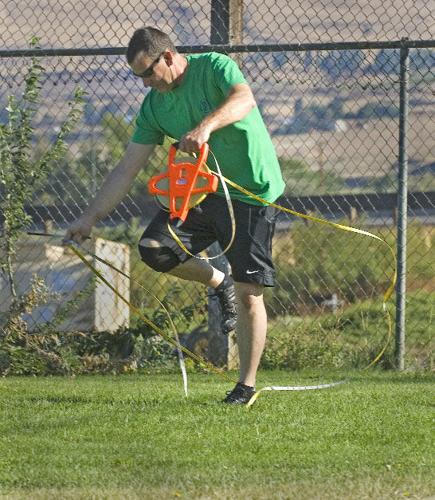
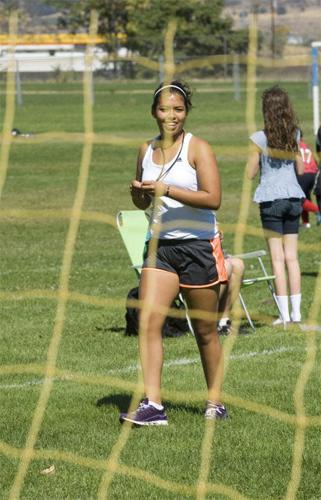
“Our need is more volunteers to help with registration, field set up, maintenance, equipment and administrative tasks,” said Radford.
The benefits of coaching or serving in a support role is that not only do adults get to enjoy social time, their children form lasting friendships.
“It’s been a really good way to get to know my girls’ friends so that I can feel comfortable about who they are spending time with,” said Taner Elliott, who has coached for four years.
He and wife Tanna have two daughters, Riley, 7, and Rozlyn, almost 6, who play on two different teams.
Taner coaches one child and Tanna the other, so the family rarely meets at the dinner table during the season.
“When the kids first start they are just out to have fun, but they also learn the structure of a sport as well as the rules, and sportsmanship,” said Taner, who played soccer in school. “These lessons carry over into everyday life as well.”
Radford said coaches in AYSO are guided by the group’s six philosophies to create a family-friendly environment:
• Everyone plays: Each member of the teams gets to play at least 50 percent of all games. That allows the child or teen to feel like a contributor.
• New teams are selected at random to balance out skills levels and give everyone a chance to learn. Boys and girls play on separate teams.
• Every child is guaranteed to be on a team; there are no elimination try-outs and nobody gets cut. No one keeps score.
• Coaches are mandated to encourage player effort and create a positive learning environment for every boy and girl.
• Players are taught mutual respect rather than a “win-at-all-costs” attitude. Good sportsmanship lessons are woven into every facet of the AYSO program.
• Every child or teen is encouraged to develop skills and knowledge to the best of his or her abilities that benefit the team as well as the individual.
Radford said volunteer coaches train in AYSO’s philosophy for specific ages to help them better meet the needs of players.
Only referees are paid and they are taught to make sure the game is fun and enjoyable. Their training involves learning to enforce not only the “letter of the law” but the “spirit of the game.”
The physical benefits of soccer include decreased body fat and improved muscle tone, as well as increased stamina and better body coordination.
The fast-paced game improves cognitive function and the skills of concentration, persistence and self-discipline. Players also learn the social skills of sharing and teamwork, which increases confidence and builds self-esteem.
Radford said soccer is not an expensive sport – all that’s needed is space and ball to practice. That’s what makes AYSO such a good fit for children of families from every income level.
“I’ve learned to work with a high diversity of people from all walks of life,” he said.
Players over 10 years of age use the Wahtonka field for Saturday games and do a limited amount of traveling to face off with other teams.
Players under 10 take Kramer field on Sundays. Practices for all AYSO participants take place once or twice a week.
“New volunteers will look at different ways of doing things so it makes the program better,” said Radford.
The organization doesn’t fundraise out of the belief that families are busy enough without adding that burden to their schedules.
Instead, sponsorships are sold on coaches’ T-shirts to cover the cost of referees and equipment for the team.
There is usually a big crowd at games, said Radford, which underscores the important of AYSO in building community.
“When I started in the program we were in the 400-500 (participants) range and I’d like to see more but we will have to change some infrastructure,” he said.
In addition to Radford, The Dalles AYSO board includes: Shane Cowan, Greg Shubert, Stefanie Buell, Sarah Bzezi, Deidra Marx, Julie Massey-Whitaker, Eric Bartholomew, Erica Holt, Kristen Richelderfer and Manny Garcia.
For more information about The Dalles AYSO, or to volunteer, visit www.thedallesayso or the organization’s Facebook page.


Commented
Sorry, there are no recent results for popular commented articles.