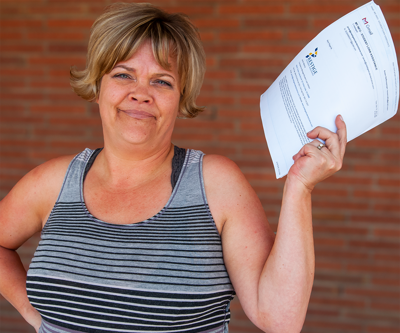
When Susan Raffensperger got the call from Prestige Student Solutions, she was excited by the possibilities: A career-based interventions coordinator at The Dalles High School, Reffensperger had just started the school year at a new job and was looking into buying a house — and was struggling with a load of school debt and the cost of moving from Bend to a new city.
It was a stressful time, she was behind on her loan payments, and Raffensperger was feeling desperate when she received the call from “Javier Medina,” with “Prestige Student Solutions.”
He was adamant that he could reduce her loan payments, which she desperately needed to do, and seemed very knowledgeable. “He helped me get my student loan ID information together and walked me through the process.”
Nevertheless, she was careful. She checked out the company’s website, reviewed the information she was sent. “I’m an ex banker, I worked as a banker for 10 years in Bend, so I understand that world,” she said.
“He had people sending me emails, the invoices all had the company logo and name.”
Javier explained various options that could help her, and when asked about the contract, he had his secretary email her one.
“He assured me this would be a really good thing for me,” she said. “It all seemed legit.”
Over a week, they had multiple contacts. She received the contract, and Javier called again the next day.
“This has to happen right now,” Javier told her. “We’ve got to move fast.”
And Raffensperger was feeling desperate. “I just couldn’t afford a $500 payment on a student loan. I was past due, I couldn’t pay,” she explained.
So she signed the contract, and gave him routing and checking account information for two $250 payments as an advance fee for the loan.
She thought she was set: Javier’s “assistant” was emailing her, assuring her that they were taking care of everything, that all was well.
Raffensperger was surprised when, in April, she began getting “past due” notices. She emailed Javier’s “assistant.” No response. The phone number was disconnected, emails were not returned.
“Eventually I found out nothing had been done,” she said. She called her bank, but there was nothing they could do about the loss of her $500.
Looking back on the experience, Raffensperger can see the signs that should have warned her she was being scammed.
“If things have to happen fast, that is a warning,” she said. “And if it sounds too good to be true, it probably is.”
She added that she should have used a debit card, to give herself the protection of Visa, and recommended talking over money decisions with someone else.
Javier was good at what he does, she said. “He absolutely picked up my emotions on this,” she explained.
And be aware that those operating scams can appear surprisingly legit, she said. “I had a very complicated set of loans. He understood them. As a banker I trusted experts, and he had a lot of knowledge.”
One thing she didn’t do, and now wishes she had, is look up the business with the Better Business Bureau.
In hopes of helping others in the future, she filed a report of her own with the Bureau, noting the company “had legitimate contracts, emails, and debited my checking account for $500. I was desperate to lower my payments! The company did NOTHING after taking my money. The phone numbers are disconnected, and I get no response to email.”
“Javier spent time convincing me how honest and trustworthy he was,” she reported.
She may have lost her $500, but by talking about it, and reporting it, Raffensperger may well help others avoid the pain of being cheated.



Commented
Sorry, there are no recent results for popular commented articles.