

Stephanie Bowen
School District 21
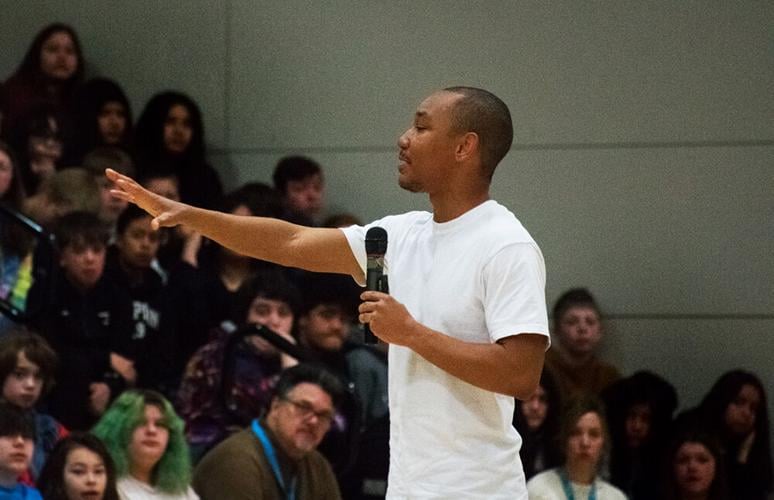
THE DALLES — Nationally-recognized youth speaker Jamar Root visited The Dalles middle and high schools on Friday, Feb. 27.
Root gave assemblies at both schools, then hosted a voluntary Teen Summit.
A Temple University graduate from Dallas, Root shared his own story— including a life-changing leukemia diagnosis in 2019. His response was: “Why me?”
That moment forced him to reevaluate. Root described himself as focused on results — achievements, recognition, external validation.
“I realized I was chasing outcomes,” he explained. “I wasn’t enjoying the process of what I was doing.”
His diagnosis shifted his mindset. Instead of asking what career would bring success, he began asking what kind of person he wanted to become, what life would feel meaningful.
Today, Root speaks in more than 35 states and is the #1 youth speaker for Teen Truth.
Root’s presentation challenged a question students hear often: “What do you want to be when you grow up?”
Root argued the question itself creates unnecessary pressure for young people navigating identity and expectations.
“Stop asking yourself what you want to be,” he told students. “Start asking yourself who you want to be.”
He said feeling lost or uncertain about the future is not a failure, but normal. He struggled with not having a clear path in high school and transition to college.
“Everyone feels pressure to have it figured out,” he said. “But growth happens in the experimenting, not in having a perfect plan.”
As a sophomore starting second baseman and later co-captain of his high school baseball team, Root developed intense anxiety around performance. Routine throws became overwhelming. Fear of failure grew so strong he lost both his confidence and starting position.
Rather than hiding the struggle, Root shared how one teammate, Hunter, played catch with him daily, regardless of mistakes or criticism from others.
“It wasn’t a big speech,” Root explained. “It was just consistency.”
Through that, Root rebuilt his confidence and success on the field.
Root also addressed a hard time in senior year when he faced bullying and confrontation after advocating for fairness in athletic programs. He described an incident where peers tried to intimidate him and how a close friend, Josh, helped him navigate the situation calmly and responsibly.
“That was when I learned what real friendship looks like,” Root said. He found good relationships matter more than popularity. “Trying to please everyone is an endless job. You can’t control other people’s opinions — but you can control your own.”
Root explored the tension between authenticity and fitting in. “If everyone likes you,” he shared, “you might not be being yourself.”
Root described being told as a student to “tone it down,” and how shrinking himself to fit expectations diminished his potential. It wasn’t until he embraced his authentic personality that he found confidence and clarity.
“Being different isn’t your weakness,” he said. “It’s your potential.”
At the summit, Root said, “The biggest risk isn’t failure. It’s living a life that isn’t true to you.”
He said moving across the country for college — knowing no one — was a pivotal experiences. Instead of focusing on worst-case scenarios, he began asking what the best-case outcome could be.
A recurring message throughout the day was the importance of belonging.
Root acknowledged not everyone will like each other — that’s okay. What matters is cultivating spaces where authenticity is welcomed.
He shared the story of a student named Ryan who faced learning challenges and ridicule earlier in life but flourished in a high school environment that embraced him. Though Ryan didn’t make the varsity basketball team, he earned a meaningful role as team manager — demonstrating supportive cultures open alternative pathways for success.
Students left with practical reminders:
• Seek authentic friendships
• Support others consistently
• Don’t tie self-worth to one activity or one opinion
• Embrace individuality
• Redefine success on your own terms
Root left students with a message about self-acceptance: “You don’t need everyone to accept you,” he said. “You need to accept yourself.”


Commented
Sorry, there are no recent results for popular commented articles.