White Salmon team develops ‘last resort respirator’: Community partnership breathes life into inexpensive device that could help in the battle against COVID-19
In early March as the Covid-19 virus spread across China and Italy, it appeared to be a distant but increasingly inevitable train-wreck, a crisis hurtling down a fixed trajectory towards world-historic proportions. As anxiety grew, Chris Hipskind, a shop teacher at Columbia High School in White Salmon, invited members of his local industrial advisory committee to discuss whether there was anything they could do to help fight the pandemic.
Six committee members brainstormed during that first meeting. Two ideas emerged: One straightforward, the other extremely daunting. They had heard hospitals were rapidly running short of personal protective equipment (PPE). It was suggested they build face shields and deliver them to protect the medical personnel who were risking their lives to save others. They immediately began that project, guided by Dr. Ian McKenna, a Portland emergency room doctor.
The second idea was more challenging. Hospitals were running out of ventilators, which are essential in treating patients suffering from COVID 19, a disease that attacks the respiratory system and destroys lung tissue. Because conventional ventilators are expensive, difficult to manufacture and in critically short supply, the team sought to create a simple, inexpensive substitute that could be quickly manufactured from common materials. These are intended as an emergency substitute, only to be used in the event that local hospitals’ ventilators are not sufficient to meet demand.
That task proved formidable. During 10 long days designing and building numerous prototypes, the team grew to over 20 people from all over the world, remotely sharing ideas and testing concepts. Three medical professionals provided guidance regarding the medical requirements of the device.
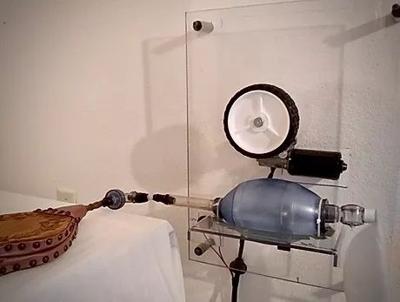
After many initial attempts, the team had a breakthrough on March 27. Chris Heald, a local retired mechanic, pursued an idea that fellow team member Dave Lind had suggested. Heald designed an ingenious method of pushing air through a bag ventilator mask using a simple windshield wiper motor. The device, consisting of roughly a dozen parts, is projected to cost hundreds of dollars, a fraction of the cost of standard ventilators, which sell for tens of thousands of dollars.
Since then, the team has worked quickly to refine the design to be easily manufactured anywhere in the world. Matt Mullinix, a nurse anesthesiologist at Skyline, and John Zimmerer and Kyle Hadley, the team’s other medical advisors, said that using this device may be preferable to putting multiple people on conventional ventilators, an approach currently being adopted by some hospitals.
The device has not yet been tested on real patients, and hopefully will not be needed. However, the team is continuing its work, should the growing pandemic require them.
For this reason, they are collecting donations to purchase supplies, so that these bag ventilator masks can be assembled quickly if needed. An account has been set up at Riverview Bank in White Salmon to accept donations. Checks should be made out to Last Resort Ventilator. Donations can also be made online at lastresortventilator.org. This website also features a video showing the device in action.
Manufacturers interested in helping to produce these locally, and hospitals interested in placing orders, are encouraged to visit the website for more information.
Acknowledgments go to Jason Erwin, manager at NAPA Auto Parts in Bingen for donated switches, and Brian Prigel of Prigel Machine in Odell, who volunteered machining time. Several community members have already donated money. Design team members include William Ayer, Adam Huxtable, Chris Heald, Mike Blankenship, Jack Perrin, Jesse Bryan, Aram Soghikian, John Hadley, Dave Lind, Steve Roberts, Don Ferency, Don Ruthardt, Dean Hovinghoff, Ron Stoner, Rikus Nel, Debbie Hipskind, Kurt Taylor, Cody Hipskind, David Morrison, Bob Schwarz, Bryant Zaugg, and Chris Hipskind.



Commented