
Dinner used to mean a reservation. Now it means a group text, an assigned course and someone who shows up with a bottle they’ve been meaning to open. For Americans who entertain regularly, the math on dining out has quietly tipped, and a new set of hosting formats fills in where the restaurant used to be.
Restaurant menu prices are up 3.6% year over year as of April 2026, the slowest pace in 15 months, but still run well above the broader inflation rate. The cumulative effect over four years is what’s moving people. Full-service meals and snacks rose 4.6% in the year ended February 2026, while food at home climbed just 2.4% over the same period, a gap that has compounded steadily since 2022 and shows no sign of closing. The kitchen, for a growing number of hosts, has become the most affordable room in the house.
The assigned-course potluck
The open-ended “just bring something” invitation has given way to a more structured one. Hosts assign courses: one guest handles the starter, another the salad, a third the dessert, while the host handles the main dish. The approach turns a logistics problem into a feature.
The price comparison holds up under scrutiny. Choice Angus ribeye at Walmart currently runs between $15 and $34 per tray, depending on cut and pack size, putting a generous single-serving steak at roughly $25 to $32 at retail. The same cut at LongHorn Steakhouse starts at over $30 before tax, tip or a drink, and climbs sharply at top steakhouses. The gap is real, but what makes the assigned-course format work isn’t just the savings.
Guests cook what they do best, and that turns out to matter more than expected. A friend’s grandmother’s lemon tart is a different thing entirely from a dessert pulled off a restaurant menu, and the conversation about who made what tends to carry the first half of the evening on its own.
The Bring-Your-Own format
Removing the beverage list from the equation changes the evening more than most hosts expect. When guests bring their own bottle, cocktail kit or six-pack, the drink becomes a talking point rather than a line item. Someone arrives with a natural wine they’ve been meaning to open, another brings the ingredients for a Negroni and a third shows up with a case of something they discovered at a local brewery. The table fills in around the food in a way that a restaurant round of drinks rarely produces.
Part of what makes it work is the conversation that starts before anyone even sits down. The bottles are placed on the counter, someone asks about the label and the evening begins to find its own pace. A host who doesn’t juggle a bar tab also has more room to focus on the food. A dinner built around one well-executed main course and drinks that the guests actually chose tends to feel less staged and closer to what people gathered for in the first place.
The garden table, done deliberately
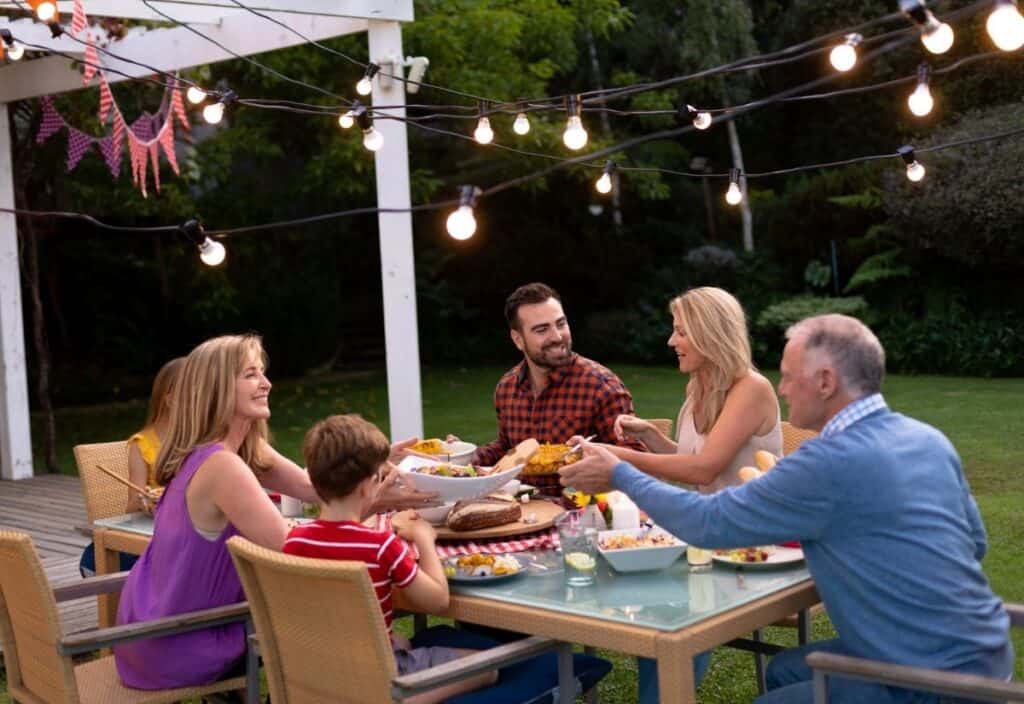
A table set outside with string lights and mismatched ceramics from different decades now reads as intentional rather than improvised. Hosts structure these evenings in courses rather than setting out a buffet, borrowing the pacing of a restaurant without the bill. About 28% of consumers plan to host more at-home gatherings this year than last, with budget-friendly hosting topping the list of motivators at 46%. The occasion doesn’t require a reservation to feel deliberate. Fresh air and a table that took 30 minutes to arrange can produce an evening that a booking rarely matches.
What the math actually looks like
Restaurant prices have risen enough that many casual nights out no longer feel casual once the bill arrives. Drinks, appetizers and entrees add up quickly, while the same gathering at home can cost a fraction of the price depending on the menu. About 93% of Americans expect to cook as much or more in the next 12 months than they did the year before, with the economy cited as a factor by 85% of those planning to cook more.
Restaurants still earn the occasion when the occasion calls for it. A birthday dinner, an anniversary, a meal that is itself the event: those still go out. The casual Saturday gathering that doesn’t need a reason is increasingly happening at home. The kitchen island, where everyone ends up anyway, has become its own kind of destination.
Zuzana Paar is the creator of Sustainable Life Ideas, a lifestyle blog dedicated to simple, intentional and eco-friendly living. With a global perspective shaped by years abroad, she shares everyday tips, thoughtful routines and creative ways to live more sustainably, without the overwhelm.
The post The new dinner party playbook Americans are using as restaurant prices hit a 4-year high appeared first on Food Drink Life.


Commented